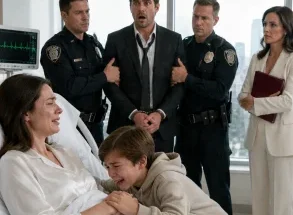
My parents br0..ke my six-year-old daughter’s fingers with a hammer for asking why my niece got steak while I got moldy leftovers. Be glad it was only your worthless fingers. Next time it’ll be your mouth so you won’t be able to speak or chew ever again. Dad laughed sadistically while cr//u/s/hing the b0nes completely. I took my crying daughter and …
The fluorescent lights in the emergency room were so bright that they seemed to erase every shadow in the waiting area, turning the pale tile floors and sterile white walls into something almost unreal as I sat there gripping my phone so tightly that my knuckles had turned completely white.
Behind the swinging double doors at the end of the hallway, my six-year-old daughter Nora was surrounded by doctors and nurses who were speaking in careful, measured voices while examining her tiny hand, and every time the doors moved I felt my chest tighten because I knew they were seeing injuries that no child should ever have to explain.
The image of her small fingers, swollen and bent in unnatural directions, would not leave my mind no matter how hard I tried to focus on something else.
It replayed over and over again in my head, like a memory that had carved itself into my brain so deeply that I could not escape it even if I closed my eyes.
My name is Isabelle Williams, I am thirty-two years old, and until yesterday I had convinced myself that my life was finally beginning to stabilize after years of quiet struggle.
Now I was sitting alone in a hospital at two in the morning, trying to figure out how to tell strangers the truth about what had happened without sounding like someone who had completely lost touch with reality.
Because the truth was something most people would struggle to believe.
Who would believe that my own parents, people who were respected in our community, regular church attendees who greeted neighbors with warm smiles and baked casseroles for charity events, could be responsible for something like this?
Who would believe that the same grandparents who proudly showed photos of my brother’s children to anyone who would listen could treat their other granddaughter like she did not belong in the family at all?
The truth was that what happened in that garage had not appeared out of nowhere.
It was the final eruption of something that had been buried beneath years of silence and excuses, a darkness that had existed inside my childhood home long before my daughter was even born.
A nurse approached my chair, her bright scrubs covered in small cartoon animals that seemed strangely cheerful under the harsh hospital lighting.
“The doctor will be with you shortly,” she said gently, her eyes lingering for a moment on the dark stains still marking the front of my blouse before she gave a quiet nod.
I tried to respond, but my throat felt tight and dry, as if the words themselves were refusing to come out.
Instead, I simply nodded back while forcing myself to take slow breaths that would keep the panic from spilling over.
My phone buzzed again in my hand.
I did not need to look at the screen to know who it was.
My older brother Thomas had called fourteen times in the last hour.
Each time the phone vibrated, a heavy wave of dread rolled through my chest because I knew exactly what he wanted.
He wanted an explanation.
He wanted reassurance.
He wanted to believe that what he had seen earlier that evening could somehow be explained away as a misunderstanding.
I silenced the call without answering.
There was nothing I could say to him that would make sense of what had happened.
How could I explain that the parents who had raised us both had become something unrecognizable?
How could I put into words the moment I realized that the house I had returned to six years ago was never truly a safe place for my daughter?
“Ms. Williams?”
I looked up to see a doctor approaching, her dark hair pulled neatly back and a clipboard tucked beneath one arm.
“I’m Dr. Reynolds,” she said, taking a seat beside me. “We’ve finished the imaging on Nora’s hand.”
My stomach tightened as she opened the folder.
“Three of her fingers have multiple fractures,” she explained carefully. “The pattern of these injuries suggests significant force applied in a very deliberate way.”
The room felt smaller suddenly, the air heavier.
“Is she going to be okay?” I asked quietly, my voice barely steady.
“She will need surgery to properly realign the bones,” Dr. Reynolds replied, her tone calm but serious. “Our pediatric orthopedic specialist has already been contacted.”
She paused before continuing.
“Isabelle, based on the nature of these injuries, our hospital policy requires that we involve a social worker to speak with you.”
The words hung in the air between us.
My chest tightened as an old, familiar instinct surged forward, the same instinct that had protected my parents for most of my life.
Deny everything.
Minimize what happened.
Find some explanation that would keep the family intact.
It was the survival strategy I had learned as a child.
But then I remembered Nora’s terrified face as she looked at me in that garage, silently asking a question I could never forget.
Why aren’t you protecting me?
“My father did this,” I whispered finally, the words trembling as they left my mouth. “My mother stood there and watched.”
Dr. Reynolds’ expression shifted for a fraction of a second, a flash of disbelief crossing her features before her professional composure returned.
“I’m going to contact our social worker,” she said quietly. “And we will notify the authorities so they can begin an investigation.”
Within an hour, a social worker named Janet arrived.
Not long after that, two police officers stepped into the hospital conference room where I had been waiting.
Detective Marcus spoke gently as he began asking questions about my family, our living situation, and the events that had unfolded earlier that evening.
“Has anything like this happened before?” he asked carefully.
The question hovered in the air between us.
I hesitated, feeling the weight of twenty-six years of buried memories pressing against my chest.
“Not to Nora physically,” I said slowly. “But there has been verbal cruelty toward both of us.”
“And toward you when you were a child?” he asked.
The answer was complicated.
How could anyone summarize a lifetime of quiet cruelty into a single sentence?
Growing up as the younger child in the Williams household meant existing permanently in the shadow of my older brother.
Thomas was three years older than me, and from the moment we were old enough to understand the difference, it was clear who our parents believed mattered more.
Thomas received encouragement, praise, and endless patience.
I received criticism, correction, and silence.
I remembered bringing home an A on a math test when I was eight years old after studying for days because I wanted my father to be proud of me.
He looked at the paper briefly and asked why it was not an A plus.
That same week Thomas brought home a B in English, and my parents took him out for ice cream to celebrate his effort.
Those moments built slowly over the years until they shaped the way I saw myself.
By the time I reached my teenage years, I had learned to make myself small and quiet, speaking only when necessary and apologizing for things that were never my fault.
The physical punishments were unpredictable but unforgettable.
A sudden slap for speaking too loudly.
An arm twisted painfully for dropping a glass.
Long hours locked in the basement closet for small mistakes that would not have earned Thomas even a warning.
Nothing that left obvious marks.
Nothing that outsiders would question.
When I became pregnant with Nora at twenty-six, unmarried and abandoned by her father, my parents offered to let me move back into their house.
At the time I believed they were helping me.
In reality they were reclaiming control.
For six years I lived under their roof again, enduring the same quiet hostility I had known as a child while trying to save enough money to eventually leave.
I told myself I was building stability for Nora.
I told myself it was temporary.
Yesterday proved how wrong I had been.
It was Thomas’s birthday dinner.
The dining table had been set beautifully with polished silverware, crystal glasses, and fresh flowers arranged in the center.
My mother had prepared an elaborate meal that filled the entire house with the scent of roasted meat and warm spices.
When the plates were served, Thomas’s children received perfect portions of freshly cooked steak with vegetables arranged neatly beside them.
Nora’s plate was different.
Instead of the fresh meal everyone else was eating, she had been given a serving of leftover casserole that had been sitting in the refrigerator for days, the edges darkened and beginning to spoil.
I noticed immediately.
But before I could say anything, Nora looked down at the plate and asked a quiet question that changed everything.
“Grandma,” she said softly, “how come Madison and Jackson get the good food but mine looks old?”
The table went completely silent.
My father’s expression darkened in a way I recognized from childhood, the same warning sign that meant trouble was about to follow.
My mother’s voice turned icy.
“Excuse me?”
Nora shrank slightly in her chair but tried to explain.
“I just wondered why.”
My father slowly pushed back his chair and stood up.
“You ungrateful child,” he said in a low voice that carried across the room.
Thomas shifted uncomfortably beside his wife.
“Dad, it’s not a big deal,” he muttered.
But my father had already turned his attention toward Nora.
“Come with me,” he said sharply.
When he grabbed her arm, something inside me snapped.
“Don’t touch her,” I said, standing up.
My father laughed coldly.
“This is my house,” he said. “You live here because I allow it.”
“Nora, we’re leaving,” I said quickly.
What happened next unfolded so quickly that even now it feels like a blur.
My father dragged Nora toward the garage while I rushed after them, my heart pounding as panic surged through me.
Inside the garage he reached toward his workbench.
And in that moment everything spiraled beyond anything I had ever imagined.
 To read the FULL story and discover what happens next:
 Like this post
 Tap “ALL C0MMENTS” to check C0mment with FULL ST0RY
 Type “KITTY” To Read The Full Story. When We Reach 30 Comments “KITTY” The Full Story Will Be Revealed.
Part 2
The memory of that garage still clung to me as I sat in the hospital hallway, my hands trembling while the events replayed in slow, unbearable detail inside my mind.
My father’s voice had echoed against the concrete walls while Nora cried in confusion, and my mother had stood nearby with an expression so cold that it felt like looking at a stranger instead of the woman who had raised me.
I remembered shouting for them to stop while rushing forward, my entire body moving on instinct as panic and disbelief collided in my chest.
Somehow I managed to pull Nora into my arms and escape through the door, ignoring the voices shouting behind me while I carried her toward the car.
By the time we reached the hospital, her small hand was trembling in mine and my mind was racing with a single overwhelming realization.
Everything I had endured growing up had not ended when Nora was born.
It had only been waiting.
And now, sitting beneath the unforgiving hospital lights while doctors prepared to repair the damage done to my child’s hand, I understood that the truth I had hidden for most of my life could no longer remain buried.
Type “KITTY” if you’re still with me.

The emergency room’s fluorescent lights burned my eyes as I sat in the waiting area, clutching my phone with white knuckles. My daughter, Nora, was behind those swinging doors, her tiny hand being examined by doctors who kept asking me questions I couldn’t answer without exposing the monster my family had become.
The image of her small fingers, swollen and bend at unnatural angles, was seared into my brain. How could I tell them what really happened? that my own parents had done this to my six-year-old child. My name is Isabelle Williams, 32 years old, single mother, and up until yesterday, I believed I was finally getting my life back on track.
Now, I was sitting in a hospital at 2:00 a.m. trying to figure out how to explain what happened without sounding completely insane. Because who would believe me? Who would believe that my parents, respected community members, churchgoers, and doting grandparents to my brother’s children would deliberately harm their own granddaughter? The truth was a nightmare I’d been living my entire life, but had somehow convinced myself wasn’t real anymore.
A nurse approached, her scrubs adorned with cartoon characters that seemed mockingly cheerful under the circumstances. “The doctor will be with you shortly,” she said, her eyes lingering a moment too long on the dried blood still staining my blouse. “I nodded mutely, unable to form words that wouldn’t dissolve into sobs.
My phone buzzed again, the 14th call from my brother, Thomas, in the last hour. I silenced it without looking. What could I possibly say to him? That our parents, the people who raised us, were monsters wearing human skin? That the golden boy of the family had been blind to the darkness festering in our childhood home? Ms. Williams. A doctor in blue scrubs approached, clipboard in hand. I’m Dr. Reynolds.
We’ve completed X-rays on Norah’s hand. Three of her fingers have multiple fractures. This kind of injury requires significant force applied deliberately. I swallowed hard. Is she going to be okay? She’ll need surgery to reset the bones. We’ve called our pediatric orthopedic specialist. Dr. Reynolds sat down beside me, lowering her voice.
Isabelle, our social worker, will need to speak with you about this injury. The pattern suggests intentional trauma. The walls seem to close in around me. My chest tighten as 26 years of survival instinct screamed at me to deny everything, to protect my parents, to find some explanation that wouldn’t tear my family apart.
It’s what I’d always done. But then I thought of Norah’s terrified face as my father brought the hammer down on her small hand. I thought of her screams that would haunt me for the rest of my life. I thought of her trusting eyes, asking me silently why I wasn’t protecting her. “My father did this to her,” I whispered, my voice breaking. “My mother watched.
” The doctor’s professional demeanor cracked slightly, revealing a flash of horror before she composed herself. “I’ll contact our social worker and the authorities.” And Isabelle, we have resources here, counselors, advocates. You don’t have to face this alone. But I was alone. I had always been alone, even in a house full of people who were supposed to love me.
A social worker named Janet arrived first, followed an hour later by two police officers, Detective Marcus and Officer Sterling. They interviewed me separately in a small conference room, asking detailed questions about the incident and our living situation. Ms. Williams, has anything like this happened before? Detective Marcus asked gently.
I hesitated. The old instinct to protect, to minimize, to deny rising up like bile in my throat. Not to Nora, not physically, but there have been incidents, verbal abuse toward both of us. And to you as a child, the question hung in the air between us. How could I possibly compress a lifetime of systematic abuse into a simple answer? Well need to arrest your parents tonight, Officer Sterling said after I gave them our address and a detailed statement.
Do you have somewhere safe to stay? I didn’t. We had nowhere to go, no money of our own. My parents controlled everything, my housing, my transportation, even my part-time job at their friend’s accounting firm. We can help with emergency housing, Janet said, handing me a card. This shelter specializes in helping families escape domestic violence.
4 hours later, I sat in a small hospital room watching Norah sleep. Her right hand was wrapped in bandages, small pins now holding her shattered bones together. The police had arrested my parents at their home around 4:00 a.m. Social services had opened an investigation into our case. Janet had been surprisingly understanding once she realized the scope of our situation.
It’s common for abuse victims to normalize their experience, she explained. To believe they deserve the treatment they receive or that it isn’t really abuse at all. I should have protected her better, I whispered, watching Norah’s chest rise and fall with each breath. I should have left years ago.
Leaving an abusive situation is complicated, Janet replied. Especially when the abusers control your housing, finances, and support system. The important thing is that you’re protecting your daughter now. But was I? We had nowhere to go, no resources of our own. I had been saving secretly for years, squirreing away small amounts whenever possible, but it wasn’t nearly enough to start over.
Janet handed me another card. This is for a women’s shelter. They can help with emergency housing, legal aid, counseling, whatever you need to get back on your feet. I took the card numbly, staring at the lifeline it represented. All these years, I had convinced myself that I needed to stay with my parents for Norah’s sake, for stability, for financial security.
But what good was stability if it came with such a terrible price? Growing up as the second child in the Williams household meant living in the shadow of my older brother, Thomas. He was three years older and the golden child. Athletic, charismatic, ambitious, everything my parents valued. I was not. For my earliest memories, the distinction was clear. Thomas got new clothes.
I got handme-downs. Thomas got encouragement and praise. I got criticism and correction. Thomas got love. I got tolerated. I remember once when I was eight and Thomas was 11, bringing home an A on a math test. I had studied for days, desperate for the kind of approval Thomas received so effortlessly. My father glanced at the paper, frowned, and asked, “Why not an A+?” That same week, Thomas brought home a B in English, and my parents took him out for ice cream to celebrate his effort.
These small cruelties accumulated over the years, shaping me into someone who expected little, and apologized constantly for existing. By my teenage years, I had learned to make myself invisible, to speak softly, take up minimal space, and never ever contradict my parents. The physical abuse was sporadic but memorable.
A slap across the face for talking back. A twisted arm for being clumsy. Being locked in the basement closet for hours for various infractions. Nothing that left permanent marks. Nothing that couldn’t be explained away as accidents or my own clumsiness. I learned to hide bruises, to lie convincingly about injuries, to protect the family image at all costs.
When I became pregnant with Norah at 26, unmarried and abandoned by her father, it only confirmed what my parents had always believed. I was a family disappointment, but they saw an opportunity in my desperation. With nowhere to go and no support system, they offered to let me move back home for the baby’s sake.
What they really wanted was control. For 6 years, I endured their subtle cruelty toward both Nora and me. The backhanded compliments, the constant reminders of my failures, the way they lavished affection on Thomas’s children while treating Norah like an unwelcome burden. I convinced myself it wasn’t abuse, just difficult family dynamics.
I told myself I was building a stable life for my daughter. I was saving money, taking online classes, planning our escape, just a few more months. I kept thinking, just a little longer. But yesterday, everything changed. It was Thomas’s birthday celebration. My parents had invited the entire family for a lavish dinner at their home.
Thomas, his wife, Rebecca, and their two children, Madison, seven, and Jackson, three, were the guests of honor. Nora and I were there. The dining room table was set beautifully. Crystal glasses, the good china, fresh flowers. My mother had prepared an impressive feast, prime rib for the adults, chicken nuggets for the kids. Or so I thought.
When the food was served, Madison and Jackson received child-sized portions of the tender meat along with fresh sides. Norah, however, was given a plate of leftover casserole from three days prior, the edges darkened and slightly moldy. I immediately noticed, but before I could say anything, Norah’s small voice broke the dinner conversation.
Grandma, how come Madison and Jackson get the good food, but mine looks old? The table went silent. My father’s face darkened in that way I recognized from childhood. The calm before the storm. Excuse me? My mother said isoly. I just wondered why. You ungrateful little brat, my father cut in, his voice dangerously low.
Your mother can’t even provide for you properly, and you have the nerve to question what food you’re given in our house? Thomas shifted uncomfortably. Dad, it’s not a big deal. She can have some of the good food. No, my mother interjected. Isabelle’s child needs to learn her place just like Isabelle never did. I found my voice. Mom, please.
She’s just a child asking a question. A disrespectful, entitled child. My father snapped, standing up. Come with me, young lady. I think you need a lesson in gratitude. When he grabbed Norah’s arm, something inside me finally broke free. Don’t touch her, I said, standing up too. My father’s laugh was cold.
Or what, Isabelle? This is my house. You live here because I allow it. You eat because I provide it. You exist because I permit it. Nora, we’re leaving, I said, reaching for my daughter. What happened next occurred so quickly that I’m still trying to process it. My father dragged Nora to the garage with me scrambling after them. Thomas and Rebecca remained at the table, shocked into silence.
My mother followed, her face twisted in a grotesque smile. In the garage, my father grabbed a hammer from his workbench. Before I could reach them, he had Norah’s hand pinned to the surface of his workbench. “Ask your stupid questions again,” he growled at her terrified face. “The sickening sound of the hammer connecting with my daughter’s small hand will forever echo in my nightmares.
Be glad it was only your worthless fingers. Next time it’ll be your mouth, so you won’t be able to speak or chew ever again.” My father laughed sadistically while bringing the hammer down again, crushing the bones completely. Norah’s screams tore through the garage as I lunged at him, knocking him off balance. I scooped her up, cradling her injured hand against my chest.
“Disgusting trash like you get scraps and should be grateful we don’t throw you in the garbage where you belong.” My mother spat with pure hatred, blocking our path to the door. “How could you do this?” I screamed, tears streaming down my face. “She’s a child. She’s your granddaughter. How do you expect us to act in front of trash people?” My father shouted back.
We are doing you a favor fixing her, teaching her the lessons you never learned. Somehow, I managed to push past them and flee the house with Nora in my arms, her blood soaking through my shirt as she sobbed against my shoulder. I drove straight to the emergency room, my mind racing between horror at what had happened and the crushing realization that this had always been who they were.
The abuse had just been more subtle before. As Norah slept in the hospital bed, my phone buzzed with messages from Thomas. He was horrified. He said he had no idea our parents were capable of such cruelty. He and Rebecca had taken their children and left immediately after we did. He wanted to help to make it right.
Too little, too late. I turned off my phone and held Norah’s uninjured hand as the weight of our reality settled over me. We had nothing now, no home to return to, no family to rely on, just each other and the long road of recovery ahead. But as I watched my daughter’s chest rise and fall with each breath, something hardened inside me.
This wasn’t over. My parents wouldn’t get away with what they’d done. Not to Nora and not to me. A lifetime of abuse, manipulation, and cruelty had culminated in this unforgivable act of violence against an innocent child. It was time they learned there were consequences. The shelter Janet had recommended was clean and secure, if not exactly comfortable.
Our room contained two twin beds, a small dresser, and little else. But for the first time in years, I slept without fear. Norah, however, had nightmares, crying out in her sleep, clutching her injured hand protectively against her chest. The days that followed were a blur of hospital visits, police interviews, and court appearances.
My parents were arrested that first night, but released on bail within a week. Their attorney was one of the best in the state, an old family friend, naturally. I received a text from Rebecca, Thomas’s wife, asking to meet. Despite my reservations, I agreed to see her at a cafe near the shelter while Nora was in a therapy session with the resident counselor.
Rebecca looked tired, her usually immaculate appearance slightly disheveled. Thomas wanted to come, she said immediately. But I thought you might be more comfortable just seeing me first. How is he? I asked. More out of social conditioning than genuine concern. Devastated. Confused? She stirred her coffee absently. He had no idea, Isabelle.
None of us did. That’s the thing about abusers, I said, surprised by the bitterness in my voice. They’re excellent at presenting a perfect facade to the world. Rebecca reached across the table, hesitating before placing her hand on mine. I want you to know that Thomas and I believe you completely, and we want to help.
I pulled my hand back instinctively. Why? You’ve never shown much interest in Norah or me before. Her face flushed. That’s fair. But Isabelle, what happened? It changed things. made us see clearly for the first time. She took a deep breath. We want you and Nora to come stay with us. We have a guest house on our property.
It’s small, but it has everything you need, and you can stay as long as necessary. I don’t know, I said, thinking of the shelter strict security protocols, the counselors who understood trauma, the other women who didn’t judge me for not leaving sooner. At least come see it, Rebecca pressed. And know that the offer stands whenever you’re ready.
2 days later, I did go see the guest house. It was charming. A converted carriage house behind Thomas and Rebecca’s Victorian home with a small kitchen, a cozy living area, and two bedrooms upstairs. Through the windows, I could see Madison and Jackson playing in the yard. The kids miss Nora, Thomas said, appearing in the doorway. He looked older somehow, the confident swagger replaced by a tentative hesitance.
I know this is awkward, but we really do want to help. It was strange being around Thomas without our parents influence. For the first time, I saw regret in his eyes when he looked at me. Regret for never seeing what was happening for accepting the preferential treatment without questioning why. I should have protected you, he said that evening as we sat on his back porch, watching Norah play carefully with Madison and Jackson in the yard.
Her hand was still in a cast, but her spirit was recovering faster than I dared to hope. I always knew they favored me, but I never realized how cruel they were to you. “You were a kid, too,” I said, though the words tasted bitter. But I need you to be honest with me now. Did you ever see them hurt me physically when we were growing up? Anything you can remember could help the case.
Thomas looked away uncomfortably. There were things, incidents I convinced myself weren’t what they seemed. Dad’s discipline always seemed harsher with you. The way you’d flinch when he raised his voice. How you disappear for hours sometimes. But Isabelle, they’re building their defense already. They’re claiming temporary insanity, saying they’ve never been violent before.
Of course they are, I whispered. They’ve started calling people from church, from the country club, character witnesses. And there, he hesitated. They’re painting you as unstable, claiming you’ve always been troubled, prone to exaggeration. A cold laugh escaped me. The irony. They made me this way, and now they’ll use it against me.
Within two weeks, Norah and I had moved into the guest house. It wasn’t perfect. Living in such close proximity to Thomas and his perfect family sometimes stirred up old resentments. But it was safer than the alternatives and watching Norah form genuine friendships with her cousins, I realized she deserved this chance at normaly.
The preliminary hearing 3 weeks later was a nightmare. My parents sat across the courtroom looking respectable and concerned in their expensive clothes. My father’s attorney described him as a devoted grandfather who had one inexplicable lapse in judgment. He painted a picture of me as an ungrateful daughter who had taken advantage of their generosity for years while raising an undisiplined child.
The only thing that kept me from falling apart was the physical evidence. Norah’s X-rays told the story no amount of character witnesses could refute. The orthopedic surgeon testified that the injuries required significant force applied multiple times, not a momentary lapse in judgment. Still, I knew how these things could go.
My parents were wealthy, respected members of the community. I was a single mother with a history of depression documented in medical records. If this went to trial, they might actually win. That’s when fragments of suppressed memories began surfacing. A memory had been nagging at me since the night of the attack. Something about the methodical way my father had wielded that hammer.
The clinical detachment in my mother’s eyes as she watched. This wasn’t their first time. I was certain of it. I began having flashbacks, fragments of memories I’d suppressed for years. A dark closet. The smell of my father’s cigars. The sound of something breaking that might have been a bone. My own bone.
I need to see a therapist. I told Rebecca abruptly one morning as we prepared lunches for the children. She looked surprised but pleased. Of course, I can recommend someone excellent. She helped me through my postpartum depression. The therapist, Dr. Garcia, specialized in trauma recovery. In our first session, I explained my suspicions.
I think there’s more to remember. Things I’ve blocked out. That’s common with childhood trauma. She explained the mind protects itself by compartmentalizing experiences that are too painful to process. But Isabelle, recovering those memories needs to be done carefully. It’s a gradual process. I don’t have much time. I said the preliminary hearing didn’t go well.
If my parents get away with this, they could try to get custody of Nora. They’ve already filed a motion claiming I’m an unfit mother. Dr. Garcia frowned. That’s concerning, but there are techniques we can use to help access those memories safely through careful therapeutic work. Over the next month, through careful therapy sessions, the floodgates gradually opened.
Memories surfaced slowly. Detailed recollections of systematic abuse spanning my entire childhood. Broken fingers when I spilled milk at four years old. Being locked in the basement for days after receiving a bee on a report card at 12. Cigarette burns for talking back at 7. They documented it. I gasped during one session as another memory surfaced.
I saw my mother writing in a journal after after my father hurt me. And there were pictures. They took pictures of my injuries. Pictures? Dr. Garcia asked carefully to remind me to show me what would happen again if I misbehaved. They kept everything organized like they were conducting experiments.
As the therapy sessions continued over several weeks, my resolve strengthened. I needed to find those journals, those photographs, the evidence that would prove this wasn’t a one-time incident, but a pattern of abuse spanning decades. “You want to do what?” Thomas asked, his eyes wide with disbelief when I told him my plan two months after the incident.
I need to search their house, I repeated calmly. There’s evidence there. I know it. We were sitting in his kitchen after the children had gone to bed. Norah was upstairs with Madison and Jackson having what Rebecca had orchestrated as a sleepover to give Thomas and me time to talk.
Isabelle, that’s breaking and entering. You could get arrested. Not if you let me in. You still have a key, don’t you? I held his gaze steadily. Thomas, they’ve hidden things for years. Decades. Think about it. Do you really believe this is the first time they’ve been violent? That they just suddenly snapped after 60 plus years of being perfect, loving people? He rubbed his face tiredly.
What exactly are you looking for? I don’t know yet, but I’ll recognize it when I see it. That weekend, while Rebecca stayed with the children, Thomas and I drove to our parents’ house. They were attending some charity fundraiser, maintaining appearances as always. The familiar driveway made my stomach clench, but I forced the feeling down.
I wasn’t a child anymore. I wasn’t powerless. We have maybe 4 hours, Thomas said as he unlocked the door. Where do you want to start? Their bedroom, dad’s study. Any place they keep things they don’t want found. We work methodically. Thomas searched our father’s study while I tackled their bedroom. At first, I found nothing unusual, just the expected possessions of an upper middle class couple in their 60s.
But then, I noticed something odd about their walk-in closet. The back wall seemed shallower than it should be. I ran my hands along the edge until I felt it. A slight gap in the wood paneling. Pressing against one side caused a narrow panel to pop open slightly, revealing a hidden compartment built into the wall. Inside were several metal lock boxes.
Thomas, I called, my heart racing. I found something. The first lock box contained financial documents, statements for offshore accounts, evidence of tax evasion spanning decades. The second held a collection of prescription medications in other people’s names clearly stolen or illegally obtained. But it was the third box that made my blood run cold.
Photographs, dozens of them dating back to when Thomas and I were children. Pictures of injuries, my injuries, bruises on my arms and legs, a split lip, what looked like cigarette burns on my back, a clearly broken wrist. Each photo meticulously labeled with dates and what my mother had written as infractions. Oh my god, Thomas whispered, looking over my shoulder.
Isabelle, I don’t remember seeing any of this. I barely did it either until recently, I said, my hands shaking as I flipped through the images. They gaslighted me so effectively that I convinced myself most of it never happened. There were journals, too. My mother’s handwriting describing in clinical detail the corrective measures they’d applied to fix my various defects.
It was like reading the notes of a mad scientist, not a mother. One entry from when I was 10 stood out. Subject continues to display undesirable traits despite repeated correction. Today’s session, three strikes to the right hand with wooden ruler for speaking without permission at dinner. Subject showed appropriate distress response and compliance.
We’ll continue monitoring for improvement. They documented everything, I said in disbelief. Why would they keep evidence of their own abuse? Thomas looked physically ill. Because they think they were right. They’re proud of their methods. We continued searching and found more hidden compartments throughout their house, behind false backs and drawers, inside hollowedout books, even under loose floorboards in the basement, more financial fraud evidence, more prescription drug theft, and most disturbingly, evidence that I wasn’t their only victim. There were
folders labeled with other families names, people who had worked for my parents over the years. The Martinez children folder contained photographs of our former gardener’s kids from 15 years ago, showing similar injuries to mine. Another labeled Henderson boy documented the correction of our previous housekeeper’s son.
“Thomas, they’re monsters,” I whispered, feeling physically sick as I flipped through folder after folder. “Not just to me, but to other children.” Children whose parents couldn’t afford to speak up. My brother’s face had gone gray. “We need to go now. Take everything.” By the time we left at 2 a.m., we had three large bags of evidence and a plan.
My attorneys eyes widened as I spread the documents across her desk the following Monday. Jessica Lynn had taken my case pro bono after hearing about Norah’s injuries, but even she hadn’t expected this scope of evidence. “This is extensive,” she said, examining the photographs with visible disgust and extremely disturbing.
“Your parents documented their own child abuse for decades. Can we use it?” she nodded slowly. Some of the historical abuse is beyond the statute of limitations for new criminal charges, but it establishes a clear pattern of behavior that completely destroys their momentary lapse defense and the financial crimes and prescription fraud.
Those we can definitely use as leverage. Thomas sat beside me, his presence still strange after years of emotional distance. There are other victims, he said quietly. Children of people who worked for my parents. Could we find them? Jessica tapped her pen thoughtfully. Possibly. It would strengthen the case significantly to have multiple victims testify to the same pattern of abuse.
She looked at me directly. But Isabelle, are you prepared for what that means? A potentially public trial, media attention, having to relive all these experiences in excruciating detail. I thought of Nora, of her broken fingers, of the nightmares that still woke her most nights. I thought of the other children whose photographs filled those folders, children who had probably never received justice. Yes, I said firmly.
Whatever it takes. The plan evolved over the following weeks. Jessica would work with a private investigator to locate the other potential victims from the files. Thomas would provide financial support for the legal proceedings and help convince the other families to come forward.
And I would continue therapy, preparing myself to testify if necessary. But first, Jessica would approach my parents attorney with a comprehensive deal. My parents would plead guilty to felony child abuse, surrender all rights regarding Norah permanently, agree to extensive no contact orders, pay for all of Norah’s medical and psychological treatment, and face justice for their historical crimes.
In exchange, we might consider reduced sentences that wouldn’t result in life imprisonment. What we didn’t expect was their response. “They’re calling your bluff,” Jessica told me a week later, her voice grim. “They don’t believe you actually have anything substantial. They think you’re desperate and making things up. I felt the blood drain from my face.
“So what now?” “Now,” she said grimly. “We show our hand.” The next day, copies of selected financial documents, nothing that identified me or other specific victims, but enough evidence to raise serious questions about tax evasion and prescription fraud were anonymously delivered to the district attorney’s office, the IRS criminal investigation division, and three investigative journalists known for exposing white collar corruption.
The effect was immediate and dramatic. Within 72 hours, federal agents were at my parents’ home with search warrants for financial crimes. The local news ran stories about the prominent local couple under federal investigation for financial improprieties. “My parents carefully constructed social standing began to crumble publicly.
” “Their attorney called Jessica within hours of the news breaking. “They’re ready to talk,” she told me, a small smile playing at her lips. The meeting took place at the courthouse a week later. My parents sat across from me, looking older and more diminished than I’d ever seen them. My father’s face was tight with barely controlled rage.
My mother wouldn’t meet my eyes. Before we begin, Jessica said coolly, I want to be clear that this is your one opportunity to resolve this matter with minimal additional public exposure. We have far more evidence than what’s already been shared with authorities. My father’s attorney leaned in to whisper something to him urgently.
He brushed the man off impatiently. You ungrateful little He hissed at me. After everything we’ve done for you, Rupert, his attorney, warned sharply. No, my father continued, his face reening with fury, she needs to hear this. We took her in when she had nothing. We gave her ungrateful brat of a child a roof over her head.
And this is how she repays us. I felt strangely calm as I looked at him. This man who had terrorized me my entire life suddenly seemed small, empathetic. You broke my six-year-old daughter’s fingers with a hammer, I said evenly. You told her next time it would be her mouth so she couldn’t speak or chew again. You called her trash and said she belonged in the garbage.
I leaned forward slightly. Did you really think I would let that go? It was discipline. My mother finally spoke, her voice brittle and defensive. Something you never learned properly. Discipline? Thomas interjected, surprising everyone. I hadn’t known he would attend the meeting. Is that what you call this? He slid a photograph across the table, one of the images from their collection, showing my arm in a clearly unnatural position when I was about seven.
My mother flinched visibly. My father’s face went blank with shock that we had found their records. And what about the Martinez children? Thomas continued, his voice shaking with anger. I’d never heard from him before. The Henderson boy was terrorizing other people’s children disciplined too.
I don’t know what you’re talking about, my father said. But his eyes darted nervously to his attorney. Jessica placed a thick folder on the table and slid it toward their attorney. These are our terms. They’re non-negotiable. As they reviewed the documents, I studied my parents’ faces. I was looking for something. Remorse perhaps.
Some recognition of the harm they caused. There was nothing but indignation and anger. This is extortion. My father spat after several minutes. No, I replied quietly. This is mercy. Because if you don’t accept these terms, everything goes public. every photograph, every journal entry, every victim statement we’ve collected. Your choice.
The truth was, we had already begun finding the other victims. The Martinez family had been surprisingly easy to locate. Carlos still worked as a landscaper in the area. When Thomas and I visited their modest home to explain why we were there, Mrs. Martinez had burst into tears. “We knew something was wrong,” she said in heavily accented English.
“The children, they were afraid to go to your parents’ house. But my husband, he needed the job. We needed the money. Their daughter, Anna, now 23 and working as a teacher, had agreed to provide a statement. So had Jason Henderson, the former housekeeper’s son, now 26 and working in construction, and two others we’d identified from the records. All had similar stories.
Excessive discipline for minor infractions, threats to keep them silent, their parents’ livelihoods held hostage to ensure compliance. My parents didn’t know this yet, of course. They only knew that we had their records, their photographs, their journals, and that was proving to be enough. After two hours of back and forth negotiation, during which their attorney repeatedly tried to minimize the evidence, and my father continued to rage about my ingratitude, they finally signed the agreement. The terms were comprehensive.
My father would plead guilty to felony child abuse and receive 5 years in prison. My mother would plead guilty to criminal negligence and child endangerment, receiving three years. They would surrender all parental rights and claims regarding Norah and agreed to lifetime no contact orders with both of us.
They would pay for all of Norah’s medical expenses, ongoing therapy, and establish a substantial trust fund for her education. In exchange, we would not actively pursue additional criminal charges for the historical abuse or turn over additional evidence of financial crimes to federal authorities, though what was already in the government’s hands would take its own course.
As they stood to leave after signing, my mother paused at the doorway. For a moment, I thought I saw something like regret flicker across her face. But then her expression hardened again into the familiar mask of cold disdain. “You were always such a disappointment,” she said softly, her voice carrying that same poisonous tone I’d heard my entire life.
I smiled, feeling truly free for the first time in my 32 years. “No, Mom, you were.” The months that followed were a time of healing and rebuilding. Norah continued therapy with Dr. Patterson, a child psychologist who specialized in trauma cases. We met twice a week initially, then once a week as she began processing what had happened to her.
Her nightmares gradually decreased and the protective way she held her injured hands started to relax. I joined a support group for adult survivors of childhood abuse where I met others who understood the complex emotions I was navigating, the guilt over not protecting Norah sooner, the anger at my parents, the relief that it was over, the grief for the family I’d never really had.
The group met every Wednesday evening in the basement of a local church, and those two hours became an anchor point in my week. With help from the state’s victim services program, I found a job at a small marketing firm downtown. The pay wasn’t spectacular, but my boss was understanding about my flexible schedule needs for therapy appointments and court dates.
With the settlement money my parents had been forced to provide, and the trust fund established for Nora, I was able to finish my degree through online courses and start building genuine financial independence for the first time in my life. Thomas and I were cautiously rebuilding our relationship. He had started therapy, too, working through his role as the golden child, and the guilt he carried for not seeing what was happening.
Rebecca had become an unexpected ally and friend, often watching Nora when I had late meetings or therapy sessions. The federal investigation into my parents’ financial crimes continued, ultimately resulting in significant fines and additional prison time for tax evasion. They sold their house to pay legal fees and moved to Florida after their release, telling people I was mentally unstable and had fabricated the abuse allegations.
Some people believed them. I found I didn’t care anymore. What did matter was connecting with the other victims. We formed an unlikely support network. Anna Martinez, Jason Henderson, and the others. We met monthly for coffee, sharing our progress and setbacks. There was something powerfully healing about being believed, about validating each other’s experiences after years of gaslighting.
Eight months after the hearing, Nora and I moved into our own apartment. It was small but bright with a tiny balcony where we grew herbs and flowers in colorful pots. We painted the walls ourselves, Norah choosing cheerful yellow for her bedroom. One evening, as we sat at our small kitchen table eating dinner we had cooked together, she looked up at me with those serious eyes.
“Mommy, are we safe now forever?” Norah asked. I reached across and took her hand. The one that had been broken, now healed, but bearing small scars. Yes, sweetheart. We’re safe now. And they can never hurt us again. Never. I promised. She nodded, satisfied, and returned to her meal. I watched her eat. This remarkable child who had endured so much yet somehow maintained her gentle spirit.
The anger I carried had transformed into determination that the cycle would end with me. The first anniversary arrived with an unexpected call from Anna Martinez. Isabelle, have you seen the news? Your mother was arrested in Florida last night. My heart stuttered. What? Why? She’s been disciplining her neighbors grandchildren.
The grandmother caught her hitting a child with a wooden spoon. They found journals, Isabelle, just like before. I sat down heavily. They didn’t stop. They just found new victims. The police are reopening our cases. They want statements from all of us. After hanging up, I called Jessica immediately. Our cases were being reopened and this time there would be no deals.
Are you prepared to testify? The prosecutor asked during our conference call with all the victims. I looked around at the faces on my computer screen. Anna, Jason, Thomas, the others. Survivors all. Yes, I said firmly. We are. The trial took place 9 months later. Other victims had come forward. Children from their Florida community, former employees children, even a distant cousin.
The pattern was identical. calculated cruelty disguised as discipline, meticulous documentation, psychological terrorism to ensure silence. Testifying was difficult but empowering. Sitting on the witness stand, facing my parents across the courtroom, recounting the abuse, it was like reliving each moment, but there was power in it, too.
With each word, I reclaimed my narrative. My father stared at me with cold hatred throughout my testimony. My mother kept her eyes downcast. Neither showed remorse. Thomas’s testimony was perhaps most damaging. The golden child describing how he’d been used as a weapon against me, held up as the standard I could never reach.
They created a world where cruelty was normal. He testified where hurting a child was called love. I believe their lies for most of my life, but I can’t unknow the truth now. The jury deliberated for less than 4 hours before returning guilty verdicts on all counts. My parents were sentenced to 15 years each, sentences that meant they would likely die in prison.
As they were led away in handcuffs, my mother finally looked at me. There was something in her eyes I’d never seen before. Not remorse, but perhaps understanding that she had lost, that her power was gone. I didn’t stay to watch them disappear. Instead, I walked outside into the sunshine where Norah was waiting with Rebecca, where Anna and Jason and the others stood supporting each other through the culmination of our shared ordeal.
“Is it over?” Norah asked, taking my hand. “Yes,” I said, feeling decades of weight lifting from my shoulders. It’s over.