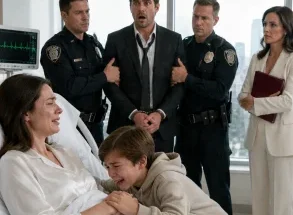
My sister left her five-year-old daughter with me for three days, and I thought I’d only have to put on cartoons and heat up some food. But on the first night
My sister left her five-year-old daughter with me for three days, and I thought I’d only have to put on cartoons and heat up some food.
But on the first night, when I served her a bowl of homemade beef stew, the little girl didn’t even touch her spoon.
Instead, trembling, she asked me, “Uncle… am I allowed to eat today?”
I noticed something I hadn’t seen before.
The way Ruby was looking at me.
Not at Sergio.
Not at the front door.
At me.
Her tiny fingers were wrapped around my shirt so tightly that I could feel her shaking through the fabric.
She wasn’t just scared of the man outside.
She was waiting to see if I would be like everyone else.
Another adult who promised to help…
And then disappeared.
The knocking came again.
Three slow, heavy knocks.
“Robert,” Sergio called from the other side of the door. “I know she’s there.”
My eyes moved toward Ruby.
Her face was completely pale.
“How does he know?” I whispered.
She didn’t answer.
She just stepped backward.
Away from the door.
Away from the voice.
Like even hearing his name hurt.
I grabbed my phone and called the police.
I didn’t care what happened next.
I didn’t care if my sister got angry.
I didn’t care if Sergio tried to explain.
A five-year-old child had asked me if she was allowed to eat.
That was enough.
While I spoke quietly with the emergency operator, Sergio continued outside.
“Robert, you’re misunderstanding everything.”
“You don’t know what happened.”
“You’re only hearing one side.”
Those words.
They sounded exactly like something a guilty person would say.
Because innocent people don’t need to convince you that your eyes are lying.
When I finished the call, I turned around.
Ruby was standing at the bottom of the stairs, holding her doll.
“Uncle…”
“What is it?”
She looked toward the ceiling.
“There.”
I followed her eyes.
At first, I saw nothing.
Then I noticed a tiny red light.
A camera.
Hidden inside the smoke detector.
My stomach dropped.
I slowly looked around my living room.
The feeling of being watched suddenly became real.
The camera in her bedroom wasn’t an accident.
Sergio had been watching.
Watching Ruby.
Watching my sister.
Maybe watching me.
My phone rang.
Unknown number.
I already knew who it was.
I answered.
“How did you get my number?” I asked.
Sergio laughed softly.
“You really think hiding her from me is going to work?”
My grip tightened.
“Stay away from my niece.”
“Your niece?”
His voice changed.
Cold.
“You mean my daughter.”
“You are not her father.”
A pause.
Then he whispered, “You don’t know what I’ve done for that child.”
I looked at Ruby.
Her eyes were full of fear.
“What did you do, Sergio?”
Silence.
Then, “I taught her discipline.”
My blood ran cold.
“That’s what you call starving a five-year-old?”
His breathing changed.
For the first time, he sounded angry.
“You don’t understand.”
“No, I understand perfectly.”
“You think you’re saving her.”
His voice lowered.
“But children need rules.”
I looked at Ruby.
The little girl who asked permission to sit on a couch.
To drink water.
To eat.
That wasn’t discipline.
That was fear.
The police arrived minutes later.
Sergio was still outside.
But when officers approached him, his entire personality changed.
The angry man disappeared.
The charming man returned.
He smiled.
He spoke calmly.
He acted confused.
“I don’t know why everyone is making such a big deal.”
“I’m just trying to bring my daughter home.”
The officers separated us.
They interviewed Ruby.
They interviewed me.
They checked the camera.
Then they found more.
Not only cameras.
A hidden device in Ruby’s backpack.
A tracker.
A microphone.
Sergio had been monitoring her.
Everywhere.
The evidence was enough to stop him from taking her.
But the worst discovery came the next morning.
My sister Paula arrived at my house.
She looked like she hadn’t slept in days.
The second she saw Ruby, she broke down.
“I’m sorry.”
Ruby stood frozen.
She didn’t run to her mother.
She didn’t hug her.
She just stared.
And that hurt Paula more than anything.
Because Paula finally realized what she had allowed to happen.
“Why didn’t you tell me?” Paula cried.
Ruby looked down.
“Because you said not to make problems.”
My sister covered her mouth.
The guilt on her face was unbearable.
Later that day, Paula told me everything.
She had started dating Sergio two years earlier.
At first, he seemed perfect.
He brought gifts.
He cooked dinner.
He told everyone he wanted to be a father figure for Ruby.
But slowly, things changed.
He started criticizing Ruby.
Her eating.
Her clothes.
Her behavior.
He told Paula, “She needs structure.”
“You’re too soft.”
“She manipulates you.”
And Paula believed him.
Because she was tired.
Because she was afraid of losing the relationship.
Because sometimes people don’t notice the cage being built around them until the door locks.
The list I found in Ruby’s backpack wasn’t written by accident.
Sergio had created rules.
Punishments.
Schedules.
He called it parenting.
But it was control.
A week later, investigators discovered more hidden recordings.
Sergio had been documenting everything.
He believed he was proving that Ruby was difficult.
Instead, he had created the evidence against himself.
Months passed.
Ruby stayed with me.
At first, she still asked permission.
“Can I have another cookie?”
“Can I watch another cartoon?”
“Can I leave my toys on the floor?”
Every time, I gave the same answer.
“Yes.”
Slowly, she learned something new.
That home didn’t have to feel like a battlefield.
That food wasn’t something you earned.
That laughter wasn’t something you needed permission for.
One evening, I made beef stew again.
The same meal from the first night.
I placed the bowl in front of her.
For a moment, she stared at it.
Old fear returning.
Then she looked up.
“Uncle?”
“Yes?”
“Can I eat?”
My heart broke.
But this time, I smiled.
“You don’t have to ask anymore.”
She looked at the bowl.
Then she smiled.
A real smile.
Small.
But real.
And she picked up the spoon.
Years later, Ruby was still the same gentle kid.
But she was no longer afraid.
She painted.
She laughed loudly.
She asked questions.
She ran through the house without looking over her shoulder.
One day, when she was older, she asked me, “Why did you believe me?”
I thought about that night.
The empty bowl.
The shaking hands.
The words: Am I allowed to eat today?
And I answered, “Because children don’t know how to pretend when they are hurting.”
She looked down.
Then smiled.
“Thank you for opening the door.”
I knew she wasn’t talking about the front door.
She meant the door she thought every adult had closed.
The door to safety.
The door to being loved.
And I realized something.
Sometimes saving someone doesn’t start with a grand gesture.
Sometimes it starts with a bowl of food.
A quiet voice.
And a child finally hearing the words they should have heard all along.
You are allowed to exist.
You are allowed to be happy.
You are allowed to eat.
But what I didn’t know then…
Was that Sergio’s story wasn’t over.
Not even close.
For months after the police removed him from our lives, everything finally seemed calm.
Ruby started sleeping through the night.
No more standing outside her bedroom door.
No more asking if she was allowed to drink water.
No more hiding pieces of bread under her pillow “just in case.”
That was the thing that broke me the most.
A child who should have been collecting stickers and drawing pictures was preparing for hunger.
She wasn’t afraid of monsters under the bed.
She was afraid of the people who were supposed to protect her.
But slowly, she changed.
The first time she laughed so hard she fell backward onto the carpet, I almost cried.
Because for a moment, I saw the little girl she should have always been.
Not the quiet child who apologized for taking up space.
Not the child who walked like she was afraid the floor would punish her.
Just Ruby.
A five-year-old girl.
My niece.
Happy.
Safe.
But one evening, almost six months after everything happened, my phone rang.
It was my sister Paula.
I answered immediately.
“Is everything okay?”
There was silence.
Then I heard her crying.
Not the kind of crying from sadness.
The kind of crying from fear.
“Robert…”
My stomach tightened.
“What happened?”
“I got a letter.”
“What kind of letter?”
She didn’t answer.
I heard paper moving.
Then she whispered, “From Sergio.”
The room suddenly felt colder.
“He can’t contact you. The court order—”
“I know.”
Her voice cracked.
“But he found a way.”
I looked toward the living room.
Ruby was sitting on the floor, drawing.
Completely unaware.
“What did he say?”
Paula hesitated.
Then, “He said he wants to see Ruby.”
I closed my eyes.
“No.”
“I know.”
“Paula, no.”
“I told him no.”
“Good.”
“But…”
That one word made my chest tighten.
“But what?”
“He said if I don’t let him see her…”
She stopped.
“Paula.”
“He said he has proof.”
“Proof of what?”
My sister started crying harder.
“He said Ruby isn’t telling the truth.”
I felt anger rise inside me.
Of course.
That was his strategy.
Make the victim look unreliable.
Make everyone question the child.
Because if people doubted Ruby, he could regain control.
“Where is he now?”
“I don’t know.”
“Did he threaten you?”
Another pause.
Then, “Not directly.”
That was enough.
Because people like Sergio didn’t always threaten.
They suggested.
They reminded.
They made you afraid without saying the words.
That night, after Ruby went to sleep, I sat alone in the kitchen.
The same kitchen where she had asked me if she was allowed to eat.
I stared at the chair where she sat that first night.
I still remembered her shaking hands.
Her tiny voice.
Her tears.
And I realized something.
The hardest part of saving someone isn’t always getting them away from danger.
Sometimes it’s convincing them they are finally safe.
Because trauma doesn’t disappear when the person causing it leaves.
It stays.
It hides.
It waits.
The next morning, something happened that I never expected.
Ruby came downstairs holding a piece of paper.
“Uncle?”
“Yeah, sweetheart?”
She looked nervous.
“What are you drawing?”
She handed it to me.
It was a picture of our house.
A big sun.
A tree.
A little girl standing next to a man.
I smiled.
“Is that us?”
She nodded.
Then I noticed something.
At the top of the drawing, she had written:
HOME.
Not house.
Home.
I looked at her.
“Ruby…”
She shrugged.
“I know the difference now.”
Those words stayed with me.
Because a five-year-old understood something many adults never learn.
A house is where you sleep.
A home is where you don’t have to be afraid.
A few days later, the police contacted us.
They found something.
Something Sergio had hidden.
Something he never expected anyone to discover.
The camera recordings.
The hidden files.
They weren’t just videos of Ruby.
There were recordings of conversations.
Private conversations.
Sergio had been collecting them.
Saving them.
Building his own twisted version of reality.
But one recording changed everything.
It was from the night Paula left Ruby with me.
The night I found the list.
The night everything came apart.
In the recording, Sergio was talking to someone on the phone.
And his words made my blood freeze.
“She finally broke.”
The other person asked, “Ruby?”
“No.”
A pause.
“Paula.”
My sister’s name.
I felt sick.
Because all this time, I thought Ruby was the only person he controlled.
I was wrong.
He had been controlling my sister too.
The recording continued.
“Once she believes she’s a bad mother, she’ll do whatever I say.”
The room went silent.
Paula covered her mouth.
She heard it too.
The man she trusted.
The man she defended.
The man she thought was helping her.
Had been planning her life like a game.
But then came the sentence that changed everything.
A sentence that proved Sergio never saw Ruby as a child.
Only as something he owned.
“Kids don’t need love.”
His voice was calm.
“They need obedience.”
I looked at my sister.
She was crying.
But this time, there was something different in her eyes.
Not fear.
Anger.
For the first time, Paula wasn’t defending him.
She was seeing him.
Really seeing him.
And I knew something had changed.
Because a mother who finally understands what happened to her child is a force nobody can easily stop.
The legal battle began.
Sergio fought.
He lied.
He blamed.
He created stories.
But every lie collapsed under evidence.
The cameras.
The recordings.
The notes.
The medical reports.
The truth.
Months later, I stood outside the courthouse with Ruby holding my hand.
She was wearing a purple dress.
Her favorite color.
The same color crayon she used to write: I really do want to be good.
She looked up at me.
“Is he going away?”
I knelt down.
“I don’t know what will happen.”
She thought for a moment.
Then asked, “Will he take my food away again?”
My heart broke.
I held her hand tighter.
“No.”
This time my answer was different.
Not because I was making a promise I couldn’t control.
But because I finally understood what she needed.
“You will never have to earn being cared for.”
Ruby looked at me.
Then she smiled.
And walked into that courtroom.
Not as a scared little girl.
But as a child whose voice finally mattered.
And that day…
For the first time…
Sergio wasn’t the person everyone listened to.
Ruby was.
The courtroom was colder than I expected.
Maybe every courtroom is.
Or maybe it only feels that way when a child has to walk into one wearing her best dress and carry the truth adults failed to protect.
The walls were pale beige. The carpet was gray. The seal of the state hung behind the judge’s bench like a promise everyone hoped the room could keep. A clerk shuffled papers. A bailiff spoke in a low voice near the door. Lawyers moved around in dark suits, carrying folders thick enough to hold other people’s nightmares.
Ruby stood beside me with her fingers hooked through mine.
Her little hand was warm.
Too warm.
She always ran hot when she was nervous.
Paula stood on her other side, wearing a navy dress that made her look older than her thirty-one years. Her hair was pulled back tightly. Her face was bare of makeup. She had stopped trying to look fine months ago, and somehow that had made her stronger. She was no longer the woman who apologized before speaking, no longer the woman who glanced at her phone every ten seconds as if expecting instructions from a man she had mistaken for stability.
She was Ruby’s mother now.
Fully.
Frightened.
Ashamed.
But awake.
A woman can sleepwalk through a cage for years.
But when she wakes up, the cage has a problem.
Sergio was already inside when we entered.
He wore a gray suit and a blue tie. His hair was cut neatly. His face was clean-shaven. His expression was calm, even gentle, arranged with the care of a man who knew strangers responded better to smooth surfaces than sharp truths.
He looked at Ruby.
She pressed closer to me.
That was all the testimony I needed.
Sergio smiled sadly, as if wounded by her fear.
A performance.
A good one.
But I had seen the man at my door.
I had heard his voice on the phone.
I had seen the camera light blinking inside my smoke detector.
Some masks look convincing only if you have never seen the hands that hold them up.
Paula saw him too.
For one second, her face changed.
Not fear this time.
Recognition.
Her jaw tightened. Her shoulders straightened. She did not look away.
Sergio noticed.
That was the first crack.
The hearing began with procedural language that made horror sound organized.
Protective order.
Custody petition.
Evidence review.
Surveillance devices.
Violation of contact restrictions.
Child welfare assessment.
The judge, a woman named Judge Marisol Bennett, listened without showing much. She had silver hair, a direct gaze, and the kind of stillness that made people talk too much if they were hiding something.
Sergio’s attorney went first.
He spoke carefully.
Too carefully.
He said Sergio had been a concerned parental figure.
He said Ruby was a sensitive child.
He said Paula had struggled with consistency and Sergio had tried to provide structure.
He said the cameras were misunderstood.
He said the tracker was for safety.
He said the recordings were part of “documentation” because Paula had allegedly been unstable.
He said no one should confuse strict household rules with abuse.
Strict household rules.
I felt Paula go stiff beside me.
Ruby looked up at me.
“What does strict mean?” she whispered.
I leaned down.
“It means someone is trying to make a bad thing sound better.”
She nodded solemnly, as if filing that away for later.
Then our attorney, Vanessa Hart, stood.
Vanessa had been recommended by the detective assigned to the case. She was small, sharp-eyed, and spoke in a soft voice that made people lean in before realizing they had entered dangerous territory.
“Your Honor,” she said, “this case is not about misunderstood discipline. It is about coercive control over a mother and systematic psychological abuse of a child.”
Sergio’s expression did not change.
But his hand moved once against the table.
I saw it.
So did Vanessa.
She began with the list found in Ruby’s backpack.
She read it aloud.
No snacks unless approved.
No second servings.
No crying at meals.
No talking back.
No lying.
No making Mom upset.
No asking for food after bedtime.
Punishments: no dinner, no cartoons, no doll, no bedroom light, no hugs.
The courtroom went silent.
Even the bailiff looked down.
Ruby leaned into my leg.
Paula covered her mouth, tears already falling.
Sergio’s attorney stood.
“Your Honor, we object to characterization—”
Judge Bennett raised one hand.
“The document may be read. Sit down.”
He sat.
Vanessa continued.
She presented photographs of the hidden devices.
The smoke detector camera.
The backpack tracker.
The microphone.
The recordings.
The notes Sergio made about Ruby’s behavior.
One note said: Child responds to food denial more quickly than toy removal.
My vision blurred.
I heard Paula make a sound beside me like something tearing.
That sentence did not come from anger.
It came from observation.
Experiment.
Control.
Vanessa did not raise her voice.
That made it worse.
“Mr. Delgado did not simply punish Ruby,” she said. “He studied which forms of deprivation made a five-year-old child most compliant.”
Sergio looked down.
For the first time, the mask flickered.
Then Vanessa played the recording.
She finally broke.
The other voice asked, “Ruby?”
No.
Paula.
Once she believes she’s a bad mother, she’ll do whatever I say.
Paula closed her eyes.
I thought she might fall.
I put one hand against her back.
She stayed standing.
Then came the sentence.
Kids don’t need love.
They need obedience.
The courtroom was so quiet I could hear the air system.
Ruby’s fingers tightened around mine.
She did not cry.
That frightened me more than if she had.
Children who do not cry at terrible things have often learned crying changes nothing.
Judge Bennett looked at Sergio.
“Mr. Delgado,” she said, “did you say those words?”
His attorney whispered quickly.
Sergio lifted his chin.
“Yes, Your Honor. But out of context.”
The judge’s eyes sharpened.
“Then provide the context in which saying children do not need love becomes acceptable.”
Silence.
For once, Sergio had no sentence ready.
His attorney tried to intervene.
Judge Bennett did not look away from Sergio.
“I am waiting.”
Sergio swallowed.
“I was frustrated. Paula was overwhelmed. Ruby had behavioral issues.”
Paula whispered, “She was five.”
Sergio turned toward her.
There it was.
That flash.
The real face.
Not long.
Not dramatic.
But enough.
His eyes hardened as if Paula had broken a rule by speaking without permission.
Judge Bennett saw it.
“Mr. Delgado,” she said sharply, “you will face forward.”
He did.
Slowly.
The hearing continued.
A child psychologist testified. Dr. Elaine Porter. She had met with Ruby six times. She spoke gently but clearly.
“Ruby displays symptoms consistent with prolonged coercive control and food-related anxiety,” she said. “She asks permission for basic bodily needs. Eating, drinking, bathroom use, sleeping with a light on. These are not typical responses to ordinary household structure.”
Sergio’s attorney asked whether Ruby could have been coached.
Dr. Porter looked at him over her glasses.
“A child can be coached to repeat a sentence. A child cannot be coached to flinch before taking a spoon of food.”
My throat closed.
That sentence would live in me forever.
Then Paula testified.
I feared that most.
Not because she was weak.
Because shame makes truth heavy.
She walked to the stand with both hands clasped. She swore to tell the truth. She sat down and looked at the judge, not at Sergio.
Vanessa asked, “When did you first begin to feel something was wrong?”
Paula swallowed.
“I think I knew before I admitted it.”
That was the first honest sentence.
Good.
She continued.
“At first, Sergio was kind. Very kind. He made me feel like I wasn’t alone. I was tired. Ruby was little. I worked long shifts. I felt like I was failing all the time. He made me believe he had answers.”
Her voice shook.
“He said I was too soft. That Ruby needed boundaries. That if she cried, she was manipulating me. That if I gave in, she would become spoiled.”
She paused.
I saw her grip the edge of the chair.
“And I believed him because believing him meant I wasn’t alone in parenting. It meant someone else knew what to do.”
Vanessa’s voice softened.
“And what changed?”
Paula looked at Ruby.
Ruby was sitting now beside a victim advocate, drawing on a pad with a purple crayon.
“The day Ruby didn’t run to me,” Paula said.
Her voice broke.
“I walked into Robert’s house, and my baby looked at me like she didn’t know if I was safe. That is when I understood I had not only failed to protect her from Sergio. I had taught her not to expect protection from me.”
The courtroom shifted.
Some truths do that.
They enter the room and rearrange everyone in it.
Sergio stared at the table.
Paula kept going.
“I want the court to know I am responsible for not seeing sooner. But I also want the court to know that Sergio worked very hard to make me doubt myself. He recorded me crying and called it instability. He told me Ruby would hate me if I left him. He told me no judge would believe a single mother who couldn’t even control her child.”
She looked at the judge.
“I am afraid of him. But I am more afraid of what happens if my daughter thinks fear is love.”
Vanessa nodded.
“No further questions.”
Sergio’s attorney stood.
He tried to make Paula sound unstable.
He asked about missed appointments.
Late bills.
Tears.
Fatigue.
He asked if she had ever yelled at Ruby.
Paula said yes.
He asked if she had ever forgotten to pack lunch.
Paula said yes.
He asked if she had relied on Sergio because she was overwhelmed.
Paula said yes.
Then he smiled faintly.
“Would you agree, Ms. Reyes, that you were struggling as a mother?”
Paula looked down.
I felt anger rise in me.
Then she lifted her head.
“Yes,” she said.
The attorney’s smile grew.
Before he could continue, Paula added, “And Sergio chose that struggle as the place to put a leash.”
The smile vanished.
Vanessa looked down at her papers.
I saw her mouth twitch.
Judge Bennett wrote something.
Ruby did not testify in open court.
Thank God for that mercy.
Instead, the judge reviewed a recorded forensic interview conducted by specialists. I was not allowed to see the whole thing. Only portions were summarized, and even those felt like being cut slowly.
Ruby explained rules about food.
Rules about crying.
Rules about being good.
She said Sergio watched from “the little red eye.”
She said Mommy got sad when Ruby made problems.
She said Uncle Robert gave her stew and said she could eat.
At that, Judge Bennett stopped reading.
She looked toward me.
Not long.
Just enough.
I did not know whether to feel honored or devastated.
Both, maybe.
The order came that afternoon.
Temporary full custody remained with Paula, under monitored support.
No contact between Sergio and Ruby.
No contact between Sergio and Paula outside legal channels.
Criminal investigation to proceed based on surveillance, coercive control, and child endangerment evidence.
Devices and recordings admitted into review.
Sergio’s request for visitation denied.
But the most important words came near the end.
Judge Bennett looked directly at Sergio and said, “The court finds that Mr. Delgado’s conduct was not discipline. It was control imposed through fear, surveillance, and deprivation.”
Not discipline.
Control.
The word landed like a lock turning.
Sergio’s face emptied.
For a man like him, being named accurately was its own kind of sentence.
Outside the courthouse, Paula collapsed onto a bench.
Not fainted.
Collapsed.
As if her bones had kept her standing only until the order was spoken.
Ruby climbed onto the bench beside her.
For a moment, Paula did not touch her.
I knew why.
She was afraid.
Afraid Ruby would stiffen.
Afraid Ruby would move away.
Afraid the damage had become permanent.
Then Ruby reached out and placed one small hand on her mother’s sleeve.
Paula’s face crumpled.
“Can I hug you?” Paula whispered.
That question was everything.
Not grabbing.
Not assuming.
Asking.
Ruby thought about it.
Then nodded.
Paula hugged her gently.
Carefully.
Like holding a bird that had survived a storm and still wasn’t sure hands could be safe.
I turned away so they could have that moment without my eyes on it.
Vanessa stood beside me.
“You did well,” she said.
“I feel like I failed her too.”
“You opened the door.”
“That doesn’t erase all the doors that were closed before.”
“No,” Vanessa said. “But it matters which door a child finds open first.”
I looked toward Ruby.
She was hugging Paula now, not tightly, not fully relaxed, but she had not pulled away.
That was enough for one day.
The criminal case took longer.
Cases like that do not move with the urgency of the child’s fear. They move at the speed of calendars, motions, evidence logs, attorney schedules, and systems that call delay procedure because procedure sounds better than cruelty.
During that time, Ruby lived mostly with me.
Paula moved into my guest room too for a while.
That was complicated.
I loved my sister.
I also resented her.
Both things occupied the same room.
Some mornings, I woke before dawn and found Paula sitting in the kitchen alone, staring at the refrigerator as if it were a judge.
One morning, she said, “I thought love meant someone helping you become better.”
I poured coffee.
“It can.”
She looked at me.
“But with Sergio, better always meant smaller.”
That was true.
I sat across from her.
“Paula, I need to ask you something.”
She closed her eyes.
“I know.”
“No, you don’t.”
She looked at me.
I set the mug down.
“If Ruby had not asked me if she could eat, would you have left him?”
Her face went pale.
For a long time, she said nothing.
Then she whispered, “I don’t know.”
It hurt.
But I preferred it to a lie.
“Thank you for telling the truth,” I said.
She started crying.
“I hate myself for that answer.”
“You should hate what happened. Hating yourself won’t keep Ruby safe.”
She wiped her face.
“What will?”
“Consistency. Therapy. Listening when she says no. Not rushing her to forgive you because your guilt hurts.”
Paula nodded.
“I can do that.”
“Can you?”
She looked at me then, and for the first time in months, I saw my sister without Sergio’s shadow standing behind her.
“Yes,” she said. “I have to.”
Not I want to.
Not I’ll try.
I have to.
Good.
Sometimes necessity is the first honest form of love after denial.
Ruby’s healing came in small revolutions.
The first time she left crayons on the floor without apologizing.
The first time she asked for seconds and did not whisper.
The first time she spilled milk and froze, then watched me calmly get a towel.
“No yelling?” she asked.
“No yelling.”
“No punishment?”
“No punishment.”
“Because it was an accident?”
“Yes.”
She absorbed that with the seriousness of someone learning a new law of physics.
The first time she told Paula, “I don’t want a hug right now,” Paula cried in the bathroom afterward but did not show Ruby.
I found her there sitting on the closed toilet lid.
“She said no,” Paula whispered.
“Yes.”
“I wanted to say, But I’m your mom.”
“I know.”
“I didn’t.”
“I know.”
She wiped her face.
“It hurt.”
“Yes.”
“But she looked… surprised. Like I listened.”
I leaned against the sink.
“That is how trust starts again.”
Paula nodded.
Then blew her nose loudly enough to make Ruby call through the door, “Mommy, are you honking?”
For the first time in weeks, Paula laughed.
Real laughter.
Messy.
Startled.
Alive.
By winter, Ruby had three safe places: my house, her therapist’s office, and the little art studio in the back of the community center where a retired teacher named Mrs. Alvarez ran free painting classes for children.
Ruby loved purple.
Everything became purple.
Purple houses.
Purple dogs.
Purple suns.
Purple spaghetti.
When asked why, she said, “Purple feels like quiet.”
No one argued.
Mrs. Alvarez knew what had happened in general terms, though not all details. She did not push. Good teachers know that children often paint the door long before they can speak about the room.
One afternoon, Ruby painted a plate.
Just a plate.
White background.
A purple bowl in the middle.
A spoon beside it.
Underneath, in careful letters, she wrote:
Allowed.
Mrs. Alvarez called me.
Not panicked.
Softly emotional.
“You should come see this,” she said.
I arrived fifteen minutes later.
Ruby stood beside the painting, proud and shy.
“Do you like it?”
I knelt.
“I love it.”
“It’s stew,” she said.
“I know.”
“And the word says allowed.”
“I see that.”
She looked down.
“I used to think allowed meant someone else had to say yes.”
My throat tightened.
“And now?”
She smiled a little.
“Now I think some things are already yes.”
I had to turn my face away.
Mrs. Alvarez pretended to rearrange brushes.
That painting still hangs in my kitchen.
Not framed behind glass.
Not made too precious.
It hangs where food is cooked.
Where bowls are filled.
Where yes happens daily.
Sergio’s attorney tried one final strategy before trial.
He offered a plea agreement that involved minimal time, counseling, and no admission of intentional harm.
Vanessa explained it to us at my kitchen table.
Paula listened quietly.
Her hands were folded.
Ruby was upstairs watching cartoons with headphones on.
“No admission?” Paula asked.
“Correct,” Vanessa said. “He would acknowledge poor judgment and emotional misconduct.”
Paula’s mouth tightened.
“Emotional misconduct.”
I almost laughed.
But Paula did not.
She looked at Vanessa.
“No.”
Vanessa nodded slowly.
“This would avoid trial.”
“No.”
“It would avoid Ruby’s recorded interview being examined further in court.”
Paula flinched.
Then looked toward the ceiling.
“She doesn’t have to testify in person, right?”
“No. We can protect her from that.”
“Then no.”
Vanessa studied her.
“Are you sure?”
Paula’s voice shook, but the answer did not.
“He spent years making soft words for ugly things. I won’t help him do that in court.”
That was the moment I knew my sister had crossed fully from fear into truth.
Vanessa smiled faintly.
“Then we go forward.”
The trial began in March.
Rain again.
Always rain at the worst doors.
Sergio’s side continued to argue discipline, misunderstanding, and Paula’s instability. But evidence is patient. It waited through every objection and then stood up again.
The hidden cameras.
The tracker.
The backpack microphone.
The list.
The notes.
The recordings.
The medical evaluation of Ruby’s food anxiety.
The psychologist’s testimony.
The emergency call.
My testimony.
I told the jury about the stew.
About Ruby’s question.
About the knock at the door.
About finding the camera.
I spoke calmly.
Until the prosecutor asked, “Mr. Reyes, what did you think when Ruby asked if she was allowed to eat?”
Then I had to stop.
I looked at the jury.
Twelve strangers.
Some parents.
Some not.
All of them suddenly still.
“I thought,” I said, voice breaking, “that every adult who had heard that child speak before me and failed to understand her fear should have to answer for it, including me.”
Sergio’s attorney stood.
“Objection.”
“Sustained,” the judge said.
But the sentence had already entered the room.
You cannot unhear a child asking permission to eat.
The prosecutor continued.
“Did you believe Ruby was pretending?”
“No.”
“Why?”
I looked at Sergio.
He stared at me with hatred carefully folded beneath his calm face.
“Because fear that deep has a weight. Children that young don’t invent it. They carry it.”
Paula testified after me.
This time, she did not cry at first.
She spoke clearly.
She admitted weakness.
She admitted failure.
She admitted she had ignored signs because Sergio had trained her to doubt her own instincts.
The defense tried to use that against her.
“So you were not a reliable observer?”
Paula answered, “No. I wasn’t. That’s why Sergio chose me.”
The prosecutor looked up sharply.
The jury did too.
Paula continued, “But I’m reliable now because I stopped trying to protect the person who hurt us.”
That sentence landed hard.
Then came the recording.
Kids don’t need love.
They need obedience.
One juror closed her eyes.
Another stared at Sergio as if finally seeing him clearly.
Sergio testified.
That was his mistake.
Men like Sergio often believe their own voice can rearrange reality if given enough time.
He said he loved Ruby.
He said Paula was overwhelmed.
He said he wanted to help.
He said modern children lacked discipline.
He said cameras were protection.
He said food boundaries were healthy.
He said Ruby was dramatic.
He said Paula was emotional.
He said I had always disliked him.
True.
But not legally useful.
The prosecutor approached him slowly.
“Mr. Delgado, you wrote in your notes that food denial produced quicker compliance.”
He shifted.
“That’s being taken out of context.”
“What is the context?”
“I was documenting behavior.”
“A five-year-old’s behavior?”
“Yes.”
“And you wrote that denying food changed that behavior?”
“I wrote that consequences changed behavior.”
“Consequences meaning no food?”
Sergio’s jaw tightened.
“Occasionally.”
The prosecutor let the word hang.
Occasionally.
Then she looked at the jury.
“Did Ruby know when those occasions would happen?”
Sergio said nothing.
“Did she know what behavior would cause food to be withheld?”
“She knew the rules.”
“She was five.”
“She was old enough to learn.”
The room changed.
It was subtle.
But it happened.
The charming man had overreached.
He had allowed the jury to see the philosophy beneath the behavior.
Children need obedience.
Old enough to learn.
Food as consequence.
The prosecutor’s voice softened.
“Mr. Delgado, when Ruby sat in her uncle’s kitchen and asked if she was allowed to eat, did that concern you?”
He looked at me.
Then at Paula.
Then back.
“She was being coached.”
The prosecutor nodded.
“By whom?”
Silence.
“By Robert Reyes?”
Sergio hesitated.
“Possibly.”
The prosecutor clicked something on the screen.
A timestamp from the camera hidden in my living room.
Video from before I knew the camera existed.
Ruby sitting at my table.
The stew bowl in front of her.
Me standing near the counter.
Her tiny voice, barely audible but clear:
Uncle… am I allowed to eat today?
The courtroom went still.
The prosecutor turned back to Sergio.
“This was recorded by your own hidden device, before Mr. Reyes knew he was being recorded. Who coached her?”
Sergio’s face drained.
There was no answer.
Because he had filmed his own truth.
The verdict came two days later.
Guilty on several counts related to unlawful surveillance, violation of protective orders, and child endangerment. Other charges were reduced or merged, as legal things often are in ways that leave families both relieved and unsatisfied.
But the most important thing was this: he was named.
Not strict.
Not misunderstood.
Not concerned.
Guilty.
Sergio stood while the verdict was read.
For once, no speech.
No explanation.
No soft smile.
Only a man discovering that control does not work in every room.
At sentencing, Paula gave a statement.
She stood at the podium with her hands shaking.
“I used to think the worst thing Sergio did was hurt my daughter,” she said. “Then I realized he also tried to make me help him do it. He turned my exhaustion into permission. He turned my fear into silence. He turned parenting into punishment and called it love.”
She looked at the judge.
“My daughter asked if she was allowed to eat. That sentence will live in me forever. I ask the court to make sure he cannot teach another child that care has to be earned through fear.”
Then she stepped away.
I was proud of her.
Furious at her still sometimes.
But proud.
Both can be true.
Sergio was sentenced to prison time, probation conditions afterward, mandatory treatment, and no contact with Ruby or Paula. He was also prohibited from possessing surveillance devices beyond ordinary use without disclosure during the term of supervision.
No sentence felt like enough.
But when the judge said “no contact,” Paula exhaled like she had been holding her breath for two years.
Ruby was not in court for sentencing.
She was at school, painting purple planets.
When Paula told her later that Sergio could not come near them, Ruby asked only one question.
“Can he see through the smoke detector?”
Paula cried.
I answered because she could not.
“No, sweetheart. No more red eyes.”
Ruby nodded.
Then went back to coloring.
Children sometimes accept freedom in pieces.
A nightlight.
A full bowl.
A camera removed.
A locked door that keeps danger out rather than fear in.
The year after trial was quieter.
Not easy.
Quiet.
Ruby and Paula moved into a small apartment three miles from my house. Two bedrooms. Yellow kitchen. Balcony with a stubborn tomato plant Ruby named Mr. Soup for reasons no one understood.
I helped them move.
Paula insisted on carrying boxes herself until she nearly dropped one marked KITCHEN and I told her healing did not require a hernia.
Ruby chose her own room.
That mattered.
The walls were pale blue when they moved in. She wanted purple, of course. Paula bought paint. Ruby picked the shade.
Lavender Storm.
A name that made all of us go silent for a second.
Then Ruby said, “Storms can be pretty if you’re inside safe.”
So Lavender Storm it was.
The first night in the apartment, Ruby called me at 8:12.
“Uncle?”
“Yes?”
“The fridge has food.”
“That’s good.”
“And Mommy said I can have yogurt if I wake up hungry.”
“That’s good too.”
“And the smoke detector is only a smoke detector.”
My throat tightened.
“Yes.”
“Can you come tomorrow?”
“Of course.”
“Not because I’m scared.”
“Okay.”
“Just because.”
I smiled.
“Just because is my favorite reason.”
Paula’s relationship with Ruby rebuilt slowly.
Painfully.
Some days Ruby trusted her.
Some days she did not.
Some nights she crawled into Paula’s bed. Other nights she locked her bedroom door and asked Paula to knock.
Paula knocked.
Always.
Even when it hurt.
Especially then.
That was her penance: not dramatic suffering, but small respect repeated until Ruby’s body believed it.
One afternoon, Paula called me crying.
“She told me she hates me.”
I closed my eyes.
“What did you say?”
“I said, ‘I understand.’”
“Good.”
“Then she screamed that I don’t understand.”
“Also fair.”
Paula laughed through tears.
“I wanted to tell her I’m her mother.”
“But?”
“But mothers can fail.”
That sentence held so much grief that for a moment I could not speak.
“Yes,” I said softly. “They can.”
“Can they come back from that?”
I thought of Ruby touching Paula’s sleeve on the courthouse bench.
“I think some can. If they stop asking the child to make it easier.”
Paula sniffed.
“I’m trying.”
“I know.”
That was enough for the call.
Not for the wound.
But for the call.
Ruby started kindergarten again with a new teacher, Ms. Greene, who had been briefed carefully but not burdened with details. Ms. Greene was young, kind, and had a voice like warm bread. Ruby adored her immediately.
At parent conference night, Ms. Greene told Paula and me that Ruby had begun helping other children open their snacks.
“At first,” Ms. Greene said gently, “I worried she was trying to manage food anxieties by controlling snack time.”
Paula’s face tightened.
“But then I watched more carefully,” Ms. Greene continued. “She asks them, ‘Do you need help?’ And if they say no, she says okay. She’s learning consent through juice boxes.”
I laughed.
Then cried.
Paula did both at once.
Ms. Greene handed us a drawing Ruby had made.
It showed a table full of children eating.
Above it, Ruby had written:
Everybody gets some.
I kept a copy.
Paula put the original on the fridge.
Years passed that way.
Not cleanly.
But forward.
Ruby grew into a girl with big questions and a bigger laugh. She still loved purple. She still hated being watched. She refused to use baby monitors for dolls because “privacy matters.” She became deeply suspicious of smoke detectors until age nine, when I took one apart at the kitchen table and showed her how it worked.
“See?” I said. “No camera.”
She inspected the pieces.
“Can people put cameras in them?”
“Yes.”
Her face changed.
“But not in ours?”
“Not in ours.”
“How do you know?”
“Because we check.”
She thought about that.
Then nodded.
“Checking makes me feel better.”
So checking became part of safety.
Not obsession.
Ritual.
Before sleepovers, we checked corners together.
Before hotel rooms, Paula checked smoke detectors, vents, outlets.
Not because fear should run the world.
Because a child who had been secretly watched deserved to see adults make transparency normal.
When Ruby was ten, she asked to read the rule list Sergio had made.
Paula said no at first.
I understood.
Then Dr. Porter, still Ruby’s therapist after all those years, said, “Curiosity is not regression. It may be integration.”
Therapists say things like that and make them sound less terrifying than they are.
So one Saturday, Ruby sat at my kitchen table with Paula and me.
The list lay inside a plastic sleeve.
Evidence once.
Now history.
Ruby read slowly.
No snacks unless approved.
No crying at meals.
No asking for food after bedtime.
Her face stayed calm until the end.
Then she looked up.
“He was weird.”
Paula made a sound somewhere between laugh and sob.
“Yes,” I said. “He was.”
Ruby looked at the list again.
“I thought I was bad.”
“I know.”
She frowned.
“I wasn’t.”
“No.”
“He wrote it like I was.”
“Yes.”
Ruby pushed the paper away.
“I don’t want it.”
Paula reached for it.
Ruby stopped her.
“Can we burn it?”
Paula looked at me.
I looked at Dr. Porter’s instructions in my head and decided sometimes therapy can be expanded by common sense and fire safety.
We took it to the backyard grill.
I placed the list in an old metal pan.
Ruby struck the match with my hand over hers.
The paper caught slowly.
Black curled over Sergio’s handwriting.
Ruby watched until it became ash.
Then she said, “Can we make burgers now?”
And that was healing too.
A child burning a rule list and asking for dinner.
When Ruby turned twelve, she began asking harder questions about Paula.
Not Sergio.
Paula.
“Why didn’t Mom believe me?”
We were in my truck, driving home from art class. Rain dotted the windshield. She was old enough now to sit in the front seat, long legs folded awkwardly, purple hoodie sleeves pulled over her hands.
I kept my eyes on the road.
“She had been taught not to believe herself,” I said.
Ruby stared out the window.
“That’s not the same as believing me.”
“No. It isn’t.”
“She should have.”
“Yes.”
Ruby’s mouth tightened.
“Do you think she’s a bad mom?”
The question was careful.
Dangerous.
Children sometimes test whether adults can hold two truths.
“No,” I said. “I think she was a scared mom who failed you. And then she became a braver mom who worked to stop failing you.”
Ruby was quiet.
“Is that enough?”
I took a breath.
“That is not a question I can answer for you.”
She looked at me.
“That’s annoying.”
“I know.”
She thought about it for a long time.
Then said, “Sometimes I love her and sometimes I’m mad.”
“Yes.”
“Is that allowed?”
I nearly pulled over.
Allowed.
The old word.
The first word.
Still living somewhere inside her, but different now. Not fear at the table. A girl asking whether her emotional complexity had permission to exist.
“Yes,” I said. “That is allowed.”
She nodded.
Then turned up the radio.
I drove through the rain, hands steady on the wheel, understanding that some words never disappear completely. They change rooms. They change meanings. They become questions instead of cages.
At thirteen, Ruby testified before a state committee.
Not about Sergio specifically.
About child surveillance and coercive control.
A local advocacy group had found Paula through Vanessa and asked whether Ruby would consider submitting a statement. Paula hesitated. I hesitated harder. Ruby said she wanted to.
We asked Dr. Porter.
She said, “Let her decide, but make sure she understands she does not owe her story to anyone.”
Ruby understood.
Her statement was short.
She wore a purple blazer because of course she did.
Paula sat on one side of her.
I sat on the other.
The hearing room had microphones, nameplates, bottled water, and legislators who looked serious in the way adults do when they are not yet emotionally involved.
Ruby leaned toward the microphone.
“My name is Ruby Reyes,” she said. “When I was little, someone put cameras in places where I was supposed to feel safe. He said it was to help me behave. It didn’t help me behave. It made me afraid all the time.”
The room quieted.
“I think adults forget that privacy is part of safety too. Kids need someone to see them when they are hurt. But they don’t need to be watched like they are always doing something wrong.”
Paula cried silently beside her.
Ruby continued.
“I also want to say that food should never be a punishment. Ever. Not for little kids. Not for big kids. Not for anyone.”
She looked down at her paper.
Then up again.
“When I was five, I asked my uncle if I was allowed to eat. I don’t want any other kid to ask that.”
That was all.
She sat back.
The room stayed silent for a moment longer than procedure required.
Then one legislator, an older man with tired eyes, said, “Thank you, Ruby.”
Not Ms. Reyes.
Ruby.
That mattered.
Afterward, in the hallway, Ruby leaned against the wall and exhaled.
“Was that okay?”
Paula hugged her only after Ruby nodded.
“It was more than okay.”
Ruby looked at me.
“Did I sound scared?”
“Yes,” I said.
Her face fell.
“Good,” I added. “Scared and brave often use the same voice.”
She smiled.
Then asked if we could get fries.
We got fries.
Extra.
No one asked permission.
At fifteen, Ruby stopped being gentle for a while.
That happens with teenagers.
It also happens with children whose fear turns into anger once they finally feel safe enough to stop pleasing everyone.
Paula suffered the most.
Slamming doors.
Eye rolls.
Sharp words.
“You don’t get to tell me what’s safe now.”
That one cut.
Paula called me after that fight and said, “I deserved it.”
“Maybe.”
“That’s not helpful.”
“It’s true. Helpful comes after true.”
She sighed.
“I want to defend myself.”
“Don’t.”
“She’s fifteen.”
“Yes.”
“She can be cruel.”
“Yes.”
“I’m supposed to just take it?”
“No. You’re supposed to set boundaries without rewriting history.”
Paula hated that.
Then used it.
The next week, when Ruby shouted, “You didn’t care when it mattered,” Paula said quietly, “I did care. I also failed. You can be angry about that. You cannot call me names while doing it.”
Ruby stormed upstairs.
Then came down twenty minutes later and said, “Fine.”
Paula considered that a victory.
It was.
Healing does not make teenagers easier.
It makes the adults less desperate for the child to validate them.
At sixteen, Ruby painted her first serious series.
She called it Permission.
The paintings were enormous and uncomfortable.
A bowl on a table under a spotlight.
A child standing in front of a closed refrigerator.
A smoke detector with a purple flower growing out of it.
A woman made of mirrors.
A man drawn only as a shadow with a smiling mouth.
And one painting of a door wide open, but beyond it nothing was visible except light.
At the student exhibition, people stood in front of the bowl painting longest.
The title card read:
Allowed to Eat.
I stood beside Paula.
We cried openly.
Ruby pretended not to see because teenagers have reputations to maintain.
A woman approached Ruby after the exhibition.
She was maybe forty, with a little boy beside her holding her hand.
She spoke quietly.
“My son saw your painting. He asked me why the bowl looked sad.”
Ruby looked down at the boy.
“What did you tell him?”
“I told him sometimes bowls remember hunger.”
Ruby’s face changed.
The woman’s eyes filled.
“Thank you for making it.”
Ruby did not know what to say.
So she nodded.
Later, in the car, she said, “I don’t know if I like people understanding it.”
I said, “That’s the risk of telling the truth.”
“Does it get easier?”
“No.”
She looked at me.
“Then why do it?”
I thought about the night of the stew.
The red light in the smoke detector.
The courthouse.
The list burning.
The committee microphone.
“Because somewhere, someone who thought they were alone recognizes the room.”
Ruby looked out the window.
Then whispered, “I used to be alone.”
“Yes.”
“I’m not now.”
“No.”
She nodded.
That was enough.
Sergio was released when Ruby was seventeen.
The notification came through official channels first.
Paula called me before opening the email.
“I can’t,” she said.
“You can.”
“No, Robert.”
“You can. And I’ll stay on the phone while you do.”
I heard her breathing.
Then clicking.
Then silence.
“He’s out next month,” she whispered.
I looked toward the kitchen wall, where Allowed still hung.
“All right.”
“All right?”
“No,” I said. “Not all right. But known. Known is better than unknown.”
Paula cried.
Then we got practical.
Vanessa filed to extend certain protective restrictions where possible. Ruby was old enough to understand and old enough to choose how much information she wanted. She wanted all of it.
“Don’t protect me with vagueness,” she said.
She had earned that.
Sergio did not contact them directly.
For two weeks.
Then a letter arrived at Paula’s apartment.
No return address.
But we knew.
Vanessa told us not to open it at home.
We took it to her office.
Ruby came.
Paula did not want her to.
Ruby said, “It’s my letter too if it’s about me.”
Vanessa opened it with gloves because evidence had rituals.
Inside was one page.
Paula,
I hope enough time has passed for everyone to calm down. I made mistakes, but I also loved you and Ruby more than anyone understood. I have done a lot of work. I would like the chance to apologize face to face. I think Ruby deserves closure. I think you do too.
Sergio
Ruby laughed.
Not loudly.
Coldly.
“I think I deserve a sandwich more.”
Vanessa looked at her.
“Do you want to respond?”
“No.”
“Good.”
Ruby stood.
Then paused.
“Actually, yes.”
We all looked at her.
She took a blank piece of paper from Vanessa’s desk.
She wrote one sentence.
No.
Signed:
Ruby.
Vanessa mailed it through legal channels.
Not because Sergio deserved an answer.
Because Ruby wanted him to receive the word he had never respected.
No.
He did not write again.
Maybe prison had taught him something.
Maybe legal consequences had.
Maybe he simply understood Ruby was no longer a child at a table waiting to be allowed.
At eighteen, Ruby left for art school.
She chose a college two states away, with old brick buildings, winter snow, and a studio program that made her eyes light up when she spoke about it.
Paula struggled.
Of course she did.
She wanted to hover, call, monitor, ask too many questions. Every anxious part of her saw Ruby leaving as risk.
But Paula had learned something.
Fear is not always instruction.
The night before move-in, Paula sat with me on my porch while Ruby packed upstairs.
“I want to put a tracker in her suitcase,” she admitted.
I looked at her.
“I won’t,” she said quickly.
“Good.”
“I just want to.”
“Wanting is allowed. Doing is not.”
She laughed weakly.
“I hate how often parenting is not doing something.”
“Yes,” I said. “Especially when not doing is respect.”
At the dorm, Ruby arranged her side of the room carefully.
Purple quilt.
Art supplies.
Small lamp.
No cameras.
No hidden things.
On her desk, she placed three objects.
A photo of Paula.
A photo of me.
And the framed word from her childhood drawing:
HOME.
Not the whole drawing.
Just the word, cut carefully and framed.
Paula saw it and began crying immediately.
Ruby rolled her eyes.
“Mom.”
“I know, I know. Not dramatic.”
“You are literally dramatic.”
“I’m proud.”
“That’s allowed.”
Paula laughed through tears.
They hugged.
Easily now.
Not perfectly.
Easily.
That evening, before leaving campus, Ruby walked with me to the parking lot.
Students moved around us carrying boxes, pillows, plants, anxieties. Parents cried badly. Teenagers pretended to be embarrassed and secretly liked being loved.
Ruby stopped beside my truck.
“Uncle Robert?”
“Yes?”
“If I get scared, can I call you?”
“Always.”
“But what if it’s stupid?”
“Especially then.”
She nodded.
Then hugged me hard.
I held her.
She was taller now. Almost grown. Still Ruby. Still the child at my kitchen table. Still the girl in the purple dress outside court. Still the artist who burned the list and painted the bowl and told a committee that children should not be watched like suspects.
“Thank you for feeding me,” she whispered.
My heart broke all over again.
Then rebuilt itself around the words.
“Thank you for telling me you were hungry.”
She pulled back.
Her eyes shone.
Then she smiled.
A real smile.
Not small anymore.
The first semester was hard.
Ruby called often at first.
Then less.
That hurt and thrilled us.
Paula would ask, “Have you heard from her?”
I’d say, “Not today.”
She would panic.
Then remember panic was not proof.
Ruby came home for Thanksgiving with purple streaks in her hair and a new vocabulary of art theory that made Paula blink rapidly.
She also came home with a friend named Jordan, who had nowhere else to go for the holiday.
Ruby asked first.
Properly.
“Can Jordan come? They don’t eat turkey, but they make a really good pumpkin thing.”
“Yes,” Paula said.
Then looked at me afterward and whispered, “I said yes without asking if it was convenient.”
I smiled.
“Growth.”
At Thanksgiving dinner, Ruby served herself first.
No one commented.
That mattered.
She took mashed potatoes, green beans, stuffing, and two rolls.
Then she paused, looked at the table, and said, “Everybody gets some.”
Paula cried into the cranberry sauce.
Jordan looked alarmed.
Ruby said, “Family trauma. It’s fine.”
It was not fine.
It was also, somehow, okay.
Years later, Ruby became an art therapist.
No one was surprised.
Her office had purple chairs, shelves of clay, washable paint, a tiny play kitchen, and no overhead camera in sight. She worked with children who had gone quiet too early.
On her first day, she sent me a photo of her office door.
Ruby Reyes, ATR.
Under it, taped temporarily, was a handwritten sign:
You don’t have to be good to be safe here.
I cried in my kitchen.
Then made stew.
Beef stew.
Carrots.
Potatoes.
Onions.
The same recipe from that first night.
Ruby came over after work, tired and glowing with the strange exhaustion of a person who has begun doing what she was made to do.
I placed a bowl in front of her.
She looked at it.
Then at me.
We both remembered.
Of course we did.
Some meals become monuments.
She picked up the spoon.
Paused.
Then smiled.
“Permission?”
I looked at her.
“No.”
Her smile widened.
“Right.”
She took a bite.
Closed her eyes.
And said, “Home.”
When Paula turned fifty, Ruby threw her a party.
Nothing fancy.
Backyard lights.
Music.
Tacos.
Cake.
Purple flowers because Ruby never fully abandoned the bit.
During the toast, Ruby stood with a glass of lemonade.
“My mom and I have not had an easy story,” she said.
Paula froze.
I stood near the grill, ready to catch whatever fell.
Ruby continued.
“When I was little, I didn’t feel safe with her. That is true.”
The backyard went quiet.
Paula’s eyes filled.
“But another truth is that she learned how to become safe. Not quickly. Not perfectly. But she learned. She let me be angry. She let me say no. She knocked on my door. She apologized without asking me to make her feel better. That is also true.”
Paula covered her mouth.
Ruby looked at her mother.
“I love you because of the second truth. I trust you because you never tried to erase the first.”
No one spoke.
Then Paula walked to her daughter and hugged her.
Not tightly.
Not desperately.
Just enough.
Ruby hugged back.
I turned toward the grill because I was crying into tortillas and needed privacy.
Years after Sergio, after trial, after art school, after everything that once felt impossible, Ruby invited me to speak at a conference for child advocates.
I said no.
She said, “Uncle Robert.”
I said no again.
She said, “You opened the door. You can stand at a podium.”
That was unfairly effective.
So I went.
I stood before a room of social workers, therapists, teachers, lawyers, foster parents, and people who had chosen professions that required them to look directly at what many families hide.
I had prepared notes.
Then abandoned them.
“My niece once asked if she was allowed to eat,” I began.
The room changed immediately.
Some sentences do that.
They pull every polite thought out of the air.
“I wish I could tell you I responded perfectly. I did not. I froze. I felt shock before action. I wondered whether I had misunderstood. That is what frightens me most now—not the moment I knew, but the seconds before I let myself know.”
I looked at the room.
“If a child tells you something is wrong in the language available to them, believe the fear before you demand perfect words.”
People wrote that down.
Good.
“Ruby did not say, I am being abused. She said, Am I allowed to eat? She did not say, I am being surveilled. She pointed to a red light. Children often hand us the truth in pieces because pieces are all they have.”
I saw a woman in the front row crying.
I kept going.
“The question is whether we are willing to assemble them before the child has to break louder.”
That was the sentence that later appeared online.
Clipped.
Shared.
Quoted.
But the part I cared about came at the end.
“Saving a child is not always heroic. Sometimes it is inconvenient. Sometimes it costs you your family’s comfort, your sister’s trust, your own denial. Sometimes it begins with calling the police while a man outside your door says you’re misunderstanding everything. Call anyway.”
Ruby hugged me afterward.
“You did good,” she said.
“Thank you, Professor Stew.”
She rolled her eyes.
But she cried too.
I am an old man now.
Older than I feel until I stand too quickly.
Ruby visits on Sundays when she can. Paula comes too, sometimes with groceries, sometimes with gossip, sometimes with silence. We have learned to be a family that does not require constant explanation.
Sergio is a name we say when necessary.
Not a ghost.
Not a forbidden word.
A fact.
Facts lose some power when they are allowed to stand in light.
The Allowed painting still hangs in my kitchen.
The paper is aging now. The purple has faded slightly. The bowl remains.
Children who visit ask about it sometimes.
I say, “Someone I love painted that when she was learning she deserved dinner.”
Adults usually go quiet.
Children understand faster.
One little boy once looked at it and said, “Everybody deserves dinner.”
“Yes,” I told him. “Exactly.”
Ruby heard that from the hallway and cried quietly where no one could see.
Or where she thought no one could.
When I think back to the first night, I remember strange details.
The smell of beef stew.
The rain against the windows.
The weight of Ruby’s fingers gripping my shirt.
Sergio’s voice on the porch.
The red light above the stairs.
But most of all, I remember the space between her question and my answer.
That tiny pause where the whole future waited.
Am I allowed to eat today?
I have spent years wishing I had answered faster.
Louder.
Better.
But Ruby once told me something that helped.
“You answered,” she said. “That’s the part that mattered.”
Maybe she is right.
Maybe saving someone does not require perfect timing.
Maybe it requires finally refusing to look away.
The door I opened that night was not only my front door.
It was the door back into trust.
For Ruby.
For Paula.
For me.
Because I had believed, before that night, that family pain should be handled privately. Quietly. With explanations. With patience. With chances.
Now I know better.
Some doors should be opened to the police.
Some secrets should be dragged into court.
Some men should hear their own recordings played back in front of a judge.
Some children should be told yes again and again until yes becomes part of their bones.
Yes, you can eat.
Yes, you can laugh.
Yes, you can say no.
Yes, you can be angry.
Yes, you can love your mother and still remember she failed.
Yes, you can heal without pretending it didn’t hurt.
And yes, you are allowed to exist without earning the space you take.
That is the lesson Ruby taught all of us.
Not Sergio.
Not the court.
Not me.
Ruby.
A five-year-old girl with shaking hands and an untouched bowl of stew.
She taught us that hunger is not always for food.
Sometimes a child is starving for permission to be safe.
And once she receives it, once she truly believes it, she can grow into the kind of person who opens doors for others.
Not because she owes the world her pain.
But because she knows what it feels like to stand outside safety and wonder if anyone inside will answer.
Ruby answers now.
So does Paula.
So do I.
The stew simmers.
The door opens.
The table has enough.
And no child who enters my house will ever have to ask whether they are allowed to eat.