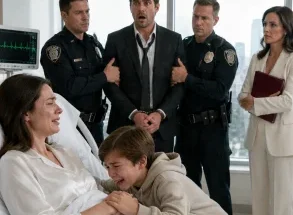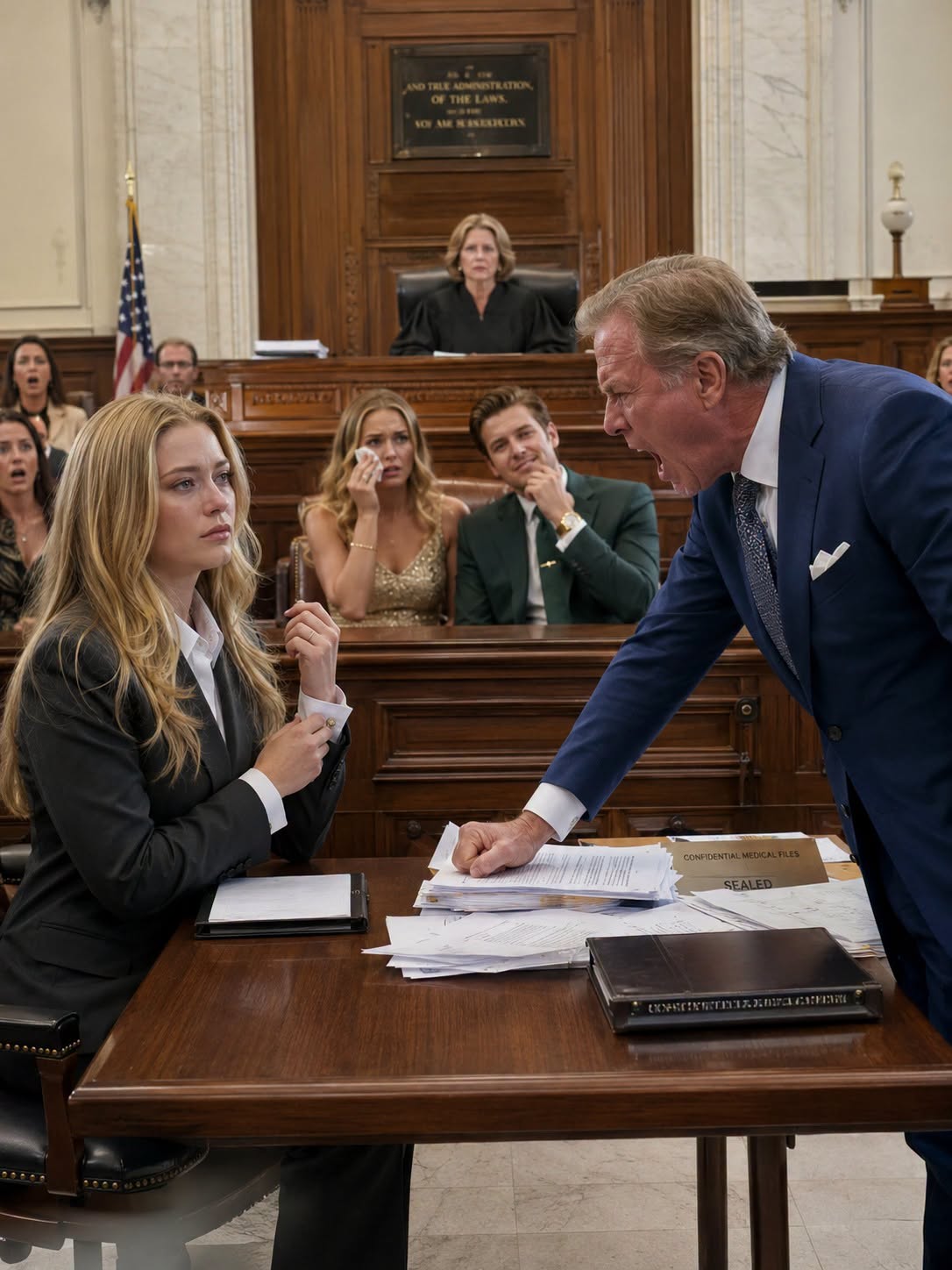
I was homeless for three months after that.
Boston is not gentle to girls with one suitcase, no money, and a family determined to make them look dangerous.
I spent mornings in public libraries because they were warm. I applied for jobs from borrowed computers. At night, I slept in a transit station until a security guard, who pretended not to notice me, let me curl up in a utility closet behind the maintenance room.
I was hungry.
I was ashamed.
I was angry enough to survive.
Then, one rainy Tuesday morning, my grandmother found me.
Beatrice Hayes walked into a cheap diner near South Station wearing a camel coat, pearls, and the expression of a woman who had already made up her mind. She slid into the cracked vinyl booth across from me.
“You look terrible, Blair,” she said.
I tried to apologize.
She raised one hand.
“But you do not look like a junkie.”
That was the first kind sentence anyone in my family had given me in weeks.
I broke down.
Not loudly. Not theatrically.
Just enough for her to see what Richard had done.
Beatrice listened. Then she opened her handbag and placed an envelope on the table.
Inside was a cashier’s check.
Enough for six months of rent.
Enough for CPA exam courses.
Enough for a second chance.
“This is not charity,” she said. “This is an investment.”
I still remembered every word.
“Your father took your education. He took your reputation. He took your safety. Now you are going to learn the language of money, and you are going to become untouchable.”
That was my grandmother.
Sharp.
Patient.
Dangerous in silence.
For the next twelve years, she and I built a secret alliance.
To Richard, Madison, and Jamal, I remained the family disgrace. The addict. The failure. The cautionary tale whispered about over Thanksgiving wine.
Let them whisper.
Let them laugh.
Let them think I was broken.
Let them bury my name at dinner tables.
Let them build their throne over a grave they never checked.
While they mocked me, I studied.
I passed the CPA exams on the first try. I earned a master’s degree in accounting. Then I became a certified fraud examiner. I trained under federal financial crimes investigators. I learned how to trace shell companies, false invoices, pension theft, money laundering, and offshore transfers.
Eventually, I began contracting with federal task forces.
White-collar criminals think they are artists.
They are not.
They are creatures of habit.
They get greedy. They get sloppy. They trust the wrong people. They always leave a paper trail.
My grandmother watched my rise from the shadows.
We met in quiet cafés, hotel lobbies, and once in the parking lot of a grocery store because she said it felt “appropriately dramatic.” She brought me documents sometimes. Not because she needed help, but because she enjoyed watching me solve problems.
She knew Richard was drowning in debt years before he admitted it to himself.
She knew Jamal was not the brilliant hedge fund manager he pretended to be.
She knew Madison had no loyalty to anyone who could not fund her lifestyle.
So when Beatrice got sick, she prepared.
She had three independent doctors evaluate her cognitive function on the day she signed her final will. She recorded video statements. She locked trusts in language so tight that no greedy relative could pry them open.