My Parents Left Me a $1M Mansion. After I inherited my parents’ $1m ocean villa, my brother and sister tried to force me to sign it over. When I said no, they pushed me down the stairs. I woke up in the trauma unit with strangulation marks, cracked ribs, and detectives asking whether I had simply fallen….
Part 1
I did not plan for my first breath back in that house to feel like swallowing memory.
The ocean wind swept across the porch as if it still recognized me, carrying salt, sunlight, and the faint sweetness of lilies pressed against my chest. Their stems felt cool in my hands, solid enough to keep me anchored while grief moved through me in slow, heavy waves. Below the cliff, the sea sighed against the rocks, the same steady sound that had once filled summer evenings when my mother would sit with me on the porch and brush my hair behind my ears before school.
“You are made for gentleness, Emily,” she used to whisper, “even in storms.”
That sentence came back to me as I stood at the white gate of the ocean villa my parents had left me.
Not Mark.
Not Melissa.
Me.
My name is Emily Carter, and I had spent the weeks after their deaths trying to understand why my parents chose me as the sole owner of the house. The villa was worth nearly a million dollars, a pale coastal property built into the cliffside with wide windows, sea-breeze curtains, polished wood floors, and a porch that seemed to float above the water. It was the one beautiful thing my parents had built after a lifetime of working too hard and loving too quietly.
My father had been a man who smelled like sawdust, coffee, and long days. He fixed neighbors’ fences without charging enough, patched broken porch steps before anyone asked, and believed kindness meant showing up with tools before the storm came. My mother worked nights at a diner when we were little, coming home with flour on her cheek, her feet swollen, and hymns humming softly under her breath as she scrambled eggs before finally sleeping through daylight.
They taught me love was not loud.
Love was a hand on your forehead when you were sick. Love was shoes bought before winter, even if your mother’s coat stayed old another year. Love was my father standing in the rain because a widow down the road needed her gutters cleared before the water ruined her kitchen wall.
I became a nurse because of them.
In the ICU, I learned to hold strangers through the worst hours of their lives. I learned how to speak gently when machines were too loud, how to tuck blankets around bodies fighting to stay alive, how to keep my voice steady when families broke apart at bedside. I had seen pain, fear, and the terrible ways people could turn helplessness into anger.
Still, nothing prepared me for what my own brother and sister would do in the house where our parents’ love should have protected me.
The keys trembled in my palm as I walked up the gravel path. I told myself it was grief. I told myself my hands shook because I was returning alone, because my parents’ voices still lived in every window, every polished banister, every framed photo I knew would be waiting inside.
“Mom,” I whispered, barely louder than the sea, “we’re home.”
I wanted to believe peace lived there.
I needed to believe it.
The front door gleamed in the late afternoon sun. I turned the key, and the lock clicked open with a familiar softness that nearly broke me. Curtains stirred inside, lifted by the sea breeze like the house itself was breathing. Hardwood shone under golden light. For one fragile heartbeat, everything felt right.
Then a footstep behind me shattered the moment.
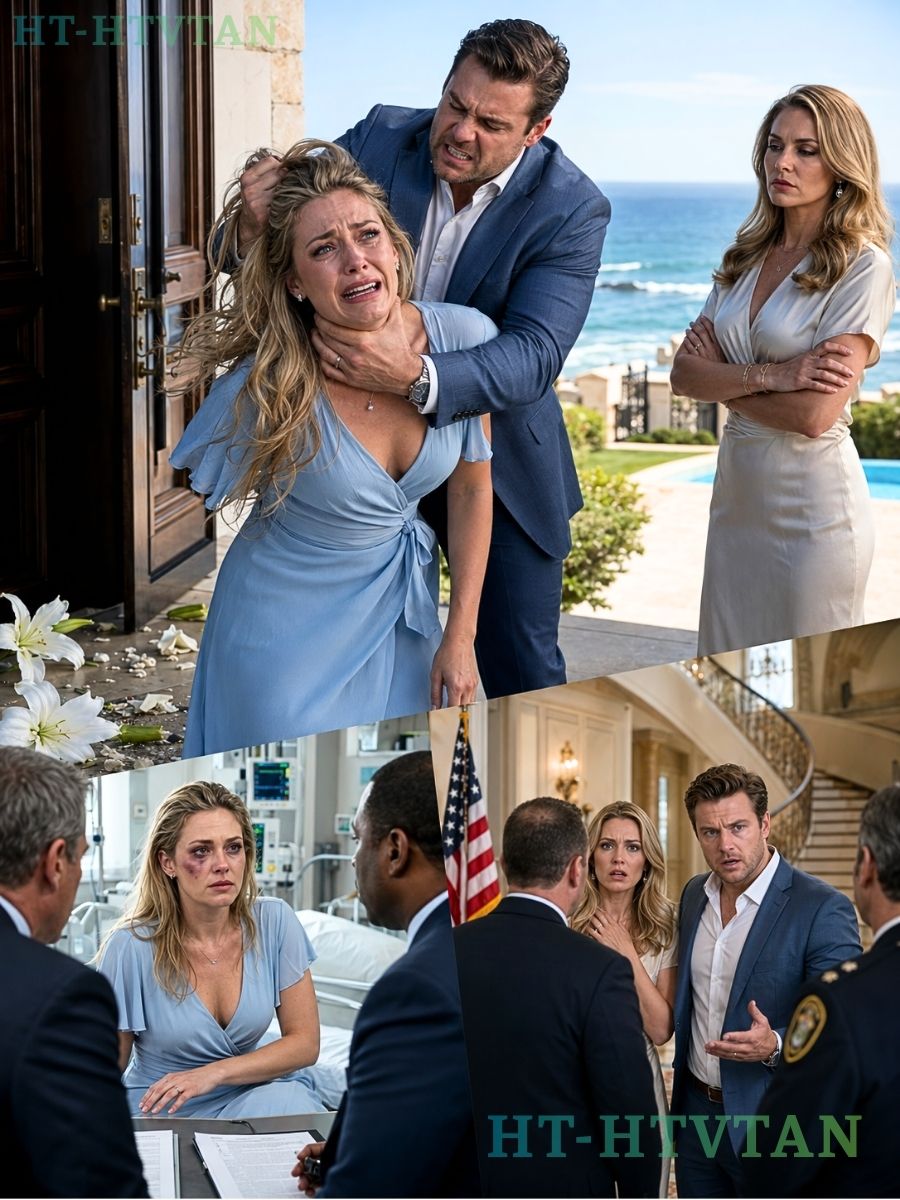
Pain exploded across my scalp as fingers fisted in my hair and yanked me backward so violently the lilies flew from my arms. They hit the floor in a pale scatter, petals breaking loose like little white prayers. My skull slammed into the doorframe, and my vision burst into static.
I gasped.
A hand clamped around my throat.
The smell reached me before the voice did, sweat, anger, and something bitter that had been rotting for years beneath polite family dinners and estate phone calls.
“Emily,” my brother Mark breathed into my ear. “Dad loved you more.”
His fingers tightened.
“Let’s see if heaven loves you too.”
I clawed at his wrist, but he squeezed harder, cutting off sound, air, and dignity in one brutal motion. My knees weakened. My pulse thundered in my ears. Panic flashed hot and wild through my chest, but my body could not find enough air to scream.
Melissa stood by the door.
My sister did not look frightened. She did not look shocked. She stood there with her arms folded, face still as glass, a smirk curling at the corner of her mouth like this was a performance she had waited years to star in.
“No one will believe you,” she said softly. “You’re the good daughter, remember?”
That almost hurt worse than Mark’s hand around my throat.
Because she knew.
She knew exactly how the family saw me. Responsible Emily. Gentle Emily. The nurse. The caretaker. The daughter who remembered birthdays, handled hospice paperwork, brought food, paid bills, and swallowed her own exhaustion because somebody always needed something from her.
Mark shoved me forward, then loosened his grip just enough for breath to rip back into my lungs in broken shards.
“Sign the house over,” he growled. “Or we finish what we started.”
The house.
Of course.
That was all this had ever been to them.
Not grief. Not fairness. Not one last conversation about what our parents wanted. Mark and Melissa had not come to mourn inside the villa. They had come to take it, to force my hand, to turn inheritance into a threat and my mother’s final gift into another thing they believed I should surrender for the sake of family peace.
I shoved backward with instinct, not strength.
Mark stumbled half a step.
Enough.
Enough to pull away.
Enough to run.
My hand found the staircase railing, fingers trembling like thin branches in wind. I turned toward the stairs because the front door was blocked, because my phone was in my pocket, because all I could think was get out, get help, keep breathing.
Then Mark’s palm slammed between my shoulders.
My body pitched forward into empty air.
The world flipped.
Wood struck bone.
Pain detonated in my spine, then my ribs, then my skull. My shoulder hit a stair edge. My hip twisted wrong. The banister blurred past in fragments of light and shadow. Everything went sharp, then blurry, then unbearably loud.
When I stopped falling, I lay curled at the foot of the stairs, shaking uncontrollably.
My breath came fractured.
A metallic taste filled my mouth.
For several seconds, I could not understand where I was. The ceiling tilted above me. The walls stretched too far away. The scattered lilies lay above on the landing, one petal torn and clinging to the wood, absurdly delicate in the middle of all that violence.
My mother’s favorite flower.
Take the house, Emily, and rest.
That had been one of her last whispers at hospice, her voice thin but certain, her hand small and warm in mine.
Rest.
The irony burned.
I reached blindly for my phone. Blood smeared across the screen as my thumb trembled over the numbers.
Nine.
One.
Mark stomped down the steps two at a time, rage pouring off him like heat from asphalt.
Melissa lifted her phone and angled it toward me.
She was recording.
“Drama queen,” she murmured, delight wrapped around the words like ribbon on a gift.
If humiliation could bruise skin, mine would already have been purple.
My thumb found the last one.
Call.
A ring.
A click.
A faint voice.
“Emergency services. What is your location?”
My chest spasmed.
“Help,” I choked out. “Family house.”
The words came apart, fragile as soap bubbles in wind.
A shadow fell across me.
Mark laughed low.
“Pathetic.”
His boot nudged my ribs.
Pain flared white.
Then a voice came from outside.
“Everything okay in there?”
A neighbor.
Melissa snapped toward the door. “Family matter. Stay out of it.”
Family matter.
The phrase had covered so many sins in so many homes. Family matter meant silence. Family matter meant don’t interfere. Family matter meant victims should keep their pain tidy so outsiders could feel comfortable walking away.
I dragged myself toward the hallway.
My nails scraped tile. My body refused to quit even as consciousness threatened to slip from me. I tried to speak again, but my voice dissolved into air.
Then sirens shattered the coastal quiet.
Mark cursed.
Melissa stopped smiling.
Hands grabbed me, but not theirs this time. Uniforms. Blue flashes across my half-open eyes. A mask pressed over my mouth, and oxygen flooded in, cool and sharp.
“Hold on, ma’am,” a paramedic murmured. “You’re safe now.”
Safe.
The word felt foreign.
He lifted my hand. “Squeeze if you hear me.”
My fingers barely moved.
But they moved.
He nodded, voice softening. “Good. Stay with me.”
As they lifted me onto the stretcher, I heard the ocean again, still moving, untouched, peace existing somewhere even if it had slipped through my hands. The ceiling of the ambulance blurred above me. The siren wailed, slicing through the coastal night.
I tried to speak, but the mask muffled everything.
Tears slid sideways into my hair.
The paramedic pressed my hand. “You are not alone.”
The last thing I felt was motion.
Forward.
Away from them.
Away from the house.
Away from the stairs.
Then darkness rolled in like a tide and pulled me under.
Part 2….
When consciousness returned, it arrived like broken light through dirty glass, flickering and reluctant.
I felt weight first, a heavy pressure across my chest that was not a blanket but pain. My ribs burned as if fire lived between each bone. Something tugged at my arm. An IV line. A monitor beeped nearby, steady and clinical, a heartbeat that was mine but felt borrowed.
The scent came next.
Antiseptic. Latex. A faint trace of warm coffee somewhere beyond the curtain.
My eyelids lifted slowly, and the world assembled in painful pieces. White ceiling tiles. Fluorescent lights. The crisp blue cuff of a nurse’s uniform. Then a hand brushed my forehead, gentle and practiced.
“You’re safe, Emily,” the nurse whispered.
Safe.
The word floated inside me without landing.
My throat felt raw, scraped hollow from Mark’s fingers and the screams that had barely escaped. The nurse lifted a cup with a straw.
“Just a sip. Small. Don’t force it.”
Water touched my lips, and swallowing felt like dragging glass through my throat.
“You’re in the trauma unit at Bay View Medical,” she said. “You arrived by ambulance. Concussion, rib fracture, severe bruising.”
She hesitated.
“And strangulation marks.”
The room tilted.
Strangulation marks.
Reality crawled back in cold and merciless. Fingers on my neck. Breath stolen. Melissa’s smile behind her phone. My brother’s voice asking whether heaven loved me too.
The monitor chirped faster.
“Breathe with me,” the nurse said, placing her hand lightly over mine. “In. Out. Slow.”
The curtain slid aside.
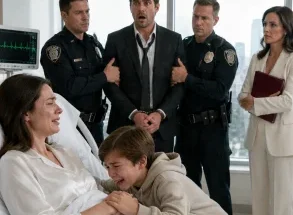
Two men in plain clothes stepped in. Detectives. One older, with tired eyes and a softness around the edges earned from years of seeing broken people before broken laws. The other younger, stiff-backed, his suspicion worn like armor.
“Miss Carter,” the older one said gently. “I’m Detective Ruiz. This is Detective Hall. We need to ask a few questions.”
Hall spoke before I could nod. “Can you tell us what happened? Did you fall? Were you drinking?”
The questions hurt more than I expected.
The nurse stiffened beside me. “She did not fall. There are handprint bruises on her neck.”
Hall shrugged slightly. “A lot of family disputes look violent but don’t go anywhere. Emotions run high.”
His tone implied my story had already been sorted into a drawer marked complicated.
Something inside me wilted.
Trauma does that. It folds you before you can stand.
Detective Ruiz shot him a look, then leaned closer to me.
“Emily, someone hurt you. We need to know so we can protect you.”
My throat burned.
The word came before sound did.
“Family.”
Ruiz nodded slowly. “Your brother and sister? Mark and Melissa Carter?”
“Yes,” I rasped. “They attacked me. For the house.”
The phrase sounded unreal, like a line from someone else’s tragedy.
But it was mine.
“Did they threaten you?” Ruiz asked.
I closed my eyes.
Let’s see if heaven loves you too.
Sign the house or we finish what we started.
“Yes,” I whispered. “They said they would <kill> me if I didn’t sign.”
Ruiz’s expression hardened.
“That is attempted homicide.”
The nurse touched my arm. “People who hurt you don’t get to be called family.”
Such a simple sentence.
Such impossible mercy.
My ribs ached. My throat burned. My heart felt cracked, but still beating.
For the first time since the stairs, I felt something rise through the fear.
Not revenge.
Not yet.
Recognition.
Surviving was not weakness.
It was the beginning of the fight.
SAY “OK” IF YOU WANT TO READ THE FULL STORY — sending you lots of love 

I did not plan for my first breath back in this house to feel like swallowing memory. The ocean wind swept across the porch as if it still recognized me. Salt and warmth touched my skin, soft as my mother’s hands used to be when she brushed my hair behind my ears before school and whispered, “You are made for gentleness even in storms.
” I stood at the white gate holding liies against my chest. Their stems felt cool, solid, almost grounding. My shoes crunched lightly on the gravel path. A quiet homecoming. A daughter returning to a promise kept. “Mom, we are home.” I whispered voice barely louder than the sea, sighing below the cliff. The keys trembled in my palm as though they too carried my parents’ ghosts.
I wanted to believe peace lived here. I needed to believe that. The front door gleamed in the golden wash of late afternoon sun. My heart beat slow, heavy, tired. Grief had softened into something like silence these past weeks. I turned the key. The lock clicked open. Familiar trusting. Air stirred from inside curtains moving like breath.
The house welcomed me, or so I thought. I lifted the flowers to my nose, inhaled their clean, sweet scent, and stepped in. Hardwood shone. Seabbze moved across my face. A quiet hum of life without pain. For one fragile heartbeat, everything felt right. Then a footstep behind me shattered the moment. My scalp ignited in pain as fingers fisted in my hair and yanked so violently the liies slipped from my hands and fell like broken prayers across the floor.
My skull slammed into the doorframe. My vision burst into white noise. I gasped. A hand clamped around my throat. I smelled sweat and anger, and something bitter like jealousy turned rotten through years. Emily, my brother Mark, breathed into my ear like a threat disguised as a greeting. Dad loved you more. Let’s see if heaven loves you, too.
My fingers clawed at his wrist, but he squeezed harder, cutting off sound and dignity in one crushing motion. Melissa stood by the door, arms folded, face still as glass. A smirk curled at the edge of her mouth like this was a performance she had waited years to star in. “No one will believe you. You are the good daughter, remember?” she said, voice dipped in honeyed venom.
Panic scattered through my chest. My knees buckled. Mark’s voice dropped to a growl. Just sign the house or we finish what we started. His grip loosened just enough for breath to rip back into my lungs in jagged shards. I shoved backward with instinct, not strength. He stumbled half a step. Enough. Enough to pull away. Enough to run.
My hand reached the staircase railing, fingers trembling like thin branches in wind. I turned to flee. His palm slammed between my shoulders. My body pitched forward into empty air. The world flipped. Wood struck bone. Pain detonated in my spine, then my ribs, then my skull. Everything went sharp. then blurry, then unbearably loud.
When I stopped falling, I lay curled at the foot of the stairs, shaking uncontrollably, breath fractured. A metallic taste filled my mouth. I reached blindly for my phone, blood smearing across the screen like a signature of desperation. Nine. One. My thumb trembled. Mark stomped down the steps two at a time, rage pouring off him like heat from asphalt.
Melissa lifted her phone and angled it at me. “Drama queen,” she murmured, recording my agony as entertainment. “If humiliation could bruise skin, mine would have been purple already.” I pressed call. A ring, a click, a faint voice. Emergency services. What is your location? My chest spasmed. Help! I choked out. Family house.
The words wavered fragile as soap bubbles in wind. A shadow fell across me and Mark’s laugh rumbled low. Pathetic. His boot nudged my ribs. Pain flared white. Then a sound from outside. A neighbor’s voice. Everything okay in there? Melissa snapped toward the door. Voice sharp. Family matter. Stay out of it. My breathing hitched.
I dragged myself toward the hallway. Nails scraping tile body, refusing to quit even as consciousness threatened to slip. Please. I tried again, but my voice dissolved to air. The liies I dropped lay scattered on the floor above me. One petal tore down the stem and clung to the wood. A strange quiet detail in the middle of chaos. My mother’s favorite.
I thought of her smile, her tired eyes at hospice, her last whisper. Take the house, Emily, and rest. The irony burned, the world tilted, sound distorted. Melissa crouched beside me, phone still raised. “You brought this on yourself,” she whispered delight curling around her words like ribbon on a gift. Something inside me broke.
“Not bone, something older, something human.” Then sirens shattering the quiet. Mark’s voice cursed. Hands grabbed me. Not theirs. Uniforms. Blue flashes across my halfopened eyes. A mask pressed over my mouth. Oxygen flooded in cool and sharp. Hold on, ma’am. A paramedic murmured. You are safe now. Safe.
The word felt foreign. He lifted my hand. Squeeze if you hear me. My fingers barely moved, but they moved. He nodded, voice softening. Good. Stay with me. As they lifted me onto the stretcher, I heard the ocean again, still moving, untouched. peace existing somewhere, even if it had slipped through my hands. The ceiling of the ambulance blurred overhead.
The siren wailed, slicing through the quiet coastal night. I tried to speak, but the mask muffled everything. Tears leaked sideways into my hair. The paramedic pressed my hand again. You are not alone. The last thing I felt was motion, forward, away from them, away from violence, toward whatever came next. Then darkness rolled in like a tide and took me under.
When consciousness returned, it arrived like broken light through dirty glass, flickering, unsteady, reluctant. I felt weight first, a heavy blanket pressing down on my chest that was not a blanket at all, but pain. My ribs burned as though fire lived between each bone. Something tugged at my arm. An IV line. A monitor beeped steadily nearby.
A heartbeat that was mine but felt borrowed. The scent hit me next. Antiseptic latex. A faint undertone of warm coffee from somewhere beyond the curtain. My eyelids lifted slow, sticky, and the world came into focus in soft, painful pieces. White ceiling tiles, harsh fluorescent light, the crisp blue cuff of a nurse uniform.
when a hand brushed my forehead gentle and practiced. “You are safe, Emily,” she whispered. Voice a low hum meant to anchor me to this room and not the nightmare I had come from. “Safe?” The word floated uncertain like it did not know where to land inside me. My throat felt raw, as if someone had scraped my voice away with gravel.
The nurse lifted a cup with a straw. Just a sip. Small. Do not force it. Water touched my lips and I swallowed each movement a jagged reminder of where violence had lived just hours earlier. I tried to speak air scraping my throat like sandpaper, but only a rasp escaped. The nurse shook her head lightly. Do not rush.
You are in the trauma unit at Bay View Medical. You arrived by ambulance. Concussion, rib fracture, severe bruising. She hesitated before adding and strangulation marks. The room tilted. Strangulation marks. Reality crawled back in cold and merciless. A memory flash burned behind my eyelids. Fingers on my neck.
Breath stolen the way Melissa smiled through it. My chest tightened. The monitor chirped faster. Breathe with me. The nurse whispered, placing her hand lightly over mine. In, out, slow, anchored. The curtain slid aside, and two men in plain clothes stepped in. Detectives, one older, with tired eyes and a softness around the edges, the kind of softness earned from years of seeing more broke souls than broken laws.
The other younger posture, stiff gaze, sharp suspicion worn like armor. Miss Carter, the older detective, said, voice gentle. I am Detective Ruiz. This is Detective Hall. We need to ask you a few questions. The younger one spoke before I could nod. Can you tell us what happened? His tone held curiosity, but also something else. Doubt.
The nurse stepped closer to my bed, protective. Let’s start slow. Detective Ruiz corrected quietly. Miss Carter, do you know where you are? I forced my voice through damaged vocal cords. Hospital. His nod was calm. Do you remember how you got here? Ambulance. My hand trembled, fingers curling slightly as if still gripping my phone from the stairs.
The younger detective crossed his arms. “Did you fall?” “Were you drinking, ma’am?” The question stabbed deeper than any bruise. The nurse stiffened beside me. “She did not fall,” she said, voice sharp but controlled. “There are handprint bruises on her neck.” Hall shrugged slightly. A lot of family disputes look violent but do not lead anywhere. Emotions run high.
People say things. His tone implied a story already chosen before mine was even spoken. Something inside me wilted for a moment. Trauma does that. It folds you in half before you can stand. Ruiz shot him a look and leaned closer to me. Emily, is it all right if I call you that? I nodded weakly. Emily, someone hurt you.
We need to know so we can protect you. My throat burned as I tried to speak. My mouth formed the word before sound came. Family. Ruise nodded slowly, encouraging. Your brother and sister Melissa and Mark Carter. My voice cracked. Yes, they attacked me. For the house. The phrase sounded surreal, leaving my lips like a story line from someone else’s tragedy.
But this was mine. Hall exhaled like he had heard this type of story too many times, but never believed it any of those times. Inheritance arguments. Been seeing those since I started. Nobody wants to be left out of a will. Ruise ignored him. Emily did. They threaten you. I closed my eyes.
His words returned like ghosts dragging chains. Let’s see if heaven loves you, too. Just sign the house or we finish what we started. I nodded. Yes. They said they would kill me if I did not sign. Ruiz expression hardened. That is attempted homicide. Hall shifted but held back comment when Ruiz shot him another warning glance.
The nurse lifted my hospital gown collar slightly. Finger-shaped bruises darkened my neck in angry purples and deep sickly red. Rui’s jaw clenched. We will get photographs and record your statement formally when you are stable. For now, I need you to know we believe you. It was such a simple sentence, but it cracked something open in my chest.
Belief is oxygen when all you have known is suffocation. Hall sighed as if this complicated his day. We will need proof before we can move to arrest. Cameras witnesses financial motive. He looked at my bruised throat again and hesitated, but it does not look good for them. Something flickered in me. The beginning of strength, small but real.
The nurse touched my arm. You are not alone,” she whispered. “People who hurt you do not get to be called family.” My breath trembled. My ribs achd. My heart felt cracked, but beating anyway. And for the first time since my body hit those stairs, I felt a spark not of fear, but of something else. Not revenge. Not yet.
Recognition. That surviving is not weakness. It is the beginning of the fight. Hall scribbled something in his notebook. Ruiz gave me one last reassuring look. We will come back soon, Emily. Rest. The curtain closed behind them. Machines hummed. My breath steadied. A tear slipped down my cheek. But this time it was not just pain.
It was clarity. Family had hurt me. But strangers had believed me. A nurse had protected me. A detective had promised justice. And somewhere in this white, sterile room, my mother’s voice surfaced like a prayer. Stand when it is time, Emily. Stand. I closed my eyes, and for the first time since the stairs, I felt like maybe I would.
I am Emily Carter, and before the world twisted itself into the shape of betrayal and hospital ceilings, I was someone who believed loyalty could save people. I grew up in a small rental home where the carpets were always a little worn and the walls held years of family noise and hope. My father worked with his hands, the kind of man who came home smelling like sawdust and determination, who fixed neighbors fences and refused to take money because kindness felt like a richer currency to him.
My mother worked nights at a diner, brushing flour from her cheek every morning before waking us up for school, humming hymns under her breath as she scrambled eggs and kissed my forehead, then drifted off to sleep while sunlight painted her tired face. I learned early that love is not loud. It is quiet hands cleaning grease from a jacket.
Quiet voices for giving late rent notices. Quiet courage walking into another double shift because your children need shoes. I became a nurse because of them. because they taught me that tending to pain is a sacred calling. In the ICU, I saw strangers at their worst moments and held their hands anyway. I wiped faces, fixed blankets, whispered comfort into rooms where machines beeped like fragile hearts, learning to survive.
Continue reading….
I learned to breathe through chaos, to focus through fear, to stay standing when life tried to kneel me. Those skills did not save me from my siblings, but they are saving me now. I was the eldest. Responsibility sat on my shoulders before I even understood the word. While other children played tag in summer evenings, I sat with utility bills spread on the kitchen table, helping my mother count tips and decide which invoice could wait one more week.
I learned nothing stretches like love except sacrifice. Mark and Melissa never felt that weight. They drifted through school like leaves on a stream, doors opening without effort. their mistakes cushioned by parents who refused to stop believing that one day they might turn their faces toward the light. But they did not.
Mark grew tall and broad-shouldered and hollow where honor should have lived. His anger arrived before his facial hair sharp and sudden breaking things he claimed he never meant to break. Melissa grew soft and cruel, the kind of child who cried sweet tears to get what she wanted, then smirked when she thought no one was watching.
I was the one who stayed. I called doctors when my mother first forgot how to button her blouse. I was the one who noticed my father hands shaking when he tried to sign a receipt. I helped him guide the pen, felt his embarrassment bloom red across his cheeks, watched him gather his dignity and stand again. I gave them my weekends, my lunch breaks, my nights.
I sat in waiting rooms reading tightly folded pamphlets about elder care and memory decline while my siblings posted photos at rooftop bars with glittering city lights behind them and captions about living your best life. They never said mother’s memory was failing or father back was crumbling. They never visited hospice at dawn when the halls smelled like bleach and fading hope.
I held my mother’s hand as her breath thinned and she whispered, “Keep them safe, Emily.” She did not mean safe from the world. She meant safe from themselves. She looked at me like I was her anchor and her apology at once. My father died 6 months later, his lungs too tired from years at dusty job sites, his heart broken in quiet ways by a lifetime of providing more than he kept for himself.
He placed his hand on mine near the end, fingers rough and warm even then, and said, “When we are gone, that house is your peace.” I told him I would protect it. I did not know then that protecting it meant protecting myself, too. The villa by the ocean was their dream saved for through decades of coupons and shaking hands, pouring change into envelopes labeled hope.
They never traveled. They never owned a new car. But they believed in sunsets over water and mornings filled with salt air. They believed in a place where I could one day rest after years of holding everyone else together. They thought my siblings would understand. They did not know that envy grows fast when watered with entitlement.
People think the strong ones do not break. They think the ones who stay steady will always stay. But strength fatigues even mountains erode. I did not crumble under the weight of responsibility but under the violence of betrayal. Still I am here breathing, healing, remembering who I am. A daughter who loved hard. A caretaker who gave without keeping receipts.
A woman who thought family meant safety. Now I know better. Family is not blood. Family is who stands when pain arrives. In that hospital bed, I realized something sharp and necessary. I have lived my life believing endurance was noble and silence was strength. But silence is not strength. Silence is surrender dressed up as grace.
And I am done surrendering. My parents raised me in love, not weakness. They taught me to help, but also to stand. They taught me faith, but also fire. If they could see me now in this sterile room with bruises blooming across my skin like dark flowers, I know exactly what they would say. Fight for yourself, Emily.
Fight the way we fought for you. And somewhere beneath the ache in my bones and the sting in my throat, I feel a spark flicker to life. Not rage, not revenge, resolve. The kind that builds quietly until it becomes unstoppable, like a wave crossing the ocean, ready to break strong against the shore. I will not be defined by what they did to me.
I will be defined by what I rise to do next. My siblings were not always monsters. I remind myself of that sometimes, not to excuse what they did, but to understand the slow corrosion that turned blood into blades. Childhood paints everyone soft around the edges, even those destined to become cruel. When we were young, Mark used to chase me through sprinklers in the yard, while our mother hung laundry on clothes lines that sagged like tired shoulders.
He laughed loud back then, bright and unbroken. Melissa used to braid my hair, tiny fingers, clumsy but earnest, tying mismatched ribbons she stole from my mother’s sewing drawer. We were three children under one small roof, hungry for attention for approval for love. But love was often lopsided and effort distributed unevenly.
I worked not in the way adults do, but in the way eldest daughters do. I watched my mother rub aching wrists under running water after shifts, so I learned to wash dishes and fold laundry before I learned multiplication. I carried responsibility before backpacks fit my shoulders right. Mark and Melissa carried expectation without effort.
I do not blame them for how they were raised, only for how they weaponized it later. My parents gave them softness, believing softness builds kindness. But without discipline, softness hardens into entitlement, dense enough to sink ships. In school, I studied until midnight, while Mark coasted by on charm and athletics never held after class, because every teacher believed a boy with such a bright grin could not possibly be lazy.
Melissa perfected the art of appearing fragile enough to protect fluttering lashes and sighing about headaches when assignments came due, then posting photos later with glitter gloss smiles. I tutored them both. They rolled their eyes through every session. At birthdays, I asked for books or used lab coats from the discount store.
Mark asked for a gaming console. Melissa asked for a spring break trip with friends. They got both. I got a hug and a proud smile, which should have been enough, except sometimes I wondered what it felt like to be spoiled without guilt. When I graduated nursing school, my parents cried like they had watched me rise from the dust of every sacrifice they ever made.
They saved for a month to buy me one pair of white leather shoes for my first hospital job. Mark shrugged and asked if he could borrow money for a new truck battery. Melissa told me nurses were noble, but she could never do it because hospitals smelled like fear. She said fear like it was a stain only meant for others. I bought the battery.
I paid my first month of rent. I worked night shifts that hollowed my bones but filled my pride. Meanwhile, Mark lost job after job, citing bad bosses, unfair hours, impossible expectations. More than once, my father drove across town late at night to pick him up from bars because Mark insisted he was too important to be seen taking a ride share home.
Melissa bounced between short-lived ambitions, influencer, stylist, entrepreneur, and wellness. All funded by excuses and our parents’ hope. I covered bills when my father back gave out. I covered medication for my mother when her memory slipped like sand through fingers. I covered rent for Mark after he claimed his landlord targeted him out of jealousy.
I covered credit card debt Melissa swore she would pay off once her business exploded. It exploded only in the sense that everything scattered and nothing survived. The resentment grew quietly at first, like mold hidden behind walls. A small remark here, a bitter joke there. Who do you think you are, Saint Emily? You always think you are better.
Why do you have to control everything? Why do you expect us to thank you? I did not expect thanks. I expected effort. I expected decency. But entitlement has a way of bending reality around itself until generosity looks like arrogance. And stability feels like judgment. The real shift happened when our parents’ health declined.
I moved home to care for them. Mark visited only to raid the fridge and brag about new business ideas that never lived beyond napkin scribbles. Melissa arrived with perfect eyeliner and dramatic size, staying just long enough to take photos beside our mother, smiling weakly from bed, posting captions about cherishing family time before leaving for brunch.
The day I signed my mother hospice papers, my hands shaking despite knowing it was mercy, not surrender. Melissa was at a spa live streaming a facial. She sent a heart emoji when I texted mom is resting. That was her version of support. Mark walked into the house hours later. Frustrated the Wi-Fi lagged while he played games on his phone complaining dad used to keep up with things better.
I almost screamed, but exhaustion held my tongue. After the funeral, when grief was still raw enough to sting at every inhale, Mark asked what would happen with the house. The tone in his voice was not mourning. It was calculation. Melissa asked if we could rent it for vacation money because we deserve something nice after what we went through.
What she went through, what she went through. The audacity of ignorance is almost impressive in its consistency. I told them the truth calmly. The property was left to me. That moment was the beginning of the end. Their faces changed the way clouds shift before a storm. hurt curled into hatred, not because they lost something they earned, but because they lost something they assumed should be theirs by default.
I saw it then, the years of envy, the quiet contempt for my steadiness, the belief that my effort was arrogance and my sacrifice a competition they never consented to, but always resented losing. I did not create their bitterness, but I became its target. The villa was not just a house to them. It was proof. Proof that duty is rewarded.
Proof that excuses crumble eventually. Proof they could not bear to face. They chose violence because entitlement does not tolerate boundaries. They chose to hurt me because they could not accept that love given freely to parents was not owed to them. They chose cruelty because they mistook my kindness for surrender. They never understood that kindness when pushed becomes something sharper, something strong enough to cut through lies, something that survives even when bones fracture.
I was never their enemy until the day I stopped being their safety net. Then suddenly, I was. The villa did not begin as wealth. It began as a wish whispered across years of worry stitched from overtime shifts and coupon books from birthdays where my parents gave each other handwritten notes instead of gifts because paper costs less than regret.
They never said the word retirement. They said later when things settle or maybe someday, but someday has a way of disappearing when you are always trying to survive the day in front of you. My father found the property first long before it was ours. He used to drive past the coastline after late jobs, wiping sweat from his forehead with the back of his hand rolling down the truck window to let salt air cut through exhaustion.
He told my mother one night, eyes tired but bright. If we ever catch a break, I want us to wake up to the ocean. She laughed and kissed his temple, calling him a dreamer and a good one at that. They saved in quiet ways. Loose change in jars, used furniture instead of new, patchwork repairs instead of replacements.
They did not take vacations. They took drives along the water and packed sandwiches they made together in silence that felt like ceremony. When I was in high school, my father paused in front of that villa and said, “Emily, imagine reading books on that porch someday.” And I thought he was teasing. I did not realize he was sketching my future with the kind of hope that hurts.
Years later, after decades of sacrifice, when my mother’s health faded and my father’s lungs failed, that hope crystallized into something solid and legal. He met with an estate lawyer quietly, the way men do when they want dignity more than sympathy. He knew his children. He knew who would show up and who would vanish. He did not speak in anger.
He spoke in truth. He set up a trust, not a casual will scribbled on paper. A structured witnessed notorized trust, ironclad in language and heavy with intention. the house would go to me, not because I deserved it more in some petty competition, but because I carried them when their bodies could no longer carry themselves, because love is not measured by blood alone, but by labor, by presence, by the nights spent holding someone as they shake, and the mornings spent paying bills with shaking hands.
The lawyer explained everything slowly to my father, a revocable trust, transfer on death, medical power of attorney to me. When he told me, his voice was steady, but his eyes searched mine like he feared I would refuse. He said, “Your brother and sister will not understand now, but they are adults, and they have lived as they chose.
You lived for us. Let this house live for you.” My mother nodded from her bed, breathing shallow, her fingers curled around the edge of the blanket like she was holding on to something more than fabric. She whispered, “It is where you will rest after all the storms.” I did not want to talk about storms back then.
I wanted to believe love could rescue people from themselves. That even if my siblings did not show up, much grief would change them and we would honor our parents together. Love is foolish sometimes, especially when you have been raised to forgive before you speak. I sat beside my father when he signed the papers.
His hand shook slightly, not with doubt, but with weariness. He looked at me and said, “I know this house will be safe because you protect what matters. I promised him I would take care of it, and part of me thought that meant taking care of them, too. I have learned since that sometimes taking care means letting go.
” When my parents passed, I stood in that villa alone for the first time. The ocean hummed, steady, patient, the tide washing against rocks like a metronome for grief. I opened the trust envelope again, tracing the lawyer seal with my thumb, not out of pride, but disbelief that something so beautiful could be mine.
I placed framed photos of my parents on the mantle. My mother holding a pie dish with flowers smudged on her cheek, my father sitting on a folding chair in a backyard wearing work boots, and a smile so pure it felt like sunlight. This was not wealth to me. It was inheritance in the truest sense of the word, not money, meaning a sanctuary built from sacrifice, a place where I could finally breathe after years spent holding everyone else together.
I planned to fill the shelves with books my mother loved to plant rosemary and lavender in the garden because she said those plants know how to comfort sorrow. I wanted to paint one room yellow because my father once said yellow is the color of second chances. The villa felt like grace until my siblings smelled opportunity instead of legacy.
They did not cry at the lawyer office when the trust was read. They did not say I am glad she has a safe place or thank you for caring for them. They said why her? Why not us? They said you think you earned it. They said it is family property. We have rights. Entitlement speaks loudly when it feels threatened.
Love speaks quietly and stands firm. My parents trusted me with their dream. And I will not let greed swallow what they built. That house was supposed to be a haven. They tried to turn it into war. They forgot something fundamental. I have walked hospital corridors soaked in grief and still stood.
I have held the dying and still breathed. I have carried burdens heavier than their resentment. And I am done being the gentle one who bends so others do not break. This house is my promise to them, and I will defend it. Grief had not even finished settling into the corners of the house before the first cracks appeared subtle.
At first, the way rot begins beneath perfect paint. At the funeral, I caught Melissa scrolling through real estate listings on her phone while people offered condolences near the coffee earn. She tilted the screen away quickly, but not before I saw a tab titled coastal investment potential and a gallery of beach homes with captions about luxury rental income.
Mark stood outside smoking, ranting loudly to one of his friends about how unfair it was that life never gave him breaks, as if responsibility were a storm that somehow only found him ignoring the decades I spent holding umbrellas over both of them. Desperation wears arrogance like a mask, and I saw both that day. When the lawyer confirmed the trust in quiet tones, a week later, Melissa eyes flashed the way a spoiled child eyes a cake someone else is cutting.
She plastered on a smile and said that house should be shared. You know, it is only fair. The word fair hung there, hollow mocking. Mark made a show of clapping me on the back too hard, saying, “You are lucky. Am real lucky.” then leaning in just enough to whisper, “You will do the right thing and give us our share, right?” Just loud enough to sound like a threat disguised as brotherly advice.
I tried to believe grief made them behave this way, that maybe once the weight of loss eased, they would remember that family is not a bargaining chip. But grief did not soften them. It sharpened their hunger. I moved into the villa quietly, carrying only two suitcases and my mother favorite blanket, the one woven in faded blues and creams that smelled faintly like lavender from the drawer sachets she always used.
I wanted stillness. I wanted a beginning. Instead, within days, Melissa posted a photo of herself standing by the ocean with a caption, sunset scouting with star emojis and the # new coastal chapter. Comments flooded in from her friends. Congratulations, girl. You deserve it. And manifesting beach life. I stared at the screen confusion, curdling into unease.
She had not told me she was nearby. She had not asked. She had simply begun to write herself into the story of a home she did not own. Then came the text from Mark the next morning. We should sell the place and split it three ways. I stared at my phone in the kitchen, my mother’s teacup in my hand, the steam rising and blurring my reflection in the window.
I typed slow, steady. Dad and mom already decided the trust is final. Silence for a minute, then three dots blinking, then his reply. Do not be selfish, Emily. Family first. Family first. The phrase echoed with bitter irony. Where was family when I cleaned feeding tubes and memorized medication schedules? Where was family when I sat beside hospital beds watching the people who raised us fade like old photographs losing color? Where was family when hospice whispered at his time and I held my mother hand while Melissa posted spa selfies? Where
was family when my father gasped for breath and Mark texted that he was too busy to come but send pics? I stared at those words and felt something heavy shift in me. That was the first time I felt the ground tilt. Not enough to fall, but enough to know a storm was building. I responded simply, “I will take care of the house like they asked.
” Melissa called an hour later, pretending her voice was soft, pretending care. “Hey, m so proud of you and all that you did, but you know it would mean a lot if we could all benefit.” “Benefit? A word with teeth?” I answered calmly like I learned to do in trauma units when panic needed to be met with composure.
This house is not a benefit. It is a legacy. A pause. Then her breath sharpened. You do not get to hoard family memories. It is not just yours. Maybe write that in the comments of your spa posts. I wanted to say but did not. I simply replied, “This was mom and dad choice.” Her tone dropped low and cold.
Choices can change. That night, as I locked the villa door, I felt a prickle on the back of my neck. Not fear, but recognition. I had seen this shift before in ICU rooms when a relative realized life support was ending, and panic turned into anger. Melissa and Mark were not grieving siblings.
They were drowning people, clawing for anything to stay afloat. And they decided I was the raft. They were wrong. The morning of the attack began with a softness so convincing it felt like mercy. I woke to the sound of the ocean inhaling and exhaling beyond my bedroom window. Waves brushing the shore like a mother smoothing the hair of a sleeping child.
Sunlight crept across the hardwood floors and warm strips, the kind that makes you believe the world still has goodness tucked inside it. I brewed tea the way my mother liked plain hot, no sweetener, because she believed anything worth tasting should stand on its own. I wrapped her favorite blanket around my shoulders, the faded blue one that still held her scent in threads of memory and lavender, and walked slowly through each room of the villa, letting my fingers trail across window sills and shelves the way someone touches a pulse
to be sure life is still there. Today, I would honor them, I told myself. Today, I would make the house breathe like they dreamed it would. I placed the liies in a clear vase on the dining table, open and gentle like hands offering forgiveness. Then I pulled the old photo album from the drawer, the one with cracked brown leather and corners worn soft by decades of turning pages and carried it from room to room as if guiding my parents through their creation.
“This is yours,” I whispered into empty air. “This is peace like you promised.” In the living room, I lit a small candle near their framed photo. My father in his Sunday shirt sleeves rolled up, smiling the way men smile when they are proud, but trying to hide it. My mother leaning into him, her eyes bright with a softness most people spend a lifetime searching for.
Love does not always win, but theirs had. It had won through every hardship, every unpaid bill, every scar carved by years that did not yield easily. I placed my hand on the frame, feeling steadier than I had since they left. Then I walked to the Bluetooth speaker, tapped my phone, and let a Maria drift through the room slow and sweet, the song my mother asked for on her last morning, while sunlight spilled across her pillow like a quiet blessing.
As the music filled the villa, the air shifted heavy with memory and reverence. I closed my eyes and swayed lightly, letting each note settle in the hollow places grief had carved inside me. This house was not just walls. It was a resurrection of everything they worked for. A sanctuary for my tired bones, a promise kept. When the song ended, silence returned, but it did not feel empty. It felt full.
I walked to the porch, opened the door, and let the wind roll in cool and salty, brushing my skin like a whispered prayer. My chest lifted with the deep kind of breath a person only takes when they are finally safe, or when they think they are. I did not see the shadow at the edge of the driveway right away.
I did not see the car parked just beyond the hedge. I did not see the curtain of peace beginning to tear. Instead, I hummed to myself softly stepping back inside to place another candle near the kitchen sink because my mother believed kitchens are where hearts warm most. For a moment longer, I belonged to quiet. Then my phone buzzed. A message from Melissa.
We need to talk. I stared at the screen, a strange churn tightening in my stomach. There was no apology in those words, no softness. I typed back later. She replied instantly, “Now.” The peace inside me flickered like a candle flame catching a draft. But I pushed the worry down. I told myself she was just trying again to negotiate, and I would handle it gently, but firmly like always.
“Boundaries are not cruelty.” I whispered into the air, as if reciting it could make it truer. I placed the phone face down, smoothing the blanket across my shoulders, like armor disguised as comfort. The knock on the door came moments later. Firm. Too firm. The kind that does not ask permission to enter. Only waits to be invited so it can pretend it did not break in. I froze.
The wind outside paused, too, as if even nature sensed the shift. I stepped toward the foyer heartbeat, tapping against my ribs in steady warning. I told myself to breathe, to stay calm, to trust the law, trust the papers, trust the goodness I assumed still lived in them somewhere beneath resentment and envy. I glanced once more at my parents’ photo at the love in their eyes, at the life they built, so I could stand in this moment.
I whispered, “I am here. I am strong. I am safe. I was wrong.” The knock did not stop. It grew heavier, each strike landing like a warning shot against the peaceful morning I had tried so desperately to build. My pulse thuted uneven, the blanket clutched around me, suddenly feeling less like comfort and more like thin defense.
I stepped forward, breath catching in the hollow of my throat. When I opened the door, the world shifted in one violent instant. Mark stood first, broad shoulders filling the doorway, jaw clenched to the same stormcloud eyes he had as a child when denied something he wanted. But nothing about him looked childish now.
His body leaned forward like fury barely held in skin. Behind him, Melissa arms folded chin, lifted face arranged into a mask of entitlement so polished it gleamed. I barely exhaled before Mark pushed past me without asking heavy boots on hardwood that once held only soft steps in memory. Melissa followed perfume trailing behind her sweet and sharp clawing like the artificial kindness she always performed.
What are you doing here? I asked quietly, voice tight but steady, my fingers tightening around the blanket edge like a lifeline. Melissa rolled her eyes as if I were an inconvenience, not the person whose home she invaded. We told you we needed to talk,” she said. Each word a slow drip of disdain. “Talk does not require barging into my house,” I said, trying to stand tall even as my heartbeat tripped.
Mark turned, face dark jaw grinding. “You think you can hide here like this is some fairy tale retreat?” he growled. “You think you earned this place?” I swallowed, reminding myself to breathe, to stay calm, to not ignite his rage further. I did not hide. I moved in. This is my home. Our home? Melissa snapped, stepping closer.
Heels clicking sharply like punctuation to a threat. Mom did not leave it just for you. There were witnesses, a trust, a lawyer. Their decisions were clear. My voice was calm, but my skin prickled. Melissa nostrils flared. Lawyers make mistakes. Dad always wanted us all to be equal, he told me in the car once. He did not tell you because you always act like the hero. Her tone sharpened like a blade.
You think you sacrificed so much. You think you are the savior. Mark stepped forward and snatched the phone from my side table, waving it like a weapon. And you think paper can protect you from blood. That house is ours. We are taking it. He spat the words as if they burned. Fear crept up my spine slow and cold.
Leave,” I said, voice low. “You need to leave.” Melissa laughed a light mocking trill. “You are adorable when you pretend to have power. You cannot survive without us. That was always your problem. You think responsibility means control.” Mark shoved me hard against the wall. The impact knocking breath from my lungs like air punched out of a balloon.
I gasped, hands flying to brace myself, shoulder throbbing where bone met plaster. Do not talk to us like you are above us,” he snarled, spit flying, his breath sour with rage. The blanket fell to the floor in a soft collapse, as if the house itself sank at the sight. I forced my voice steady. I am not above you.
I am away from you, and you need to leave now.” The silence that followed was not quiet. It was charged, electric like the air before lightning cracks open sky. Melissa’s voice slipped into that eerie calm she used when she wanted to hurt deepest. You think we came to talk? She raised her phone, tapping it. A real estate contract glowed on the screen. You will sign.
You will not keep what is not yours. My heart hammered fast. No, I whispered then louder. No. Mark lunged, his hand twisted in my hair, and dragged me forward, scalp igniting in pain. I stumbled, kneebuckling fingers clawing at his wrist. He slammed my head against the doorway, archwood, biting into bone vision, swimming.
“Dad loved you more,” he hissed. Hatred pure and sharp. “Let’s see if heaven loves you, too.” Panic surged through me in a jagged rush. I ripped away as hard as I could, stumbling toward the stairs, hand grabbing the railing, breath short, legs trembling. Melissa moved in front of me, blocking the hall. Arms crossed like a gate made of ice.
“No one will believe you,” she murmured, eyes glinting viciously. “You are the good daughter, remember?” The sarcasm stripped flesh from bone. I turned to run down the stairs, but before my foot even touched the first step, Mark slammed both hands into my back. The world flipped. My body crashed downward back, slamming ribs, cracking like splintered wood underweight. My skull hit a step.
Light burst behind my eyelids like shattered glass. Pain shot through me, sharp and merciless. I tumbled, limbs, flailing breath crushed out of my lungs. When I hit the bottom, I lay twisted cheek against cold tile. Breath ragged limbs numb for a terrifying second until sensation returned in a wave so harsh it stole consciousness from the edge of my mind. I tasted blood.
Metallic warm pooling. I tried to lift my head. A scream scraped up my throat, but only a broken sound escaped. Melissa’s shoes clicked closer, slow, almost playful. She crouched, camera raised, recording my pain. “Drama queen,” she whispered, smiling like cruelty tasted sweet to her. I reached for my phone, fingers shaking uncontrollably, vision doubling.
My thumb smeared blood across the glass, but found the numbers by instinct. 9 1 1. My voice trembled through bruised throat. Help. Family. House. The line crackled. Operator voice faint. What is your emergency? Before I could answer fully, Mark kicked the phone away, the device skidding across tile and hitting the baseboard.
He leaned down, face twisted. You will not take this from us. His voice was a growl, feral with entitlement. Outside footsteps, a neighbor voice calling. Everything okay in there? My hope flickered. Melissa straightened, shouting toward the door. Tone bright and fake. Family matter. All good. Stay out of it. Her voice carried the ease of someone who had lied her whole life. My pulse pounded.
I tried to crawl. Muscles trembling, palms scraping tile. Blood trailed behind me. Small red smears marking desperation. Melissa leaned close again, voice soft enough only I could hear. You brought this on yourself, Emily. You should have shared. You never learn. Then she straightened and looked at Mark. Finish it.
Something in me shattered. Not bone this time, but belief. belief that blood protects belief that love can cure someone who does not want to be healed. The room darkened at the edges. My breathing stuttered. The world tilted. I heard a siren faint but growing. Cutting through the panic. Mark froze. Melissa eyes widened.
They backed away, not out of remorse, but fear of consequence. Relief and terror collided inside me. My body trembled uncontrollably. I wanted to scream, to run, to fight, but everything hurt every breath like shards inside me. The sirens grew louder. Red and blue flashed through windows. Paramedics burst in.
Hands lifted me gently, voices firm and urgent. You are safe now. Words I did not yet believe. Oxygen pressed to my face. My fingers curled weakly around the stretcher rail. As they carried me out, I saw the liies on the floor petals crushed stems bent white, smeared with red. Innocence and violence lying side by side.
The ocean roared in the distance, steady, endless, indifferent. And I realized peace was never stolen. It was waiting for me. But survival came first, and I chose to live. The hospital lights felt harsher the second time I woke, not because they were brighter, but because I had finally accepted what they illuminated.
Pain sat in my ribs like a lodged stone. Every breath a reminder of hands that were supposed to protect me once, of a house built from love, now stained by violence. Machines beeped in steady rhythm. The quiet mechanical heartbeat of a place where people come broken and leave either mended or gone. I lay still staring at the ceiling tiles, trying to count them to anchor myself.
But numbers slipped away, dissolving under waves of disbelief and grief. I had known cruelty existed in the world. I had seen it in hospital rooms when families turned on each other in desperation. But I never imagined it would bloom so viciously inside my own bloodline. I tasted iron in my mouth, a metallic echo of the tile floor where my face had pressed as I crawled for help.
The memory pulsed like a bruise in my mind, returning again and again, no matter how tightly I tried to hold on to the present. A nurse adjusted my IV eyes, warm with a kind of empathy that hurt more than wounds. “You are safe now,” she whispered again the same refrain since I arrived, like safety could be repeated into existence.
I nodded because that was easier than admitting I did not feel safe at all. “Safety is not a room or a lock or even distance. It is trust, and trust had been ripped from me like breath. The curtain slid aside, and a uniformed officer stepped in. Not Detective Ruiz this time, but someone new expression neutral in the way law enforcement often wears when they are not sure how to categorize the person in the bed.
Victim or participant, fragile or hysterical, credible or inconvenient. He held a small notepad. Miss Carter, we are waiting on statements, but preliminary reports indicate. He paused, flipping a page like the answer might be hiding there. A family dispute escalated. Family dispute. The words hit me like another shove, as if I had simply argued too loudly, as if I had played a part in my own undoing. My throat burned.
I forced my voice through the rawness. They threw me downstairs. They tried to force me to sign the house. They hurt me. He nodded slowly, pin hovering, but not moving. We see this sometimes. Emotions run high around inheritances. People lash out. You sure you want to pursue charges? The question sucked the air from the room.
Pursue charges? As if this were optional. As if justice were a personality choice, not survival. I stared at him at the blank professional calm and felt my chest clench. I whispered, “Yes,” he scribbled without enthusiasm. It was not disbelief that cut deepest, but indifference. Indifference feels like abandonment with a badge.
When he left, tears finally broke loose. Not loud sobs, but quiet, trembling ones that soaked my pillow without making a sound. My body hurt too much to shake. Grief and rage sat heavy, tangled, painful, like barbed wire coiled around my ribs. For a moment, a dark whisper slid through my mind. Maybe it would have been easier not to fight easier to let them take everything easier to disappear into the soft numbness of giving up.
But then I remembered my mother frail in her bed voice thin but full of quiet command. Do not shrink, Emily. Do not vanish to spare others. I remembered my father squeezing my hand, pride flickering in tired eyes. You stand tall when life tries to bend you. I pressed my palm over my heart, feeling its bruised, stubborn beat.
The nurse returned, adjusting monitors, and I must have looked as hollow as I felt because she paused, rested a gentle hand on my forearm, and whispered, “People who hurt you do not get to be called family.” The words landed soft but solid like truth that had been waiting its turn. I closed my eyes, letting her voice settle.
Yet, still doubt clung like smoke. What if the police never believed me fully? What if my siblings twisted the story first? What if the world saw me as dramatic, emotional, exaggerating the way Melissa sneered on camera as if my pain were performance? The fear of not being believed hurt almost as much as the bruises.
Quiet desperation crawled in my chest. Nurses walked past. Monitors hummed somewhere. A patient moaned in pain. And I lay there feeling like a ghost in my own life. Alone, broken, exhausted. For a few heavy, suffocating minutes, I felt myself sinking into something dangerous. A surrender not to them, but to hopelessness. I thought maybe I was simply not built for battles, that surviving was enough that seeking justice might be more weight than I could carry.
But even as that weakness whispered through me, a stronger truth stirred beneath it. Not loud yet, but steady, stubborn. I had survived them. I had survived being dragged, thrown, choked, mocked, dismissed. I was bruised, but I was breathing. And breathing meant possibility. Breathing meant choice. I wiped a tear, slowly wincing as the movement tugged bruised muscles.
Weakness does not scare me. Staying weak does. I lay there staring at the ceiling, letting pain speak, letting it finish, letting it wash through like a tide that could not drown me because I was still here, still alive, still Emily. And somewhere beneath all that hurt, I felt the first small ember of resolve flicker.
Not vengeance, but justice. The quiet promise that I would not let cruelty rewrite the story of my parents’ legacy or my own. For now though, I let myself be small. I let myself hurt. I let myself feel the weight of everything. Because healing does not begin with strength. It begins with honesty. And the truth was simple, brutal, and necessary.
I was broken but not beaten. Night fell over the hospital like a heavy curtain, swallowing the hallway noises little by little, until only the soft hum of machines and the faint buzz of fluorescent lights remained. I lay awake, not because I chose to, but because pain refused to let me sleep, each breath a reminder. Each shift of my body a flash of agony.
Memories played behind my eyelids. My mother’s laughter as she needed dough on Sunday mornings. My father humming while sanding old wood. The echo of their gratitude every time I showed up when they needed me. Then those memories twisted into the violent present. Mark’s hand around my throat.
Melissa’s smirk, the thud of bone against wood, the sting of betrayal sharper than any bruise. It looped like a cruel film, my body flinching even in stillness. I tried to force the images away, but trauma does not listen to commands. It arrives when it wants and sits heavy on the chest. A soft beep sounded as the nurse checked my vitals again, her footsteps fading.
And in the silence, I stared at the ceiling and felt hollow, but also strangely alert, as if something inside me waited for a moment to rise. I remembered the last time my mother held my hand. Her voice was barely a whisper, breath fragile, but steady, eyes still bright with meaning, even when the rest of her was fading.
Strength isn’t swallowing pain. M. Strength is knowing when to speak. At the time, I nodded because it felt like the right thing to do, not because I fully understood. But now, lying in this bed with bruises blooming and bones aching, her words replayed with a clarity that cut through fog, I had mistaken silence for grace, patience, for peace, endurance, for love.
I had believed if I just held on, if I just gave more, if I just stayed soft, people would see my heart and choose kindness in return. But kindness is not currency, and sacrifice does not always plant gratitude. Sometimes it grows entitlement instead. My eyes drifted to the chair in the corner, empty, where I imagined my mother sitting knitting something warm, even though her hands hurt in the cold.
I pictured my father leaning forward, elbows on knees, steady gaze full of quiet pride. They would not look at me with pity now. They would look at me with fire. You stand when life tries to bend you, my father had said once, voice firm. You defend what matters. I pressed my palm slowly against my chest, wincing at the ache.
This house, their gift, was not wood and paint. It was their joy, their rest, their legacy. And I had nearly let it be ripped away because part of me still clung to the childish hope that blood meant loyalty. But blood had almost killed me. Loyalty did not belong to those who hurt me. It belonged to those who loved me into strength.
My lungs expanded slowly, painfully, as if my body were relearning how to breathe, not from fear, but from certainty. A thought settled in. Not a shout, not a scream, but a quiet vow. They will not win. Not because I wanted revenge, but because I refused to allow violence to rewrite the story my parents built.
I could almost hear my mother again, a whisper weaving through memory like thread. You are not made to shrink, Emily. You rise. Rise is a simple word, but in that moment, it felt like armor. Rise meant more than standing. It meant reclaiming. It meant speaking. It meant refusing to let pain become permanence.
I inhaled sharply as a rib throbbed, but even pain felt different now. No longer a cage, but a motivator. My siblings broke my trust, but they did not break my spine. They shattered my peace, but they did not bury my purpose. They tried to silence me, but here I was, breathing, thinking, planning. Not out of rage.
I did not want revenge carved from the same cruelty that shaped them. I wanted something cleaner. Truth, justice, consequence. The nurse returned silently, checking monitors, unaware that something inside me had shifted something invisible but powerful, like a tide turning in the dark before anyone on shore realizes the waves have changed direction.
She adjusted a blanket and smiled softly when she saw I was awake. “Try to rest,” she whispered. “Healing takes strength.” I blinked once, slow, steady. Healing is strength, I thought. And strength begins now. When she left, I closed my eyes again, not to hide, but to hold the image of my parents’ faces firm in my mind.
“Not ghosts, but guides.” I whispered so quietly, I barely heard it myself. “I will not bow to them. I will not let them take what love built. I will not stay silent anymore. And in the stillness, in the hum of machines, in the ache of bones, and the loneliness that did not feel quite as heavy as before, something inside me stood up even while my body could not yet.
Not rage, resolve, the kind that does not burn out, the kind that lights the way forward. Morning light washed over the hospital room in muted gold, soft but insistent, like the world reminding me it would keep moving whether I did or not. My body felt heavy, every bruise, a dull throb. But there was something different now, a steady current beneath the pain, a quiet electricity coiling through my chest.
Not adrenaline, not fear. Determination sharpened and clear. A nurse helped me sit up pillows propped behind my back. And for the first time since arriving here, I did not feel like a victim lying in recovery. I felt like someone gathering themselves before stepping onto solid ground again. When Detective Ruiz arrived, his eyes held the same gentleness as before, but this time I met it with steadier breath.
He started with the standard check how I was feeling, whether I remembered everything, whether I wanted to rest more. I told him I remembered enough to know that if I stayed passive, history would repeat itself. He nodded slowly like he saw the new steel forming in my tone. Good, he said. Then let us begin. They had photos.
They had the 911 call, but what they needed now was clarity and evidence that cut cleaner than emotion. I spoke slowly, voice raspy, but sure recounting every detail of the assault. My siblings threats their entitlement, the shove, the fall, the recording Melissa gleefully made, while I bled at the bottom of the stairs.
Ruiz did not interrupt. Hall did not smirk this time. When I finished my voice trembling at the edges, Ruiz said, “Emily, we believe you and we are moving forward. Those words anchored me again steadier than any IV drip running into my veins.” After my statement, the hospital social worker gently placed a stack of pamphlets and resources on my tray, her hand resting over mine for a moment.
“You are not alone,” she whispered. I nodded, throat tightening, and forced myself to breathe through the ache, because the truth was I had been alone with them my whole life. But I would not be alone against them. When my lawyer entered the room later that afternoon, he carried a leather briefcase and an energy that felt like structure order law. Mr.
Bennett was calm, silver-haired, the kind of man whose presence reminded me of courthouse marble and old-fashioned decency. Emily, he greeted voice firm yet warm. I am sorry for what happened to you. I swallowed hard, emotion tightening under my ribs. Thank you. He sat, opened his folder, and laid out documents in neat rows.
The trust, the deed, the medical report, preliminary police notes, hospital photographs of my injuries. He tapped the trust first. Your parents did not just gift you a home. They protected you from exactly this kind of situation. They knew what could come. Their wisdom is now your shield. Grief and pride tangled inside me in equal measure.
They had known. They saw the truth long before I could bear to. I explained everything slow and steady. How Mark and Melissa had pressured me. How the villa symbolized not just inheritance but sanctuary. How they had demanded access and turned violent when I refused. Bennett listened face measured but eyes burning with restrained outrage.
He cleared his throat. “We will pursue restraining orders immediately, criminal charges for assault and attempted coercion, and we will notify the trust court to flag any fraudulent claims they attempt.” I nodded. “And I want them barred from the property permanently.” He smiled faintly as if seeing the strength I finally recognized in myself.
“We will.” That afternoon, hospital staff helped me sit at a small rolling desk. My hands shook as I typed, not from fear, but from resolve made physical. I emailed the HOA with the trust paperwork and incident summary, requesting an emergency protective notice. I attached photos the nurse had gently taken of my bruises and neck.
I contacted the alarm company and set up remote lock codes. I messaged my neighbor, the one whose voice broke through, Melissa lies, thanking him and asking if he had doorbell footage. He replied within minutes. I do. It shows them dragging you. I gasped relief punching through pain. Thank you, I typed, he replied.
No family should do that, my chest tightened. Yes, no family should. Hours passed, broken only by nurses adjusting meds and machines, humming reassurance. Then evening came, and with it the detectives again, this time with printed forms and serious eyes. We have enough, Ruiz said. Warrant is in motion. Arrest soon. The room exhaled with me. Later, Mr.
Bennett returned, sliding additional documents into my folder. This is a restraining order petition for emergency approval. It will keep them from contacting you or approaching the property. You will sign here.” My signature trembled, but held. A nurse wheeled me to the hospital chapel afterward, a small, quiet space with stained glass and sunlight pooling like mercy across rows of empty seats.
I sat alone, handsfolded, ribs aching as I inhaled incense and silence. I closed my eyes and pictured standing in the villa again someday. Whole unafraid morning light touching ocean water with peace instead of fear. I pictured my parents laughing in the kitchen, my mother stirring soup, my father tapping the counter rhythmically as if drumming gratitude into wood.
I whispered softly into the quiet, “This house is safe. I will make it safe. I will live there. You will rest there. I will not let them poison what you built. Tears slipped down my cheeks, but they were not the same tears from before. These ones felt like cleansing, not drowning. As I was wheeled back to my room, a calm, steadiness sat in my bones, like something sacred had settled inside me.
That night, everything shifted. Nurses hurried down the hall footsteps urgent. A firm knock came at my door and Ruiz stepped in again. His expression held gravity but also satisfaction. Emily, are you ready? I blinked. Ready for what? His voice did not waver. For justice to begin. He stepped aside and a second later, two officers entered with paperwork and radios, murmuring updates.
Over the crackle, I heard it faint but clear as a bell. Mark and Melissa Carter, you are under arrest. My breath caught. My body trembled, not in fear, in vindication. Relief flooded me so suddenly, my vision blurred. I did not collapse, but I felt a weight lift I had carried since childhood.
Ruiz handed me a printed notice. They are in custody. They will be held pending charges. You are protected. I let the words sink into me bone deep. Protected. Believed, seen. Every moment of sacrifice, every silent night spent watching over my parents. Every betrayal endured, every bruise, every breath stolen at the bottom of those stairs. None of it was in vain.
My voice came out soft but firm, steadier than I expected. Thank you. Ruiz nodded. You saved yourself, Emily. We are just here to make sure the world sees it. When they left, the room felt bigger, brighter, as if something dark had finally loosened its grip. I stared at the ceiling chest rising slow and painful but strong and whispered to the empty air, “Mom, Dad, I did what you would have wanted. I protected our home.
I protected myself. I will live. I will breathe. I will heal. And they will not touch this legacy again.” The machines hummed softly beside me, marking every beat of a heart that refused to quit. I was not finished. But I had begun, and for the first time since the fall, since the betrayal, since the moment hope cracked and spilled, I felt the future waiting, not as a threat, but as a promise.
The courthouse smelled like paper polish and old air conditioning, the kind that hums with a cold steadiness you can feel in your bones. I sat in a wheelchair near the hallway wall, body wrapped in medical tape and determination, watching doors open and close as attorneys shuffled by with briefcases clutched like shields. Fluorescent lights buzzed overhead, reflecting on the waxed floor so bright it almost hurt to look.
My ribs achd every time I inhaled, my throat still bruised. But none of that pain compared to the chill that ran through me when I saw them escorted in by officers. Mark with wrists cuffed in front of him, jaw- clenched shoulders, tense, eyes burning with fury he still believed was righteousness.
Melissa, trailing behind mascara smudged hair, hastily pinned her face pale, not from guilt, but humiliation, a kind she had never imagined she would taste. Their eyes flicked toward me, and for the first time I saw something new in both of them. Not dominance, not smuggness, not entitlement, but fear. It did not satisfy me the way movies pretend it should. It did not fill me with triumph.
It simply settled like a quiet truth. Choices have consequences. Melissa broke first tears brimming voice, trembling as she whispered across the hallway. Emily, please, we are family. I looked at her the way someone looks at a stranger pretending to remember your name. Family protects, I said softly.
Not betrays and breaks. Her lip trembled. I watched a hundred rehearsed manipulations flicker across her expression, each one dying when it met the calm steel in my eyes. She wasn’t looking at the sister she once used. She was looking at someone she could no longer bend. Mark tried a different tactic.
Anger sharpened into a blade. This is not over,” he hissed. But his voice cracked halfway through, and I realized he was afraid, not just of losing the house, but of finally being seen exposed, judged, without the shield of excuses he had hidden behind his whole life. The officer beside him pulled a little tighter on the cuffs.
I didn’t raise my voice. I didn’t tremble. I simply held his gaze and said, “It already is.” In the courtroom, the judge listened to the police report the medical evidence, the footage from the neighbor’s camera capturing the shove. Melissa’s recorded mockery, my broken body twisting on the floor. The words reckless assault coercion property intimidation echoed against woodpanled walls.
At one point, the prosecutor read aloud the recording of Melissa saying, “You brought this on yourself.” The courtroom shifted a ripple of disgust traveling quietly but unmistakably through those watching. Melissa buried her face in her hands. Mark stared at the table jaw grinding so hard I heard his teeth click. When the judge spoke, his voice carried the weight of something irrevocable.
You attacked a vulnerable family member in her home in pursuit of property not legally yours. Your actions were not a lapse in judgment. They were calculated cruel and dangerous. I exhaled slow, my ribs screaming, but my spirit steady. This was not vengeance. This was restoration, not punishment, balance. The judge continued, “Mark Carter, you are sentenced to probation, mandatory anger management, and community service with a suspended sentence contingent on compliance and zero further contact.
” Melissa Carter, a restraining order will be enforced. Supervised probation, mandatory counseling, and social rehabilitation monitoring. Neither of you are permitted near the property or the victim. Violation will result in immediate jail time. Their heads bowed as each word fell like a door locking shut.
And just like that, the moment passed. No drama, no shouting, just consequence unfolding with the quiet severity life sometimes requires. Outside the courtroom, reporters murmured, curious eyes lingering. But no cameras flashed. This was not a tabloid spectacle, just a private reckoning seen by the few who cared to watch. When I wheeled toward the exit, the sunlight outside felt too bright, like a new chapter starting before my eyes were ready. Yet, I welcomed it.
Pain followed me out the courthouse doors, but so did clarity. When I returned to the villa weeks later, healed enough to walk slowly up the steps, the ocean wind greeted me first, gentle and constant brushing hair from my face, as if the house itself exhaled relief. I unlocked the door and stepped inside. The air was still calm, undisturbed by violence now.
Dust moes floated in golden afternoon light, like tiny suspended prayers. I stood in the foyer and let silence wrap around me, not heavy now, but warm. I walked to the kitchen, set my hands on the cool marble counter, and breathed deep. For a moment, memory flickered the fall, the blood, the liies scattered like fragile bones.
But then another memory rose stronger, my father laughing softly at the porch railing, my mother humming near the stove, sunlight painting her hair silver like a crown. I opened the drawer labeled boring armor, and placed new papers inside, restraining orders, digital lock codes, security updates. Boundaries do not make you cruel. They make you safe.
I made tea in my mother’s mug, chipped on one side handle, worn smooth. I sat at the window overlooking the sea, steam rising in soft curls, tide rolling in slow, steady rhythms like the heartbeat of the world. A text buzzed on my phone. My niece grandma looked happy there. I wrote back, “You can visit anytime with my permission, just pancakes.
” she replied with a smiling emoji and a pink heart. A quiet truce in a broken family mosaic, one piece still shining. On the porch, I laid a fresh photo of my parents beside a candle and set two chairs facing the water. The ocean roared quietly. The breeze tasted like salt and peace, and I whispered into the wind, “Justice isn’t revenge.
It’s giving love a place to breathe again.” My bruises faded, the house healed, and so did I. Not with a sudden sunrise, but with steady returning light. Every wave that touched the shore sounded like a promise. I breathe now. I live now. I am home. And the door that once let violence in now protects peace. The locks click, not to keep love out, but to keep safety in.
And somewhere beyond the tide, I feel them. My parents resting at last, knowing I stood when life tried to bend me. This house stands because I did. And today I breathe, too. There is a moment after every storm where the world holds its breath, not to fear what comes next, but to honor what survived. If you are listening to my story right now, maybe you know that moment, too.
Maybe you have stood in a quiet room trying to piece yourself back together after someone you trusted tried to break more than your bones. They tried to break your sense of worth, your place in the world, your right to exist without apology. And maybe like me, you learned that survival is not loud. It is not dramatic.
It is choosing to breathe when everything inside you aches. It is choosing to stand even when the ground feels unsteady. It is choosing to keep your voice even after someone tried to steal the air from your lungs. I am here. You are here. And that matters. Not everyone will understand the courage it takes to draw a boundary when the people crossing it share your last name.
Not everyone will applaud when you choose peace over tradition, safety over silence, truth over loyalty to the wrong people. But the world does not have to approve for you to reclaim your life. A boundary is not a wall. It is a door you choose who gets to walk through. Family is not defined by shared blood, but by shared safety.
Love does not demand you bleed for it. The ones who truly care never ask you to shrink so they can grow. If someone ever told you you were dramatic for hurting weak, for leaving selfish for protecting yourself, hear me now. Your healing is your right, not your apology. I spent years believing endurance was noble. Believing forgiveness meant letting people back in, believing sacrifice made me worthy.
But peace is not earned by bleeding. Peace is claimed by choosing yourself. If you have ever been betrayed by the people who should have held you. If you have ever been told to keep quiet, to keep the family together, if you have ever stared at the ceiling, wondering how pain could come from faces you once kissed. Good night.
I hope my voice finds you right now like a hand reaching in the dark. You are not alone. You are not foolish for loving. You are not cruel for leaving. You are not broken for hurting. You are becoming. And becoming hurts before it heals. Thank you for listening to my story, for breathing with me through every fall and every rise.
If it touched you, if it reminded you of your strength or your worth or your right to peace, stay here with me. Share this story so someone else can feel less alone in theirs. Tell me in the comments where you are listening from. And if you have ever had to choose yourself, even when it hurt, your voice matters here.
And before you scroll away, take a breath. Not a rushed one, not a fearful one, a full one. Let it fill you. Let it remind you you are still here. You survived everything designed to break you and you are only just beginning. Hit subscribe because our stories are not over and the next chapter belongs to the kind of strength only real survivors carry.
I am standing. You are standing and together we rise.