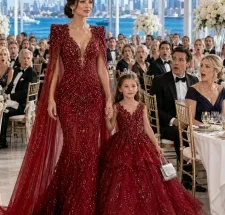
“You’re Still Broke,” My Father Mocked At Christmas While My $30 Billion Transfer Hit My Phone. My Brother Laughed, His Fiancée Called My Career “Little,” And My Mother Smiled Like I Was Still The Family Failure. None Of Them Knew I Owned The Empire That Was About To Buy Their Company.
Part 1
I walked across the marble floors of my father’s Aspen estate carrying a secret worth thirty billion dollars, and for once, I did not come home hoping to be loved.
I came home to watch the people who had spent years reducing me to a family embarrassment realize that the woman they mocked over Christmas dinner had already become the one person powerful enough to decide whether their world survived the winter.
The Ashford estate glittered beneath a blanket of fresh snow, every window glowing gold against the dark mountainside. Pine garlands framed the front doors, red silk ribbons hung in perfect bows, and the walkway had been cleared so neatly that no guest would ever have to remember someone had been paid to stand outside in the cold and make rich people feel untouched by weather.
Five years had passed since my father, Richard Ashford, fired me from Ashford Capital, the company my grandfather built and my father treated like a throne. Five years since I walked out carrying a cardboard box with my coffee mug, a framed photograph, and whatever remained of my belief that hard work could earn love from people determined not to give it.
Five years since my mother, Vivian, called me an embarrassment to the Ashford name and told me not to make the situation harder by “acting wounded.”
Those words had followed me longer than the firing itself. Acting wounded. As if humiliation were a performance, as if being removed from my own family’s company in front of executives I had trained was just another emotional inconvenience I should have swallowed elegantly.
Now I stood outside that same family’s Christmas dinner wearing a black wool coat, holding a small gift wrapped in brown paper and twine.
It was simple, honest, and intentionally plain.
They would hate it.
The moment I stepped inside, warmth wrapped around me too quickly, carrying the scent of pine, cinnamon, polished wood, expensive candles, and the faint metallic chill of wealth displayed as tradition. The foyer looked exactly as I remembered, all white marble, gold trim, and a chandelier so large it felt less like lighting and more like a declaration.
Christmas carols drifted from deeper inside the house, performed by a live string quartet tucked somewhere out of sight, because my mother believed music was most elegant when the musicians could be heard but not acknowledged.
I heard my father before I saw him.
Richard Ashford’s laugh rolled through the dining room, deep and booming, shaped by decades of believing rooms were built to receive his voice. It was the kind of laugh that demanded other men join in and smaller people disappear beneath it.
I walked toward the sound with each step echoing softly on the marble.
The dining room looked like an advertisement for inherited arrogance. The table stretched beneath white linen so crisp it seemed sharp enough to cut skin, crystal glasses caught candlelight in expensive flashes, and silverware gleamed beside porcelain plates that had been in the Ashford family for generations, a fact my mother mentioned whenever she wanted guests to understand they were eating from history rather than dishes.
And there they were.
My family.
My father sat at the head of the table, naturally, his silver hair perfectly styled and his posture radiating the self-assurance of a man who had never seriously considered that the world might stop obeying him. At sixty-eight, Richard still looked like the CEO he had been for thirty years, polished, controlled, and convinced that power was a natural extension of his last name.
My mother sat beside him in red silk, diamonds at her throat and wrists, her face arranged into the smooth serenity of a woman who believed cruelty became refinement when spoken softly.
Across the table, my brother Declan poured wine for his fiancée, Sienna Whitmore. Declan had always been the golden child, not because he was kinder, smarter, or stronger, but because he had inherited the family’s greatest talent: obedience disguised as ambition.
Sienna leaned toward him, all sleek hair, sharp cheekbones, designer silk, and a smile that looked expensive but never warm. She whispered something in his ear, and he laughed before glancing toward me as if my arrival had become the joke.
I placed my brown-paper gift on the sideboard, next to a pile of glossy boxes tied with satin ribbon.
My father noticed the wrapping and smiled.
Not kindly.
“Don’t worry, Natasha,” he said, loud enough for the entire table to hear. “We’ll make sure you can afford a plate this year.”
Laughter broke around the room instantly.
It bounced off the walls, bright and cruel, the kind of laughter meant less to enjoy something funny and more to remind the target where she stood. My mother lowered her eyes to her wine glass, smiling faintly. Declan covered his mouth, badly pretending restraint. Sienna tilted her head at me with the practiced pity of someone who had already been told which family member was safe to mock.
I smiled.
The old Natasha would have felt the heat rise into her face. She would have stood there swallowing shame, telling herself not to react, then later locked herself in a bathroom and cried quietly enough that no one could accuse her of making a scene.
But the woman standing in that dining room had been forged in five years of silence, strategy, and sleepless nights.
Sienna leaned forward, her voice syrup-sweet. “Natasha, darling, it has been forever. What are you up to these days? Still doing that little thing?”
She stretched the words little thing delicately, as if placing a dead insect on the table.
Before I could answer, Declan smiled into his wine. “She was working reception somewhere, right? After leaving the company.”
My father chuckled. “She did not leave, sweetheart. She simply was not suited for management. We all have our strengths.”
My mother added, with the smooth cruelty she had perfected through decades of charity luncheons and private insults, “We only wanted her to find something less stressful. That was all.”
The lie was elegant enough for guests to accept.
I had not been unsuited. I had been inconvenient. I had questioned a series of risky transactions, warned that Declan’s expansion strategy relied on inflated projections, and told my father in a closed boardroom that Ashford Capital could not keep disguising weakness as confidence.
Two weeks later, I was gone.
“I am managing fine,” I said softly.
My father lifted his brows with theatrical surprise. “Managing? Is that what we are calling it now?”
More laughter followed.
I sat at the table because leaving would have given them the scene they wanted. A servant poured wine into my glass, and I thanked him by name, which made my mother’s mouth tighten because she preferred staff to remain useful and invisible.
Mrs. Chen appeared from the kitchen carrying roasted duck and winter vegetables, moving with the careful grace of someone who had served this family long enough to know every cruelty before it was spoken. She had worked for the Ashfords since I was a child, and she had been one of the few people in that house who ever treated me like more than a failed investment.
“Merry Christmas, Miss Natasha,” she whispered as she passed my chair.
The warmth in her voice nearly broke the armor I had spent years building.
Almost.
But not tonight.
Sienna spent the first course talking about Declan’s firm dinner, the mayor who had attended, the senator’s wife who had admired her bracelet, and the people she described as “real names,” as if humanity became more valid when printed on donor lists.
“You should have come,” she said to me, though her smile said the opposite. “It was a room full of people who really made something of themselves.”
“Not everyone measures success by proximity to politicians,” I replied.
“Of course,” she said, looking down at her manicure. “Some people simply do not have the connections.”
Declan laughed loudly enough for our father to hear.
My mother dabbed at her lips and offered what she probably imagined was kindness. “It is all right, dear. Not everyone has to be successful. Some people bring other kinds of value to a family.”
Other kinds of value.
In Ashford language, that meant none.
I looked toward the windows, where snow fell in soft, perfect flakes beyond the glass. My reflection stared back at me, calm and unreadable, nothing like the daughter who had once sat at this table aching for approval.
Once, I had wanted to belong here. I had wanted my father to see my intelligence as something worthy rather than threatening. I had wanted my mother to stop measuring me against Declan long enough to notice that I had built myself without the constant applause he received for simply existing.
But families like mine do not reward those who ask to be seen. They reward those who play the role assigned to them.
Mine had been disappointment.
That role became my cover.
While they imagined me answering phones in some small office, I was working sixteen-hour days under a name no one in my family bothered to track. I studied markets they dismissed, invested quietly through vehicles they never connected to me, built partnerships from failure, and learned to let powerful people underestimate me until the cost of doing so became irreversible.
My father lifted his glass again, because Richard Ashford never wasted an opportunity to perform authority. “To family,” he declared. “Even the ones who cannot handle real business.”
Laughter again.
This time, I lifted my glass too.
“To lessons learned,” I said, my tone even. “Some of us take longer, but we catch up eventually.”
For half a second, his grin faltered.
Then he barked another laugh. “Just make sure those lessons pay the bills, sweetheart.”
My phone buzzed beside my plate.
I picked it up casually, pretending to check the time, though every nerve in my body recognized the timing before my eyes did. The screen glowed with a single notification.
Aldrich Private Wealth.
Miss Ashford, your transfer of $30 billion has been finalized. Congratulations on your new account status.
I read it once.
Then again.
The dining room continued around me, full of silver, silk, old money, and people who believed humiliation was still the currency I feared most.
My pulse steadied.
Not yet.
The moment had to be perfect.
I locked the screen and slipped the phone into my clutch.
Mrs. Chen, standing near the doorway with an empty tray, caught the movement. Her eyes found mine, and confusion flickered there first, then something softer, something close to understanding. I placed one finger lightly against my lips.
She nodded once and turned toward the kitchen.
Dinner continued.
Declan talked about shares he did not fully understand. My father explained market discipline to men who only agreed because disagreement at his table was considered bad manners. Sienna mentioned Forbes three separate times, each reference shaped to imply Declan would one day appear there beside people who mattered.
“You know, Natasha,” my father said, settling back in his chair, “business is control. People who lose control lose everything.”
He looked at me as though he were referring to my firing, my exile, the version of my life he had invented to make himself feel merciful.
“That is what happened when you left,” he continued. “You lost your grip.”
I smiled faintly. “Or maybe I learned a different way to hold it.”
His eyes narrowed.
My mother rose quickly, sensing the change but not understanding it. “Let’s keep the mood festive. It is Christmas, not a board meeting.”
“Of course,” I murmured.
The grandfather clock struck nine, its deep chime echoing through the hall. The fire popped in the marble fireplace, scattering tiny sparks. Somewhere beyond the dining room, the quartet moved into a softer carol, and for one suspended moment, the laughter dimmed enough for me to hear my own breathing.
I thought about the five years after they cast me out.
The apartment with bad heating. The rejections. The calls I made from coffee shops because I could not yet afford proper office space. The investors who underestimated me until I returned with numbers they could not ignore. The late nights staring at spreadsheets until dawn made the windows gray.
I thought about every person who saw my last name and assumed I had failed because I lacked talent, not because I had refused to protect powerful men from the consequences of their own arrogance.
Then I thought about the message on my phone.
Thirty billion dollars.
They thought I had returned to Christmas dinner broke, lonely, and desperate to be forgiven.
They had no idea the woman they mocked over roasted duck owned more shares through holding companies and private structures than every person at that table combined.
But that was not the sweetest part.
In exactly forty-eight hours, the board of Ashford Capital would receive an acquisition offer from Morningstar Global, a company they had never taken seriously, fronted by investors they had never met, and backed by resources that would make their quarterly earnings look like pocket change.
Morningstar was mine.
And when the dots connected, when Richard Ashford finally realized the daughter he fired had built the empire now circling his, the look on his face would be worth more than any balance sheet.
I set my glass down.
The crystal clicked softly against the table.
My father glanced up.
Our eyes met across the candlelight, his full of old control, mine calm with the patience of someone who had stopped needing permission.
“Merry Christmas, Dad,” I said.
He nodded dismissively, already turning back to Declan.
I did not mind.
Tonight was only the beginning.
Part 2….
Dessert arrived under silver cloches, each plate arranged with sugared cranberries, dark chocolate torte, and gold leaf so thin it looked less like food than evidence of waste.
My father barely touched his. He was too busy speaking to Declan about the company’s future, explaining how Ashford Capital needed to prepare for “aggressive expansion” once the winter quarter closed. Declan nodded with the obedient seriousness of a son who had never had to wonder whether approval would be waiting for him at the end of the sentence.
Sienna looked across the table at me again. “Natasha, I have to ask. Was it hard coming back tonight after everything?”
My mother’s fork paused.
Declan smirked.
My father leaned back, amused before I even answered.
I took my time lifting my water glass, letting the silence stretch just long enough to unsettle them. “Not as hard as you imagine.”
Sienna’s smile tightened. “That is brave of you.”
“No,” I said gently. “It is practical.”
The word landed strangely.
My father’s eyes narrowed, but before he could respond, one of his senior partners, seated two chairs down, leaned toward him and murmured something about a rumor moving through private markets. Morningstar Global had been acquiring positions quietly, he said, and several analysts were beginning to wonder whether an offer was coming for a legacy firm before New Year’s.
For the first time all evening, my father’s expression changed without his permission.
“Morningstar?” he repeated.
I lowered my glass.
Declan frowned. “Never heard of them.”
“You would not have,” I said.
The table quieted.
My mother looked between us, suddenly alert to a current she could not name. Sienna shifted in her chair. My father stared at me, and I saw the first small fracture appear in the confidence he had worn like armor for my entire life.
“What did you say?” he asked.
I smiled, not cruelly, not loudly, but with the calm of a woman who had waited five years to stop explaining herself.
“I said Declan would not have heard of them.”
My phone buzzed again inside my clutch.
This time, I did not reach for it immediately.
Across the table, Richard Ashford watched my hand rest beside the bag, and for the first time that night, he looked less like a king at his table and more like a man hearing footsteps outside a locked door.
SAY “OK” IF YOU WANT TO READ THE FULL STORY — sending you lots of love 

‘YOU’RE STILL BROKE, DAD MOCKED. AT LUXURY CHRISTMAS, MY PHONE BUZZED: “MS. NATASHA, YOUR ACCOUNTS NOW TOTAL $30 BILLION
I walked across marble floors that cost more than most people’s houses carrying a secret worth 30 billion dollars. Tonight wasn’t about forgiveness. Tonight was about watching their world crack like the crystal champagne flutes they held so carelessly in their perfectly manicured hands. Five years. That’s how long it had been since my father, Richard Ashford, fired me from my own family’s company.
Five years since I walked out of Ashford Capital with a cardboard box and a shattered sense of worth. Five years since my mother, Vivian, told me over the phone that I was an embarrassment to the family name. And now, on this freezing December evening in Aspen, I was back. Not because I missed them. Not because I forgave them.
But because some lessons are best taught in the language wealth speaks. The Ashford estate glittered like something out of a fairy tale. If fairy tales were about emotional manipulation and inherited cruelty. Every window blazed with golden light. Every doorframe was wrapped in fresh pine garlands tied with silk ribbons that probably cost more than I used to make in a week.
Snow fell in those perfect movie set flakes that only seem to exist in places where people have enough money to forget about shoveling driveways. I stood at the entrance, my breath forming clouds in the cold air, and I felt the weight of the small gift I’d brought. Something simple. Something honest. Something they would absolutely mock.
The moment I stepped inside, the warmth hit me along with that scent. Pine and perfection and something else I couldn’t name. Maybe it was just the smell of people who believed their own press releases. The foyer was exactly as I remembered. All marble and gold trim and a chandelier that looked like it belonged in Versailles.
Somewhere in the distance, Christmas carols played, the expensive kind. A live string quartet tucked away in some corner where guests wouldn’t have to acknowledge the help. I heard his voice before I saw him. My father’s laugh, deep and booming. The kind of laugh designed to fill rooms and make other men feel smaller.
I walked toward the sound, my heels clicking on the floor. Each step feeling like walking toward an execution I’d volunteered for. The dining room was a masterpiece of calculated extravagance. The table stretched for what seemed like miles. Covered in white linen so crisp it could cut.
Crystal glasses caught the light from candles in gold holders. Silver gleamed against porcelain plates that had been in the Ashford family for generations, as my mother loved to remind anyone who would listen. And there they were. My family. The people who were supposed to love me unconditionally but had made every condition brutally clear. My father sat at the head of the table, of course.
His silver hair perfectly styled. His posture radiating the kind of confidence that comes from never being told no. At 68, Richard Ashford still carried himself like the CEO he’d been for 30 years. Like the markets themselves bent to his will. My mother, Vivian, fluttered beside him in red silk, diamonds at her throat and wrists.
Her face a mask of Botox and breeding. She saw me first and for just a second something flickered in her eyes. Surprise, maybe. Or annoyance that I’d actually shown up. Across the table, my brother Declan poured wine into his fiance’s glass. Declan had always been the golden child. The one who stayed.
The one who did everything right. Which really just meant the one who never questioned anything. His fiance, Sienna Whitmore, leaned close to whisper something. And they both laughed. Sienna was beautiful in that sharp, expensive way. All angles and designer labels and a smile that never quite reached her calculating eyes. I set down my gift, a small box wrapped in simple brown paper and twine.
Nothing extravagant. Nothing pre- tentious. Exactly the kind of thing that would make them uncomfortable. That’s when my father’s laugh cut through the carols. “Don’t worry, Natasha.” He said, his tone dripping with mockery. “We’ll make sure you can afford a plate this year.” The room erupted. Laughter bounced off the walls, sharp and cruel.
The kind of laughter that’s designed to exclude rather than include. Everyone except me. I stood there, smile frozen on my face, watching them perform their superiority like it was choreographed. Sienna leaned forward. Tilting her head with mock concern. “Natasha, darling, it’s been forever. What are you up to these days? Still doing that little thing?” She said it like she was talking to a child.
And maybe that’s exactly how she saw me. Declan’s failed sister. The cautionary tale. Before I could answer, Declan chimed in. “She was working as a receptionist somewhere, right?” He didn’t even try to hide the smirk. “After leaving the company.” My father chuckled, reaching for his glass. “She wasn’t fired, sweetheart.” He told Sienna as if I wasn’t standing right there.
“She just wasn’t a good fit for management. We all have our strengths.” My mother added, in that smooth, poisonous way she’d perfected over decades of social climbing, “We just wanted her to find something less stressful. That’s all.” The words slipped around me like familiar chains. Polite. Polished. Humiliating.
I kept my smile in place even though it felt like broken glass cutting into my cheeks. “I’m managing fine.” I said softly. My father raised his eyebrows, theatrical surprise painted across his face. “Managing? Is that what we’re calling it?” He laughed again, louder this time, making sure everyone heard. “Well, at least someone’s paying your rent. Hopefully.
” My fingers tightened around my napkin, knuckles going white, but I stayed quiet. I’d learned something in the past five years. Something they would never understand. Silence is power. Let them talk. Let them believe what they need to believe. Their assumptions were building the scaffolding for their own humiliation.
But you’re probably wondering how I got here, aren’t you? How the daughter they fired, the one they mocked and dismissed, ended up controlling 30 billion dollars while they slowly watched their empire crumble. Trust me, that story gets even better. And the look on my father’s face when he finally understood what I’d become, that was worth every single humiliating moment.
Mrs. Chen, our long-time housekeeper, appeared from the kitchen carrying a tray of roasted duck and winter vegetables. She’d been with the family since I was a child. One of the few people in this house who’d ever shown me genuine kindness. She gave me a small, knowing smile as she passed. “Merry Christmas, Miss Natasha.
” She whispered. The warmth in her voice almost undid me. Almost. But I couldn’t afford to break. Not yet. Not when I was this close to giving them the education they so desperately needed. As plates were served, Sienna leaned forward again. Her voice syrupy sweet and twice as fake. “You should have seen the guest list at Declan’s firm’s Thanksgiving dinner. The mayor.
A senator’s wife. People who really made something of themselves.” “Not everyone’s into politics, Sienna.” I said, still smiling. “Of course.” She replied, examining her nails like they were suddenly the most interesting thing in the room. “Some people just don’t have the connections.” Declan laughed, loud enough to make sure our father heard.
My mother sipped her wine, then delivered what she probably thought was a kindness. “It’s all right, dear. Not everyone has to be successful. Some people bring other kinds of value to the family.” Other kinds of value. Translation, none at all. That stung more than anything else. That casual dismissal of my entire existence. As if my only purpose was to make them look good by comparison.
I watched the snow through the window, my reflection faint against the glass. Once upon a time, I dreamed of being part of this family with pride. I dreamed of making them proud. Of earning my place at this table through hard work and dedication. But years of cold smiles and cutting remarks had turned me into something else.
The quiet daughter. The disappointment. The one they never expected anything from. Maybe that was my greatest advantage. They’d never see me coming. My father raised his glass again, because apparently one toast wasn’t enough. “To the family.” He declared. “Even the ones who can’t handle real business.” More laughter. Sharp as knives.
I met his eyes and lifted my own glass. “To lessons learned.” I said, my tone calm and measured. “Some of us take a little longer, but we catch up eventually.” His grin faltered for half a second, confusion flickering across his face before he barked out another laugh. “Just make sure those lessons pay the bills, sweetheart.
” My mother dabbed at her lipstick and murmured, “Richard, really.” But she was smiling, too. In that moment, something inside me went perfectly still. The old Natasha would have broken down. Would have argued, begged for respect, cried in the bathroom while pretending everything was fine. But I wasn’t that girl anymore.
I reached for my phone beside my plate, pretending to check the time. The screen lit up with a single notification at the top. Aldrich Private Wealth. Miss Ashford, your transfer of 30 billion dollars has been finalized. Congratulations on your new account status. I blinked once. Read it again. Then locked the screen and slipped the phone into my clutch.
My pulse steadied. Not yet. Not quite yet. The timing had to be perfect. Mrs. Chen caught the flicker of movement. Our eyes met. I saw her confusion. Then dawning understanding. I placed a finger against my lips. She nodded almost imperceptibly and turned back toward the kitchen.
The conversation at the table rolled on, empty and predictable. Declan talking about shares, my father analyzing the market. Sienna name-dropping the Forbes list, swearing Declan would make it someday. “You know, Natasha,” my father said, because apparently he wasn’t done yet, “it’s all about control. People who lose control lose everything.
” He glanced at me as if reminding me of my past. “That’s what happened when you left. You lost your grip.” I smiled faintly. “Or maybe I just learned a different way to hold it.” He frowned, uncertain if I’d meant it as a compliment or a challenge. My mother rose to refill her glass. “Anyway, let’s keep the mood festive,” she said quickly.
“It’s Christmas, not a board meeting.” “Of course,” I murmured, still watching the snow outside. The grandfather clock struck nine, its deep chime echoing through the hall. The fire popped, scattering tiny sparks. Somewhere upstairs the old piano began playing a soft carol, Mrs. Chen’s doing, I was sure. For a moment the laughter dimmed, and all I could hear was the ticking clock and my own breathing.
I thought about the years I’d spent rebuilding my life, working 16-hour days, investing quietly while the world ignored me, learning from every failure, every closed door, every person who underestimated me because of my last name or my gender or my age. I thought about every insult, every dinner like this one, every time they’d looked right through me like I was invisible.
And then I thought about the message glowing on my phone, $30 billion. They thought I came back broke and desperate. What they didn’t know was that the the woman they mocked over dinner owned more shares than all of them combined. But here’s what made it even sweeter. I wasn’t done yet. Not by a long shot, because in exactly 48 hours the board of Ashford Capital was going to receive an acquisition offer from Morningstar Global, a company they’d never heard of, fronted by investors they’d never met, and backed by resources that would make their quarterly earnings look like
pocket change. And when they finally connected the dots, when they realized that Morningstar was mine, that I’d been building an empire while they counted me out, the look on their faces would be worth more than any amount of money. I set down my glass, letting the crystal click softly against the table. The sound was almost lost beneath the music, but it made my father glance up for a second. Our eyes locked.
His were full of pride and control, the confidence of a man who’d never been truly challenged. Mine were calm and unreadable, the eyes of someone who’d learned to play a much longer game. I smiled. “Merry Christmas, Dad.” He nodded, dismissive, already turning back to his guests. But I didn’t mind. Tonight was only the beginning.
Outside the snow fell thicker, covering the frozen world in white. Inside the candles flickered over faces too sure of their power to see what was coming. They thought I was their failure. But this Christmas I was their lesson. Let me take you back 5 years. Back to the day that changed everything. The day my father decided I wasn’t worth the Ashford name.
The conference room at Ashford Capital had felt more like a courtroom than a workplace. Glass walls, thin, cold air that seemed to press down on my chest. I’d spent 3 years working my way up from receptionist to project manager, dreaming of the day I could prove to my father that I could handle more than just his last name. Instead, I stood there, palms damp, while he flipped through a stack of papers that would end my career before it truly began.
“This report is embarrassing,” my father said flatly, not even looking at me. “Over budget, behind schedule, sloppy execution.” I swallowed hard. “The team had issues with the supplier. I submitted a proposal to” He raised a hand, cutting me off. “Excuses don’t balance numbers, Natasha.
Our clients don’t care about reasons, they care about results.” Around the long table sat six men in suits, all older, all silent. Declan, my brother, occupied a seat at the far end, his tie immaculate, his expression unreadable. He joined the company a year before me, already climbing faster thanks to Dad’s mentorship. I searched his face for any sign of support. There was none.
My father tossed the report onto the table. “Ashford Capital doesn’t reward mediocrity, not even in the family. You’ll step down immediately. HR will handle your transition paperwork.” For a moment I thought I’d misheard him. “You’re firing me?” He leaned back, arms folded. “You’ll thank me one day.
Failure builds character, assuming you can afford to keep learning.” A murmur of laughter drifted from someone near the window. I felt my face heat. “Dad, I worked for this. You told me if I proved myself” “I told you to earn it,” he snapped, “and you didn’t.” My mother had always said my father’s worst habit was confusing control with love.
I saw it clearly that day. He wasn’t angry about the project. He was furious that I’d tried to lead on my own terms, that I’d questioned his methods, that I dared to suggest there might be a better way. The meeting ended without ceremony. Papers shuffled, chairs scraped back. One by one they filed out.
Declan lingered. “It’s not personal,” he said softly, though his eyes gleamed with triumph. “Dad just expects perfection.” “Perfection or obedience?” I asked. He smirked. “Same thing here.” By the time I reached the elevator, I was trembling. My entire life had revolved around that building. Late nights, double shifts, endless attempts to prove I belonged.
As the doors closed, I caught my reflection in the mirrored wall. Tired, small, humiliated. I promised myself right then I’d never let them see me beg. I packed my office in silence. The new receptionist, my replacement, offered an awkward smile. “Mr. Ashford said to wish you luck.” Luck. The currency of people without power.
Outside snow was falling, just like tonight, 5 years later. I walked three blocks before my legs gave out. I sat on a bench near the plaza, the December wind cutting through my coat. The city lights blurred through tears I hadn’t meant to shed. My phone buzzed. Mom. I almost didn’t answer. “Natasha.” Her voice was clipped, rehearsed.
“You’ll be coming home, I assume?” “I’ll find my own place.” “Don’t be ridiculous. People will talk. We’ll say you’re taking time off.” “I’m not ashamed,” I said. “Well, we are,” she replied before hanging up. That night I rented a studio apartment the size of my old walk-in closet.
The ceiling leaked, the radiator rattled, but it was mine. I spent Christmas alone eating takeout noodles in that cold studio that felt miles away from the warmth of the Aspen fireplace. The Ashford family photo appeared in the local business journal. Dad, Mom, Declan and his girlfriend smiling in front of the company tree. The caption read, “The family behind Colorado’s most trusted investment firm.
” My name wasn’t mentioned. The following months were survival in slow motion. I sent out resumes, took interviews that went nowhere. Every rejection email ended the same. “We’re pursuing candidates with stronger references.” Stronger meaning approved by my father. My savings dwindled. I worked temporary jobs, answering phones, managing schedules, anything that paid rent.
People called me the broke daughter of the Ashford empire. It stuck. The lowest point came one snowy night in February. I stood outside Ashford Capital’s glass tower, watching lights still burning on the top floor. Declan’s office, probably. I wondered if he ever thought of me, or if I’d already been erased.
My reflection looked back at me. Hair frizzy, coat worn thin, face pale under the streetlight. For the first time, I didn’t recognize myself. Then came the twist of fate disguised as disaster. One of my temp jobs placed me as a receptionist at a small financial firm, Whitman and Pierce. They handled clients the Ashfords would have sneered at.
Tech startups, independent inventors, crypto investors before crypto meant anything. I sat at the front desk, answering phones, taking notes, learning everything I could. Numbers had always made sense to me, even when people didn’t. One afternoon I overheard a meeting between the partners and a young entrepreneur from San Francisco.
They dismissed him quickly, saying his digital finance concept was too risky. After he left, I found him downstairs at the cafe pacing, furious. “Sorry,” I said, “I heard what happened.” Alexei looked at me, surprised. “They don’t get it. The whole financial system is changing and they’re blind.” “Tell me about it,” I said.
We talked for an hour, then another. By nightfall he’d offered to show me his prototype, an app designed to decentralize global investment pools. I didn’t understand all the code, but I understood the potential. He needed organization. I needed purpose. We became partners the following week. He named our venture Morningstar Capital.
The next 2 years were chaotic, sleeping 4 hours a night, coding in cafes, pitching to investors who laughed at the idea of a young woman handling billions. But I’d learned from the Ashfords. People underestimate what they can’t control. Every no became fuel. Every failure, data. Slowly the numbers turned.
One investor led to five, five led to 50. By the third year our assets exceeded 2 billion. By the fifth, 30. I read about my father’s company’s decline in the Forbes newsletter last fall. Poor investments, shrinking returns, internal disputes. Declan had taken over as acting CEO, but the stock was crashing. Ashford Capital down 40% this quarter.
I almost felt sorry for him. Almost. That’s when Aldrich Private Wealth reached out. “Miss Ashford, your portfolio has qualified for elite client management. We’ll assign you a dedicated banker. The irony was perfect. The daughter they’d mocked as broke had become one of their top clients. And now you’re probably wondering, how did she end up back at that Christmas dinner? How did she walk into the same house that rejected her carrying a secret worth 30 billion dollars? Well, that’s where the story gets really interesting.
Because when the invitation arrived, handwritten in my mother’s looping script, I knew exactly what I had to do. The envelope had been cream-colored, thick as money, sealed with the Ashford family crest pressed in gold wax. I found it in my mailbox on a cold November morning sitting neatly among bills and subscription offers.
For a long moment, I just stared at it. The elegant script of my mother’s handwriting curling across the front like it belonged to another century. Miss Natasha Ashford, no dear, no warmth, just a summons. Inside was a single card, handwritten, formal, perfectly phrased. Family Christmas Eve dinner, Aspen estate. We’d love for you to join us.
Father and I are eager to see you. Declan and Sienna will also be there. RSVP appreciated. The words felt rehearsed, sanitized, even the paper smelled like control. I sat at my kitchen counter, coffee growing cold, and laughed. For 5 years, nothing. No calls, no messages, no birthdays, not even a note. When Forbes had run an article about Morningstar Capital calling it the future of decentralized finance, they hadn’t reached out.
When my company hit a billion in managed assets, silence. But now suddenly, I was eagerly invited. For a week, I didn’t respond. The card stayed on my desk buried under contracts and reports. Every time I saw it, a strange pull tightened in my chest, half anger, half curiosity. Mrs.
Chen called me one evening to check in, her voice warm and cautious. “Your mother’s been talking about Christmas,” she said. “They’re hosting something big this year, sponsors, investors, even a senator.” “Of course they are,” I muttered. “You should come, Miss Natasha.” She said softly, “Not for them, for yourself.” That thought lingered.
Maybe she was right. I didn’t need their approval, but maybe I needed to face what was left of them. To see the empire that had once decided I wasn’t enough. Two days later, I texted my mother a brief response. “I’ll be there.” The reply came instantly. “Wonderful, darling. The dress code is formal.” That single word carried every ounce of her obsession with appearances.
I almost deleted the message, but instead, I let it stay. Sometimes it’s useful to know your opponent still plays by the same rules. In the following weeks, I buried myself in work. Morningstar Capital was expanding into Asia. Negotiations were delicate. My team called me CEO with reverence, but I still remembered being the broke receptionist.
Every victory felt like quiet revenge. When Forbes reached out again, this time asking to feature me in their under 40 billionaires issue, I almost said no. Almost. Then I thought of my father polishing his whiskey glass while saying, “She’s playing entrepreneur. We all need hobbies.” The photographer came to my Manhattan office for the shoot.
“Can you give me something confident but not cold?” he asked. I gave him a look that could melt steel. Later, as I reviewed the proof, I thought about sending a copy to my parents just to watch them choke on their own words. But no, better to let them find it themselves. By mid-December, my banker from Aldrich called to confirm year-end transfers.
The final number, the one my father used to throw around like a prophecy, was now quietly settled in my portfolio. The irony tasted delicious. The night before my flight to Aspen, I stood by the window of my penthouse overlooking the city. Snow drifted down in lazy spirals muffling the sounds of traffic. For a moment, I wondered what it would feel like to walk into that house again.
The scent of pine and expensive perfume, the weight of judgment in every look. I whispered to my reflection, “We made it back. Not for them, but for the lesson they refused to learn.” The private car arrived at dawn, sent by my family, of course. The driver handed me an itinerary typed on letterhead. Dinner begins promptly at 7:00 p.m.
Guests include the Whitmore family, partners from Ashford Capital, and several VIPs. So that was it. They weren’t inviting me home out of affection. I was being paraded either as an act of pity or as a prop in their social theater. Either way, I could play my part. The flight to Colorado was quiet. I worked through emails until the plane descended over the snow-covered peaks.
Aspen looked exactly as I remembered, gleaming, perfect, untouchable. When the car turned onto the long tree-lined drive leading to the Ashford estate, I felt a strange calm settle over me. The house came into view, massive and gleaming, windows glowing like golden eyes. The gates opened automatically as though even the security system still recognized my name.
Mrs. Chen met me at the door, her hair streaked with more gray, but her smile unchanged. “Miss Natasha,” she whispered, tears in her eyes. “You came.” “I told you I would,” I said, hugging her tightly. “You look different, older.” “Stronger,” she corrected. Inside, the decorations were breathtaking, of course.
Garlands of white roses, crystal ornaments, a Christmas tree taller than the chandelier. Everything glittered from the silverware to the guests’ jewelry. I could hear laughter spilling from the main hall, my father’s voice booming over the music. Mrs. Chen led me to the grand staircase. “They’re waiting in the dining room,” she said softly.
“Be kind, but not too kind.” “I smiled. You know me too well.” I paused at the top of the stairs. Below, I saw them, the family tableau. Dad at the head of the table, Mom adjusting her diamond necklace, Declan whispering to Sienna. They looked perfect, they always did. But perfection cracks easily. For a heartbeat, I considered turning back.
Then I heard my father’s voice carry through the room. “Well, if she even shows up, at least we’ll have some entertainment.” Laughter followed, sharp as glass. I exhaled slowly. My heels clicked against the polished floor as I descended. Conversations faltered, faces turned. My mother rose first, surprise flickering before she composed her smile. “Natasha, darling, you made it.
” My father leaned back in his chair, eyes scanning me from head to toe. “You look healthy,” he said, which in Ashford language meant I’d gained weight. “Thanks, Dad. You too.” It was the Ashford way, insult wrapped in a compliment, impossible to fully address. Declan grinned. “You’re on time. That’s new.” “Traffic was light,” I said smoothly taking my seat across from him, “and I didn’t want to miss the show.
” The tension snapped into place, invisible but electric. My father cleared his throat. “Well, let’s begin. We’ve got quite the guest list tonight. Some of our investors, a few old friends. Try not to embarrass yourself, Natasha.” “I’ll do my best,” I said. As the first course arrived, I caught Mrs. Chen watching from the doorway.
She gave me the smallest nod, one that said, “You have the upper hand now. Don’t forget it.” And that’s when I realized something. This wasn’t about revenge anymore. This wasn’t about proving them wrong or making them sorry. This was about showing them that the world they thought they controlled had already moved on without them, that their power was an illusion built on outdated rules and inherited cruelty, and that the daughter they threw away had built something they could never touch.
But they didn’t know that yet. Not quite yet. The timing had to be perfect. And the best part? They were about to hand me the perfect opportunity without even realizing it. The dining room smelled of pine, roasted duck, and expensive wine. My mother had outdone herself. Everything sparkled as if the evening were a photo shoot for Forbes Home and Family.
Silver candles lined the center of the table, flickering across glass ornaments and crystal flutes filled with champagne. Every detail screamed perfection, and yet underneath the glitter, I could feel it. The quiet hum of tension, the unspoken hierarchy that had ruled this family for as long as I could remember.
My father stood at the head of the table, glass raised. “To family,” he declared, his tone commanding more than celebrating. “To the legacy we’ve built and to the future we protect.” “To family,” the others echoed, clinking their glasses. I lifted mine, too, though the word felt hollow in my mouth. Dinner began like a play in slow motion, each person playing their role.
Mom, the graceful hostess. Declan, the golden heir. Sienna, the perfect fiancee with a diamond so large it caught the candlelight like a small sun. And me, the black sheep seated at the far end, exactly where they wanted me. Mrs. Chen moved quietly among the guests, refilling glasses. She paused behind me for a moment, her hand brushing my shoulder, a silent reassurance.
I gave her the smallest smile before turning back to the table where Sienna was holding court. “And of course, the engagement party was just magical,” she was saying. “We had it at the Four Seasons, you know. The governor’s wife stopped by. She said she’d never seen such such a tasteful event.” My mother leaned in approvingly. “You really do have an eye for these things, Sienna.” My father nodded.
“That’s the kind of initiative I like to see, practical, classy.” Declan smirked. “Unlike some people’s idea of entrepreneurship.” My fork froze midair. “Some people?” I asked mildly. He shrugged. “You know what I mean. You always chased these side projects, art, food, tech, whatever phase you were in that year.
Sienna laughed softly. I think it’s sweet. Everyone needs a hobby. My father’s laugh joined hers. Yes, as long as hobbies stay hobbies. Real wealth comes from tradition, from structure, not from chasing fairy tales. The table went silent for a moment. The string quartet playing softly in the corner seemed to fill the gap between his words and my thoughts.
I set down my fork, wiping my lips with my napkin. Tradition’s valuable, I said evenly. But it’s also how people get stuck repeating mistakes. Sometimes structure just means a prettier prison. My father raised an eyebrow. Still quoting poetry instead of business reports, I see. Declan chuckled. She does that when she’s nervous.
I didn’t answer. Instead, I reached for my wine, letting the ruby liquid swirl. So, Declan, I said lightly. I said lightly. How’s the family business? I read that Ashford Capital’s stock dipped again this quarter. The smile dropped from his face. Temporary, he said quickly. Market fluctuations. We’re restructuring.
My father added sharply, the media exaggerates. We’re fine. Of course, I said, feigning concern. I just hope you didn’t take too many risks with derivatives this time. Those can be unpredictable. The look he gave me could have frozen the room. You wouldn’t understand, he said curtly. Leave the numbers to people who actually manage real portfolios. I smiled.
You’d be surprised what I manage. My mother stepped in before he could respond. Her voice sweet, but firm. Let’s not turn dinner into a board meeting. Declan, tell us about your honeymoon plans. He launched into a description of private villas in the Maldives, a yacht, a custom champagne partnership with some brand he couldn’t even pronounce.
Sienna giggled, chiming in with details. I listened, half amused, half detached. The money talk was supposed to intimidate me, to remind me where I ranked. But if they had any idea who signed the quarterly investment reports for half the brands they bragged about, their laughter would have died mid-sentence.
Dessert arrived, a chocolate souffle dusted with gold leaf. Mom insisted it had been flown in from New York that morning. Nothing but the best, she said proudly. I glanced toward Mrs. Chen, who caught my eye again, clearly fighting a smile. Sienna leaned forward. So, Natasha, she began, tilting her head. What do you do now? Still freelancing? I dabbed my lips with my napkin.
Something like that. Declan laughed. She probably runs an Etsy store for holiday candles. My father joined in. At least candles can’t bankrupt a company. I set my glass down. Not yet, I said softly, but give me time. They thought it was a joke. They laughed louder. Across the table, I noticed a guest I hadn’t expected.
A man in a navy suit with a polite smile and the posture of someone accustomed to high-stakes rooms. As though as my father introduced him casually between courses. This is Marcus Brennan, our new investment consultant. He’s helping us with international holdings. Marcus nodded. Pleasure to meet you all. Our eyes met briefly.
There was recognition there. He knew who I was. More importantly, he knew what I was. Aldrich Private Wealth Senior Account Manager, my banker. He gave no sign of it, of course, but as he adjusted his napkin, he gave a nearly imperceptible nod, a silent understanding. I looked away, hiding a smile. My father’s voice pulled me back.
So, Natasha, tell us, do you plan on getting serious, settling down? Serious about what? About life, he said, gesturing vaguely. A job, a man, stability. You’re 31 now, aren’t you? That’s a dangerous age to still be figuring things out. Dangerous, I repeated, the word rolling on my tongue. Interesting choice. My mother gave a nervous laugh.
He just means you deserve comfort, dear. Oh, I’m comfortable, I said. Sienna raised an eyebrow. In New York? On a receptionist’s salary? Declan snorted into his drink. I looked directly at her. You’d be amazed what I can afford these days. The silence that followed was sharp and sudden.
My father broke it with another laugh, though it sounded forced. Always the dreamer. I let the conversation drift again, pretending to be distracted by the snow outside. Every word they said fed into the same illusion, that I was still the failure they decided I was, and that illusion was my greatest weapon. When dinner ended, my mother stood, clapping softly. A toast, she announced.
To family, success, past, present, and future. Glasses rose again. I lifted mine last, letting my gaze move slowly from my father to Declan to Sienna. To future success, I said, and to surprises along the way. He frowned sharply, searching my eyes for the joke. Don’t be ridiculous, Natasha.
You never could finish anything you started. Mrs. Chen appeared beside me, murmuring discreetly. Miss Natasha, a matter regarding your arrangement needs your attention in the study. Now, Marcus says to take the call. I set down my glass, feeling the ripple of anticipation rise inside me. Excuse me, I said, pushing back my chair. It seems business doesn’t take holidays.
And as I walked toward the study, every step echoed with the promise of what was coming next. Now, here’s where everything changes. Because what happened in that study wasn’t just a phone call. It was the moment I stopped being their victim and became their reckoning. And trust me, you’re going to want to hear every word of what came next.
The study smelled like leather, oak, and old ambition. My father’s trophies lined the shelves, framed awards, stock certificates, family photos that didn’t include me. I closed the door behind me, the muffled laughter from the dining room fading into silence. The lamp on the desk cast a pool of amber light over the polished surface where I used to sneak in as a child to read business magazines I wasn’t supposed to touch.
The phone on the mahogany desk blinked with a single line. Incoming call, Aldrich Private Wealth. I picked it up. This is Natasha Ashford. Good evening, Miss Ashford, said the voice on the other end, steady, precise, unmistakably professional. This is Andrew Collins from Aldrich. I hope I’m not interrupting your holiday.
Not at all, I said, glancing at the door. What’s the update? He hesitated just long enough for me to know he understood where I was. Your new accounts have been finalized, he said carefully. Total assets now verified at 30 billion dollars. We’ve transferred your holdings under the Morningstar Global Fund, as requested.
I smiled, the kind no one else could see. Perfect timing. Andrew paused again, as if debating whether to continue. Also, I was informed that Marcus Brennan, our senior consultant, is attending your family dinner tonight. Shall I assume that was intentional? My eyes flicked toward the hallway, where I could hear faint clinking and laughter.
Let’s just say the universe has a sense of humor. He gave a small laugh. Understood. He’ll maintain discretion. I have no doubt. We exchanged a few final formalities before I ended the call. The moment the line went dead, I let out a breath I hadn’t realized I’d been holding. 30 billion. The number hung in the air like a quiet storm.
I walked to the window overlooking the snowy courtyard. The pine trees glistened beneath strings of white lights. Somewhere out there, the night hummed with peace. But inside me, everything felt sharp and electric. The door creaked open. Mrs. Chen stepped in, closing it gently behind her. Was that really your banker? She whispered. Yes. Her eyes widened.
And it’s true? You’re not poor? Very not poor, I said softly. She smiled, tears threatening at the corners of her eyes. I always knew you’d rise, Miss Natasha. You were never like them. Don’t cry, Maria, I said, calling her by her first name for the first time in years. You’ll ruin your mascara. She chuckled, wiping her eyes.
Your father asked me to fetch you. Dessert’s being served. I nodded. Tell him I’ll be right there. When she left, I turned back to the mirror above the desk. My reflection stared back, calm, deliberate, utterly in control. For years I’d imagined what this moment would feel like. It wasn’t rage anymore. It wasn’t revenge.
It was something quieter, colder. Justice with silk gloves. I picked up my phone again and opened the Aldrich app. The balance glowed on the screen. Proof. I traced the number with my thumb, then locked the screen and slipped the phone into my clutch. The weight of the moment felt immense, but I carried it lightly.
I walked toward the door. The hallway echoed under my heels, a rhythm I controlled now. When I stepped back into the dining room, conversations faltered for a split second. My father looked up from his chair, glass in hand. All settled? He asked. All settled, I said, taking my seat again. Declan leaned forward, smirking.
So, who was calling on Christmas Eve? Your landlord? Something better, I said lightly. A matter of liquidity. Sienna giggled, resting her hand on Declan’s arm. Oh, let her be. Maybe it was her boyfriend. Probably a waiter at one of those little city cafes. I smiled at her sweetly. Actually, it was my banker. Her laughter faltered. Your banker? Hmm.
He wanted to confirm a transfer. Year-end housekeeping. My father chuckled. Housekeeping, that’s one word for it. You mean the overdraft protection, right? Declan joined in. You must be their smallest account. I set my glass down, the stem making the faintest click against the table. Actually, I said, glancing toward Marcus Brennan, I believe one of Aldrich’s senior consultants here tonight can confirm otherwise.
Marcus froze mid-sip. Slowly, every head at the table turned toward him. He cleared his throat, eyes darting between my father and me. I will. Yes, I work with Aldrich. My father frowned. You’re her banker? Marcus smiled nervously. I can’t discuss client matters, of course, by confidentiality. My mother’s expression shifted, confusion warring with curiosity.
Natasha, what are you talking about? I leaned back, letting the pause stretch, the silence growing taut like a wire. Just business, I said. Apparently, I’m one of their larger clients now. Declan laughed too loud. You, a client at Aldrich? Please, they handle billionaires. The room went still. I didn’t blink.
I know. For a long moment, no one moved. Then my father barked a laugh, brittle and forced. All right, enough of the jokes. You’ve made your point. But I didn’t look away. No jokes tonight, Dad. The air changed. Even the faint background music seemed to fade. Sienna’s hand slipped from Declan’s arm. My mother’s lips parted, a soft gasp escaping. My father’s voice hardened.
What are you saying? I folded my hands on the table, calm, deliberate. I’m saying that when I left this family, you told me I’d never succeed without your name. You told me I’d end up broke. Tonight, my banker called to confirm that my accounts total 30 billion dollars. The words dropped like stones into a still pond.
The silence that followed was total. My father’s face went pale. Declan’s jaw slackened. Sienna’s wine glass tilted dangerously before she caught it. My mother’s hand trembled where it rested on the tablecloth. Marcus shifted uncomfortably. It’s true, he said finally. Ms. Ashford is one of our largest clients globally. He didn’t look at my father or Declan.
He looked only at me, a silent, professional salute across the ruined table. The sound of Declan’s glass slipping from his hand and shattering on the floor cut through the stillness. Wine spread across the white linen like spilled blood. No one spoke. I leaned back, my smile small but steady. Merry Christmas, I said quietly.
My father stood slowly, his voice shaking between disbelief and anger. You expect me to believe this? 30 billion? From what? Fairy dust? From work, I said. From vision. From the same drive you said I didn’t have. My mother whispered, Natasha. But the rest of her sentence died in her throat. Declan pushed back his chair.
This is ridiculous. You’re making this up. Marcus straightened his tie, eyes still down. She isn’t. The only sound left in the room was the soft crackle of the fireplace. I rose, smoothing the fabric of my black dress. Dinner’s been lovely, I said. Thank you for the invitation. My father opened his mouth to speak, but I was already walking toward the door.
Every step was measured, quiet, and final. Behind me, the empire that had once banished me sat frozen in shock. Mrs. Chen stood by the hallway, eyes shining. Ms. Natasha, she whispered as I passed. I smiled at her. It’s just Natasha now. And with that, I left them. Stunned, silent, staring at the space where the failure they’d mocked used to sit.
But you know what’s even better than that moment? What happened next. Because the real power wasn’t in the shock. It was in what I chose to do with it. And that decision would change everything. Not just for me, but for every single person sitting at that table. Stay with me, because this story isn’t over yet. Not even close.
The air outside the dining room felt colder than the snow drifting beyond the windows. I walked down the long marble hallway toward the foyer, the sound of my heels echoing off the walls like the punctuation to a sentence none of them had expected to hear. My hand trembled only slightly as I reached for my coat from the rack.
Adrenaline, not nerves. Behind me, muffled voices began to rise, a confused blur of anger, disbelief, and fear. Natasha! My father’s voice bellowed from the dining room. I didn’t stop. Don’t you walk away from this conversation. I turned slowly, deliberately. He stood framed in the doorway, red-faced, his pride stripped bare.
The rest of the family hovered behind him, Declan, pale and stiff. Mom, wringing her hands. Sienna, looking like she wanted to vanish into her sequin dress. I think the conversation’s over, I said quietly. My father’s jaw tightened. You don’t show up here after 5 years and humiliate us with some ridiculous story about money.
30 billion? Do you expect me to believe that? I didn’t ask you to believe it, I replied. I simply stated a fact. Declan stormed forward. You’re lying. There’s no way. You probably paid that banker to say it. Marcus Brennan appeared behind them, his voice composed but strained. Actually, Mr. Ashford, I assure you she isn’t lying.
Aldrich doesn’t falsify financial statements. Ms. Ashford is indeed one of our top-tier clients. My father spun on him. And you brought this up tonight at my table? Marcus’s professionalism cracked for the first time. Sir, I had no idea this was your daughter. I was invited here as a consultant. I found out only moments ago. The words seemed to hang there, the truth too large for the room to contain.
My mother finally spoke, her voice thin and trembling. Natasha, why didn’t you tell us all this time? I met her eyes. Because I wanted to see how you’d treat me if you thought I was still broke. A silence fell, so heavy I could almost hear the candles flicker. My father opened his mouth, but I cut him off. Do you remember what you said 5 years ago? You dismissed me because you thought failure was reserved only for the weak. You wanted me to break.
His face hardened. That was business. No, I said, stepping closer. That was cruelty. You humiliated me in front of your board because you thought breaking me would make you feel powerful. You didn’t want a daughter, you wanted another reflection of yourself. Declan’s voice cracked through the silence. You could have told us.
You could have What? I interrupted. Given you a piece of it? Let you manage my portfolio like you mismanaged your own? You’re still trying to save the company, aren’t you? You’re desperate for an investor. His face flushed crimson. How did you I read the quarterly reports, I said. Your stock’s in free fall. Your board’s threatening to remove you.
The same people who once applauded you for firing me are now planning your exit. My father’s breath hitched, the color draining from his cheeks. You think you can just walk in here and I already have, I said. I turned, ready to leave again, but my mother stepped forward, her voice trembling. Please, she said softly. Don’t leave like this.
She reached out, her fingers trembling, trying to grasp my arm. We were wrong, she whispered. All of us. We didn’t know what you were doing. We thought Her voice broke. We thought you’d failed. I exhaled slowly. You didn’t care if I failed. You cared that I embarrassed you. Tears filled her eyes, but I didn’t let them move me.
Years of silence couldn’t be erased by one apology wrapped in fear. Sienna cleared her throat, her voice shaky. Natasha, you have to admit it’s shocking. Nobody just becomes a billionaire out of nowhere. People do, I said. When they’re not busy hosting cocktail parties about legacies. Declan glared at me. You always thought you were better than us.
No, I said. I just stopped letting you convince me I was worse. The room fell silent again. For once, my father had nothing to say. He stood there, shoulders squared but gaze unfocused, like a man watching the world he built crumble grain by grain. Natasha, he said finally, his tone measured but hollow. If what you say is true, then you should understand what it means to protect a business, Dad, to protect a family.
You can’t hold on to resentment forever, he continued. We’re still family. I’m not resentful, I said. I’m realistic, and I know the difference between family and people who only love you when you’re useful. He flinched as if I’d struck him. I turned back toward the door, my coat draped over my arm. Enjoy your Christmas, I said.
Consider this my final appearance in your little production. Wait, my mother called out, her voice breaking. Please, Natasha, we want to make things right. We can start over. You’re still our daughter. The words caught me like a shard of glass. You don’t get to rediscover your daughter only when she’s rich. Declan muttered something under his breath, probably another insult, but I didn’t bother to listen.
I pushed open the door and stepped into the hallway. The warmth of the house fading behind me. Mrs. Chen was waiting by the entrance, her eyes full of quiet pride. You did what you needed to do, she said. I did, I said softly. And now it’s done. She hesitated, then pressed something into my hand, a small silver cross on a thin chain.
You left this here when you moved out, she said. I kept it safe. Thought you might need it again someday. I closed my fingers around it. Thank you. I slipped the silver cross into my pocket, the metal already warm against my palm. As I stepped out onto the porch, the cold night air hit me like a clean breath.
Snowflakes landed on my coat, melting instantly. The world outside the mansion was still, endless white under the moonlight. I looked back once. Through the frosted window, I could see my family frozen at the table, stunned and wordless. A portrait of power undone. My phone buzzed again. Another message from Andrew Collins.
Confirm transfer completed. Happy holidays, Ms. Ashford. I smiled. Happy holidays, I whispered to myself. When I reached my car, I paused before opening the door, glancing once more at the glowing windows behind me. For years, that house had defined me. A prison built of expectation and condescension. Now it was just another building full of people who finally saw me clearly, maybe for the first time in their lives.
I rolled down the window slightly, letting the cold air sting my face. It felt like freedom. And as I left the estate for the last time, one truth settled deep in my chest. I was not their failure, and I was not their solution. They had called me poor. Now they could call me something else, untouchable.
But here’s the thing about power. Real power isn’t about holding it over people. It’s about what you choose to do with it. And the decision I made in the days that followed would change not just my life, but theirs, too. Because sometimes the greatest revenge isn’t destruction, it’s restoration. And that’s exactly what I was about to do.
When I woke the next morning, Aspen was buried in silence. The storm had thickened overnight, blanketing everything in white so pure it almost looked staged. The sun hadn’t yet risen high enough to reach the peaks, and the light coming through my hotel window was a pale gray-blue. I lay there for a while, staring at the ceiling, letting the memories of last night replay in fragments.
The wine, the shock, the sound of Declan’s glass shattering, my father’s disbelief. For the first time in years, I felt empty in a good way. Like the space inside me that had once been filled with anger and old wounds was finally clean. It wasn’t joy, not exactly, more like the quiet steadiness that comes after a storm has passed.
My phone buzzed on the nightstand. One unread message from an unknown number. Natasha, this is Marcus Brennan. I wanted to apologize for what happened last night. Your composure was exceptional. Regarding Aldridge, the senior management is already asking about a strategic partnership. If you’re open to a meeting after the holidays, please let me know.
I smiled faintly. Grace. That wasn’t what last night had felt like to me. It had felt like justice wearing silk gloves. Still, I typed back. Thank you, Marcus. Tell Aldridge I’ll reach out after the new year. And thank you for your discretion. The next message came seconds later. From Mom, please call me. I stared at the words for a long time, my thumb hovering over the screen.
I could imagine her voice already, fragile, measured, still trying to control the narrative, but something in the message felt different, less commanding, more human. I made coffee and stood by the window, watching the snow drift lazily across the parking lot. Eventually, I sighed and called.
She answered on the first ring. Natasha? Yes. Her voice trembled slightly. Are you still in Aspen? For now. I wanted to say I’m sorry for everything. There was silence on my end. I could hear the faint clinking of silverware in the background, the soft murmur of servants cleaning up the wreckage of last night’s dinner. I know I wasn’t a good mother to you, she continued.
I thought I was doing what was best, teaching you the way things worked, but I see now that I was just repeating the mistakes my parents made with me. Her honesty startled me. It wasn’t the polished, controlled version of her I’d grown up with. This was the woman behind the performance. I don’t know what to say, I admitted. Say you’ll come by before you leave, she said quickly.
Just for coffee, no crowd, no pretenses, just us. I hesitated. And Dad? He’s not himself today, she said carefully. He’s been in his study all morning. Of course he had. Pride doesn’t break easily. It cracks, then hides. All right, I said finally. I’ll stop by at noon. When I arrived, the mansion looked almost peaceful under the blanket of snow.
The drive had been plowed, the walkway lined with lanterns. Mrs. Chen met me at the door, her smile a quiet mix of pride and concern. Your mother’s waiting in the conservatory, she whispered. Your father hasn’t spoken a word since you left. The conservatory smelled like citrus and pine.
My mother sat near the window in a cream sweater, her makeup softer than usual. A pot of coffee steamed between us, and for a moment, neither of us spoke. You look tired, she said gently. I slept fine. Better than your father, then, she murmured, pouring two cups. He stayed up until dawn. I think he’s trying to convince himself it’s all a misunderstanding.
That sounds like him. We sipped our coffee in silence for a while, the snow outside glowing brighter as the sun broke through. Finally, she spoke. You built something extraordinary, Natasha. I don’t pretend to understand all of it, but I saw the articles this morning. Forbes, Bloomberg, Business Insider. Your name is everywhere.
I raised an eyebrow. You read Forbes now? She smiled weakly. I skimmed, at least this time. We both laughed, though it felt fragile. Then her expression sobered. I wish we’d seen you for who you were sooner. You saw me, I said quietly. You just didn’t like what you saw. She didn’t deny it. Maybe we were afraid.
You always reminded your father of what he couldn’t control, and that frightened him more than he’d ever admit. I studied her face, the fine lines near her eyes, the way she looked smaller somehow, softer. For the first time, I felt a flicker of empathy. You could have stopped him. I tried, she whispered. You think I didn’t? But your father’s world runs on dominance, not reason.
Her words settled between us, heavy but true. We sat in silence again until Mrs. Chen appeared at the door, her expression hesitant. Mr. Ashford wants to see Miss Natasha. He’s in his study. Mom glanced at me. You don’t have to. I know, I said, but I think I should. The study door was half open. My father sat behind his desk, the same one I’d stood in front of the day he’d fired me.
He looked smaller now, the proud lines of his posture replaced by something heavier. Defeat, maybe, or shame. He didn’t look up when I entered. I suppose you’ve come to enjoy the view from the high ground, he said. I closed the door behind me. I didn’t come to gloat. He exhaled, his voice rough. Then why are you here? Because you’re still my father, I said simply.
That made him look up. His eyes were red, tired, but still sharp. You humiliated me last night. No, I said softly, you humiliated yourself. I just stopped pretending it wasn’t happening. He flinched at that. For a moment, he looked like he might yell again, but instead, his shoulders slumped. You sound like your mother, he muttered.
I’ll take that as a compliment. He gave a low, humorless laugh. You think you’re better than me now? I don’t think I’m better, I said. I think I’m free. That shut him up. I stepped closer, resting my hand on the edge of his desk. You taught me that money was the ultimate power, but the true power is the ability to walk away from that money, and you don’t have it. I do.
That is the lesson I learned the hard way. He said nothing. Your company’s failing, I continued quietly. I could help you if I wanted to, but I won’t. Not because I want to see you lose, but because you need to understand what it’s like to rebuild from the ground up, the way I did. And when you realize you can’t, I might be here to watch the bidding war.
He stared at me for a long time, his expression unreadable. Finally, he nodded once, slowly, painfully. Maybe you’re right. It wasn’t an apology, but but it was the closest thing to one he’d ever given. When I walked back through the conservatory, my mother stood waiting. How did it go? Better than I expected, I said.
Outside, the snow had stopped. The sky had cleared into the kind of blue that only comes after a storm, cold, sharp, breathtaking. I pulled my coat tighter and smiled faintly. I had walked into that house once as a daughter desperate for approval. Now I was leaving it as a woman whose greatest asset was not 30 billion dollars, but the freedom to turn her back on the house that had once defined her.
Three days after Christmas, my phone buzzed nonstop. News of my family dinner revelation had somehow leaked into the world beyond Aspen. I suspected someone from the guest list, maybe one of my father’s investors, maybe even Sienna, who had the discretion of a goldfish with Wi-Fi. Either way, the story had spread like wildfire.
Disowned daughter turned billionaire outsmarts family at Christmas dinner. I should have been angry, but I wasn’t. If anything, I was amused. The version of events circulating online was almost cinematic, embellished, dramatized, completely lacking nuance. But for once, I didn’t need to correct the narrative. Let the tabloids have their story.
I had mine. Still, the calls came. Journalists, network producers, old acquaintances who suddenly remembered my number. I ignored them all until my assistant at Morningstar, Isabella, called from New York. You’re trending on every major platform, she said breathless. #billionairedaughter has 50 million views.
Lovely, I said dryly. Just what I wanted for the holidays. Isabella laughed nervously. There’s also talk that Ashford Capital’s board might be looking for a bailout investor. Some are saying they might approach you. I went silent. The irony was almost too perfect. That night, as snow continued to fall outside my Aspen hotel, I opened my laptop and skimmed through financial reports. She was right.
Ashford Capital was hemorrhaging cash, stock down 30% since October. Internal documents hinted at layoffs. It was, in every sense, a crumbling empire, and my father was still clinging to the wheel. I closed the laptop and poured myself a glass of Cabernet. The thought lingered. Should I save them? I could easily.
One wire transfer and the company would stabilize. But at what cost to my pride, my peace? The next morning, I got my answer when Declan showed up. He arrived unannounced, wearing a tailored coat and an expression that tried to balance arrogance with desperation. I saw the exhaustion behind his eyes before he even spoke. “Nice place.
” He said, glancing around my suite. “Bigger than I expected.” “Still smaller than your ego.” I replied, finally looking up. He gave a hollow laugh. “You’ve always been good at insults.” “And you’ve always had bad timing. What do you want?” He sighed, rubbing his temples. “Dad doesn’t know I’m here. But things are bad, Natasha.
The company’s weeks away from losing major contracts. Investors are spooked. The board is restless.” I finally looked at him. “So, you came here to what?” “Beg?” His nostrils flared. “To make an offer.” “Go on.” He pulled a folder from his briefcase and slid it across the table. “A proposal. You invest in Ashford Capital.
In exchange, we give you a controlling share. You’d effectively become CEO.” I blinked. “You’re asking me to take over the family company?” He hesitated. “To save it.” The irony was so sharp I could almost taste it. The same company that fired me in front of half of Denver’s financial elite. The same one Dad said I wasn’t good enough to represent. Declan’s jaw tightened.
“We made mistakes. He made mistakes. But you have to understand, this isn’t just about business. Hundreds of employees depend on us.” I stood and walked to the window, the snow outside dazzlingly bright. “And suddenly you care about people below your pay grade?” He bristled. “You think you’re better than us now?” I turned. “No, I just think differently.
That’s why I’m standing here and you’re here asking for help.” For a moment the mask slipped and I saw the boy he used to be, the one who’d sneak me cookies during Dad’s lectures, who once told me I was the only person in the family who really listened. Then it was gone, replaced by calculation. “If you don’t help us, Ashford Capital collapses.” He said flatly.
“Our name goes down in ruins.” “Our name?” I echoed. “You mean Dad’s name, the one he used like a weapon?” He looked away. “He’s still our father.” “Yes.” I said softly. “But he’s not my responsibility anymore.” He took a breath, frustration radiating off him. “At least think about it. You can turn this into a legacy, one that’s yours, not his.
” I studied him for a moment. “You’re not wrong.” I admitted. “But legacy means nothing without integrity. Tell me, Declan, if I buy this company, who do you think I’ll keep?” He blinked. “What do you mean?” I stepped closer. “Do you think I’d keep the same board that laughed when I was fired? The same executives who cheered when Dad called me unfit for leadership? I read the filings.
Your debt-to-equity ratio is upside down and your covenants are shot. Your board is moving to activate clause 2.1, involuntary termination.” He went still. I smiled faintly. “No, if I take over, I rebuild it from the ground up and I start by cleaning the house.” He swallowed hard. “So, that’s a yes?” “That’s a maybe.” I said.
“I’ll think about it, but not for you, for the people your father never saw.” Declan nodded, his pride struggling to stay intact. “Fine, I’ll tell him.” He turned to leave, but stopped at the door. “You know,” he said quietly, “Dad’s been reading reading articles about you all week. He won’t admit it, but he’s proud.” I looked at him steadily.
“Pride means nothing without respect.” After he left, I sat back down and stared at the folder. A proposal. Control. Power. The old Natasha would have jumped at the chance to prove herself, to show them she could fix what they’d broken. But the woman I’d become knew better. Sometimes power doesn’t come from taking over what once hurt you.
It comes from walking away and watching it fall without needing to lift a hand. Still, curiosity won out. I opened the folder. Inside were financial statements, graphs, and a single handwritten note in my father’s familiar scroll. “I know I do not deserve this. If you help, do it for the name we built. Do not mistake control for strength.
” For the first time in years, I didn’t feel anger when I saw his handwriting. Just exhaustion. Maybe he finally understood what I’d been trying to show him all along. That family built on control isn’t family at all. I closed the folder and poured another glass of wine. Outside, the snow had stopped and the first light of dusk glowed soft and gold over the mountains.
Tomorrow, I’d call my lawyer and Alexei. We wouldn’t stage a takeover. We would execute a surgical acquisition. A quiet purchase of distressed assets under the Morningstar umbrella. They didn’t need to know I’d save them. They just needed to learn what it felt like to be saved by someone they once called worthless.
As the fire crackled in the hearth, I allowed myself one last thought before letting it all go. Revenge wasn’t about destruction. It was about restoration. And in that sense, I was already winning. The morning the buyout was finalized, New York was still half asleep under a gray winter sky. My office sat on the 42nd floor of the Morningstar Tower, glass walls opening onto a skyline that had become my new cathedral. Cold, glittering, alive.
I stood by the window, coffee in hand as Isabella read the final update from my legal team. “It’s done.” She said, her voice trembling slightly. “Alexei confirmed the transfer minutes ago. Ashford Capital is officially under Morningstar control.” I didn’t answer immediately. I watched the city instead, the way light crawled up the buildings, reflecting in waves across the river.
The world kept moving, indifferent to the fact that one empire had just fallen and another had quietly taken its place. Isabella hesitated. “Do you want me to inform the press?” “No.” I said. “Not yet.” She blinked. “You don’t want the announcement?” I shook my head. “Some victories don’t need fireworks.” She nodded, understanding me the way she always did, and slipped out of the room, leaving me alone with the silence.
I thought about my father, about Declan, about that night in Aspen when the word billionaire had broken something open in all of us. It would be so easy to call them now, to let the news slip into conversation like an afterthought. “By the way, I own the company you tried to destroy me in.” But that wasn’t who I was anymore.
I poured the rest of my coffee down the sink and opened my laptop. There was still work to do. Contracts to review, departments to restructure, lives to consider. Because this wasn’t just revenge anymore. This was rebuilding. At 11:00 sharp, I called the new executive team into the boardroom. They were a mix of old and new, people who’d stayed loyal to Ashford Capital through its collapse, and the sharp, hungry minds I’d recruited from Morningstar.
“Let’s be clear.” I began, standing at the head of the table. “This is not a merger. This is a reinvention. The Ashford name will remain, but it won’t stand for power or status anymore. It’ll stand for opportunity.” There were nods around the room, some skeptical, some inspired. “We’re converting 30% of operations into the Ashford Foundation.” I continued.
“Our focus will shift toward funding small business grants, women-led startups, and renewable energy ventures. Profit will still matter, but so will purpose.” A murmur of surprise rippled through the group. One man, a senior analyst who’d been with my father for decades, cleared his throat. “That’s ambitious.
Some might say radical.” “Good.” I said simply. “If it doesn’t scare you, it’s not worth doing.” By the time the meeting ended, the energy in the room had changed. People were smiling again. There was movement, hope, things my father’s boardroom had never known. That night, long after everyone had gone home, I stayed behind in my office.
The city below glowed like an electric heartbeat, pulsing with millions of stories I would never know. I picked up the phone and dialed a number I hadn’t used in years. It rang twice before he answered. “Natasha?” “Hi, Dad.” He exhaled slowly, as if the sound of my voice had been both expected and dreaded. “I wondered when you’d call.
” “I wasn’t sure I would.” “I suppose you got what you wanted, control.” “No.” I said. “The time for winning is over, Dad. I did it because your failure shouldn’t punish those who relied on you.” He let out a rough laugh. “Always the moral one.” “Someone had to be.” Another long pause. Then softly, “Your mother’s been asking about you.
” “I know. She called last week.” “And Declan? He’s figuring things out.” “He came to me for help.” I said carefully. My father snorted. “Of course he did. Always looking for a way out.” “Maybe he’s finally learning accountability.” I said. “We all had to.” He didn’t argue, just sighed. “You sound different.” “I am.
” There was something fragile in his voice when he spoke again. “I never wanted it to be this way, Natasha, you and I on opposite sides.” “We were never on opposite sides.” I said. “You just never looked over to see where I was standing.” He said nothing, but I could tell he understood. When the call ended, I sat there in the dark for a long time, watching the city.
Somewhere out there my father was facing the consequences of his own design. And for the first time, I didn’t feel anger or triumph. Just peace. The next morning, my name hit the headlines again, this time for the buyout. Morningstar acquires Ashford Capital, a daughter’s redemption. The photo beneath it showed me walking out of my office, chin high, expression unreadable.
Isabella burst into the room around 8:00, tablet in hand. “They’re calling you the silent billionaire.” She said. I laughed. “That’s new.” “It’s trending. People love the story, the woman who rebuilt her family’s empire without destroying it.” I smiled faintly. “Maybe that’s the story they need right now.” We spent the rest of the day fielding calls, signing statements, and prepping for interviews I would later decline.
By the time evening fell, my head was pounding. I turned off my phone, grabbed my coat, and slipped out into the freezing air. Outside, the city was alive. Honking cars, street vendors closing up shops, steam rising from the grates. I walked aimlessly past the Rockefeller tree, still half lit, past people taking pictures of themselves under twinkling lights.
I ended up in Central Park near the frozen pond. The quiet there was a kind I hadn’t known in years. A group of kids were skating, their laughter echoing through the cold. I sat on a bench watching them, thinking about how strange it was to have everything and still crave simplicity. Maybe that was what success really was. Not the headlines, not the money, but the freedom to sit in silence without feeling like you had to prove something.
My phone buzzed again. A text from Declan. Dad’s not doing great. Could you come by this weekend? He won’t ask, but he needs you. I read it twice before replying, “I’ll be there.” It wasn’t a weakness. It was a choice, a decision to trade the sharp edge of revenge for the difficult, messy burden of forgiveness.
When I looked up, snow had started to fall again. Light, almost invisible. I stood, tucking my hands into my pockets, and smiled to myself. Revenge had burned itself out. What remained was something quieter, deeper. It wasn’t about turning tables anymore. It was about learning to leave them behind. And that, right there, was the real power.
The kind that never fades. The kind you carry with you long after the story ends. Because the truth is, some lessons aren’t taught through destruction. They’re taught through grace. And that’s exactly what I chose. The Sunday I returned to my parents’ house, the world was dipped in twilight. The last streaks of sun painted the snow in gold and rose, and for a moment the mansion looked almost kind.
I hadn’t been here since that Christmas night, the night everything changed. The same stone steps, the same grand doors, but the air was different now. Calmer. Mrs. Chen opened the door before I could knock, her face lighting up with a warmth that almost undid me. “Miss Natasha,” she said, her voice trembling.
“It’s so good to see you again.” “It’s good to be back,” I said softly, though I admitted this felt strange. She smiled knowingly. “Good strange, I hope.” I handed her my coat. The scent of cinnamon and roasted herbs wafting from the kitchen. “Your mother’s been fussing since morning,” she whispered conspiratorially. “And your father, well, he’s been quiet.
Nervous, maybe.” “Nervous?” I said with a faint laugh. “Now, that’s new.” When I walked into the dining room, I almost didn’t recognize it. The table, once a battlefield of tension and ego, was set simply. A linen runner, crystal glasses, candles flickering low. My mother stood near the fireplace, wearing a soft navy dress instead of her usual armor of couture.
My father was at the head of the table, posture straighter than his years allowed, a hint of uncertainty flickering across his face. “Natasha,” he said. Not coldly. Not formally. Just my name. “Dad,” I replied, nodding. My mother stepped forward and kissed my cheek. Her hand lingering on my arm. “You look wonderful.” “So do you.
” For a moment, it felt almost normal. Like time had folded and we were just a family again. But beneath it all was a current neither of us could ignore. The awareness of everything that had been said and everything that hadn’t. Dinner began quietly. Declan arrived late, as always, his fiance, a warm, grounded woman named Ela, by his side.
He and Sienna had ended things months ago. Quietly, after the fallout from that Christmas. Ela greeted me with an ease that diffused the tension instantly. “Finally, the famous sister,” she said, smiling. “I’ve heard about you non-stop.” “All lies, I hope,” I replied, earning a laugh from her and even a reluctant grin from Declan.
We sat, and for a while conversation drifted easily. My mother asked about the foundation’s programs. Declan mentioned a new startup he was advising. The clinking of silverware filled the pauses that once would have been filled with judgment. It wasn’t until after the main course, a roasted lamb with rosemary, that my father finally spoke in earnest.
“I saw your interview,” he said quietly. “The one on the money hour.” I set down my glass. I figured you might have. “You were,” he hesitated, searching for the right word. “Extraordinary.” The silence that followed was heavy, but not uncomfortable. He took a sip of his wine, then continued.
“I won’t pretend it was easy to watch, to see what you’ve become without me. But I’ve been thinking a lot about something you said, that power isn’t control, it’s freedom. I didn’t understand it then. I think I do now.” I felt something loosen in my chest, like a knot finally giving way. My mother reached across the table, her fingers brushing his.
“We made mistakes,” she said softly. “Both of us. We raised you to value strength, but not vulnerability. And I see now how unfair that was.” “Mom, I” I started, but she held up a hand. “No, let me finish,” she said. “You didn’t owe us your obedience, Natasha. You owed yourself your life, and you chose it. That’s brave.
” The words hit harder than I expected. All the resentment, all the bitterness that had once burned like acid, it didn’t feel sharp anymore. Just distant. Like a shadow finally fading with the dusk. Declan leaned back watching us. “You know,” he said, “Dad’s been different these past few weeks. Calmer. He’s even been helping me with my new firm.
The humbling was painful, but it was necessary.” My father gave a small, almost sheepish smile. “When you lose everything, you start realizing how little you needed most of it, and how much you took for granted.” My mother added, glancing toward me. I laughed softly. “Well, at least we’re learning.” We talked for hours, about business, about childhood, about everything we’d once been too proud to say out loud.
My father shared stories from his early years, failures I’d never heard about, fears he’d never admitted. My mother told me about the first time she’d met him, how she’d mistaken his arrogance for confidence. Even Declan confessed how terrified he’d been watching the company collapse, knowing he’d have to face the truth about who we’d all become.
It was strange. Healing, but strange. Like rediscovering an old song you’d once loved, but forgotten the words to. When dessert came, my mother excused herself and returned with a small box. She handed it to me with both hands, her voice trembling. “This belonged to your grandmother,” she said. “She wanted you to have it when you were ready.
” Inside was a locket. Simple gold, worn smooth by years of touch. My grandmother, the only other Ashford woman who had dared to pursue her own career, always knew I was different. Inside were two pictures, my grandmother as a young woman, and me at 5 years old, grinning with ice cream on my chin. “I thought you’d lost this,” I whispered. “I kept it,” my mother said.
“Even when things were difficult, I knew one day we’d find our way back.” I closed the locket and held it tight. “Thank you,” I said, my voice breaking. My father cleared his throat. “You’ve done more for this family than you realize, Natasha. You gave us a second chance.” “No,” I said quietly. “You gave yourselves one.
I just stopped standing in the way of it.” For a long moment, no one spoke. Then Declan lifted his glass. “To second chances.” “To growth,” my mother added. My father looked at me, eyes glinting in the candlelight. “To my daughter,” he said simply. “The best of us.” I didn’t cry, not then. I just raised my glass and met his eyes. “To the lessons that took us too long to learn.
” We drank, and for the first time in years, laughter filled the room. Not the brittle kind meant to impress or deflect, but the real kind. The sound of release. Later, when I stepped outside, the air was cold and clear. The night sky glittered above me, the snow reflecting the faint glow of the house behind me.
I could still hear their voices. Soft, warm, alive. Mrs. Chen came to see me off, her eyes shining. “They’re proud of you, you know.” “I know,” I said. “And for once, that’s enough.” As I drove away, I looked in the rearview mirror at the house growing smaller behind me. It no longer felt like the place that defined me. It was just part of the story now.
A beginning, not an anchor. The city lights rose ahead of me, boundless and endless. I was walking with it, finally, peacefully. The past was not a weight dragging me down. It was the foundation I now stood upon. I was ready for whatever came next. Because this story wasn’t about revenge. It wasn’t even about redemption. It was about resilience.
About the power of rebuilding. About learning that sometimes the greatest victory isn’t destroying your enemies, it’s transforming them into family again. And that’s exactly what I did. If Natasha’s journey resonated with you, if her story of rising from rejection to become the architect of her own destiny moved you, then remember this.
Being underestimated is not a curse. It’s a gift. It’s the freedom to build without the weight of other people’s expectations. It’s the opportunity to prove, not to them, but to yourself, that you are enough. That you were always enough. So, to everyone who’s ever been fired, dismissed, overlooked, or told they’d never make it, this story is for you.
Your time is coming, and when it does, the world won’t just notice. It will remember.