HE HAD A VASECTOMY, THEN CALLED ME A TRAITOR WHEN I GOT PREGNANT — UNTIL THE ULTRASOUND EXPOSED THE TRUTH
My husband had a vasectomy, yet two months later, I got pregnant.
He called me a traitor.
He left me for another woman.
But he had no idea that the biggest shock was waiting for him in the ultrasound room.
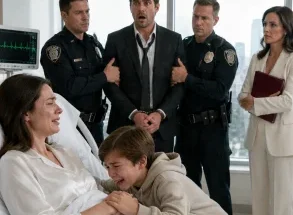
“Mr. Diego,” Dr. Salinas said, her voice sharp enough to cut through the sterile air, “before you continue insulting your wife… you need to take a very close look at what is appearing right here.”
Diego’s arrogant smile froze.
For the first time since he walked into the room, he actually looked at the screen.
Paula crossed her arms and gave a small, impatient laugh.
“What are we supposed to be looking at?” she asked. “A baby? We already know there’s a baby.”
Dr. Salinas did not even glance at her.
She kept her eyes on Diego.
“Do you see this measurement?”
Diego stepped closer, though his face still carried that smug confidence of a man who believed medicine and cruelty were standing on his side.
“Yes,” he said. “So?”
Dr. Salinas pointed to the screen.
“This pregnancy is not as recent as you think.”
My breath caught.
Diego frowned.
“What does that mean?”
The doctor clicked a few buttons and enlarged the image.
“It means the gestational development does not match conception after your vasectomy.”
The room went silent.
Even the machine seemed louder now.
The heartbeat filled the air.
Fast.
Strong.
Alive.
Diego’s eyes narrowed.
“Say that clearly.”
Dr. Salinas turned toward him fully.
“Based on the ultrasound, your wife appears to have conceived before your vasectomy.”
For one impossible second, nobody moved.
The words entered the room and settled there like a judge taking a seat.
Before.
Before the surgery.
Before Diego called me a traitor.
Before his mother came to my house with trash bags and told me women who betray their husbands should not expect shelter.
Before Paula smiled across a coffee shop table and stroked her own flat stomach like she had already won.
Before the neighborhood whispered.
Before I slept with a chair against my bedroom door.
Before all of that, this baby had already existed.
I covered my mouth.
A sob escaped me.
Not the broken kind from the bathroom floor.
Not the desperate kind from humiliation.
This was something else.
Relief so powerful it hurt.
Diego blinked.
“No.”
Dr. Salinas remained calm.
“Yes.”
“No, that’s not possible.”
“It is very possible,” she said. “Vasectomy does not retroactively prevent conception.”
Paula’s face changed first.
The smugness drained out of her mouth.
She looked at Diego.
“You said it was impossible.”
Diego did not answer her.
He was staring at the screen as if it had betrayed him personally.
Dr. Salinas continued.
“And even if conception had occurred after the vasectomy, Mr. Diego, pregnancy after a recent vasectomy is not impossible until post-procedure semen analysis confirms sterility. Patients are always instructed to use protection until clearance is confirmed.”
She looked directly at him.
“Were you cleared?”
Diego’s jaw flexed.
I already knew the answer.
He had never gone back for the follow-up test.
I had reminded him twice.
Both times, he waved me off.
“Laura, I know my own body.”
Now that arrogance stood naked in the ultrasound room.
Dr. Salinas repeated, colder this time.
“Were you medically cleared?”
Diego looked away.
Paula whispered, “Diego?”
He snapped, “Be quiet.”
The doctor’s face hardened.
“Do not speak that way in my examination room.”
For some reason, that almost made me cry again.
A stranger had defended me with more dignity than my husband had given me in weeks.
Diego dragged both hands through his hair.
“This doesn’t prove the baby is mine.”
The words came out weaker this time.
Dr. Salinas looked at him as if he had disappointed her professionally and morally.
“No ultrasound can prove paternity. But it can prove that your accusation based solely on the timing of your vasectomy was medically ignorant.”
Paula flinched.
I sat up slowly, wiping the gel from my belly with shaking hands.
For the first time since Diego had placed his coffee cup down and looked at me like garbage, I felt my spine straighten.
I looked at him.
“You left me for her before asking one doctor one question.”
Diego opened his mouth.
Closed it.
Paula’s eyes flicked between us.
Then the second shock arrived.
Dr. Salinas turned the screen slightly.
“There is one more thing.”
My heart jumped.
I grabbed the edge of the examination table.
“What?”
She softened immediately.
“The baby’s heartbeat is strong. But I need to show you something else.”
Diego muttered, “What now?”
The doctor moved the probe slowly.
A second dark shape appeared beside the first.
My mind did not understand it at first.
Then I saw another tiny flicker.
Another rhythm.
Another life.
Dr. Salinas said gently, “Laura… there are two babies.”
The room disappeared.
Two.
I stared at the screen.
One heartbeat.
Then another.
Two tiny pulses of life beating inside me while the man who created this chaos stood there with his mistress at his side.
“Twins?” I whispered.
Dr. Salinas smiled softly.
“Yes. Twins.”
My hands flew to my stomach.
I began crying so hard I could barely see.
Two babies.
Two little miracles.
Two children Diego had called another man’s without even seeing them.
Paula made a strangled sound.
Diego stared at the screen, pale now.
Completely pale.
“Twins,” he repeated.
It was not joy in his voice.
It was fear.
Because one baby could be dismissed in his mind as an inconvenience.
Two babies meant consequence.
Two babies meant child support.
Two babies meant public truth.
Two babies meant the story he had built with Paula was no longer romantic.
It was evidence of his stupidity.
Dr. Salinas printed the ultrasound images.
She handed them to me, not to him.
“Laura, I want you to schedule bloodwork and another scan. You’ll need careful monitoring.”
I nodded through tears.
Diego stepped forward.
“Let me see.”
I pulled the photos close to my chest.
“No.”
His face darkened instinctively.
“What do you mean, no?”
“I mean no.”
He stared at me as if the word did not belong in my mouth.
For eight years, I had softened my voice for him.
Explained.
Apologized.
Tried to keep peace.
Not now.
Not with two heartbeats still echoing in my ears.
“You walked in here to humiliate me,” I said. “You don’t get to hold the first picture of my babies.”
His jaw tightened.
“Our babies.”
I laughed.
The sound surprised all of us.
Even me.
“Our?”
Paula went very still.
Diego swallowed.
“Laura, listen—”
“No. You listen.”
My voice shook, but it did not break.
“You called me a traitor. You left me for your coworker. You let your mother call me a disgrace. You posted online that I was a lie. You brought Paula to a meeting where you tried to strip me of my house, my dignity, and my child’s rights.”
I looked down at my belly.
“Children’s rights.”
Diego closed his eyes.
“Laura, I was angry.”
“You were cruel.”
He opened them.
“That’s not fair.”
I almost smiled.
“Fair? Diego, fair is what you ask for before you burn the house down, not after you realize you’re still inside it.”
Paula’s face flushed.
“Don’t speak to him like that.”
I turned to her.
“And you don’t speak to me at all.”
Her mouth opened.
I raised one hand.
“No. You came into my ultrasound appointment behind my husband, proud to watch me be humiliated. You stood there waiting for a doctor to measure my shame. The only reason you’re quiet now is because the truth pointed at you instead.”
Dr. Salinas stepped between us slightly.
“This appointment is over. Mr. Diego, Ms. Paula, you need to leave.”
Diego did not move.
“Laura, we need to talk.”
I looked at the doctor.
“Can you call someone from reception?”
She nodded immediately.
Within a minute, a nurse appeared at the door.
Diego looked shocked.
As if he could not believe I would remove him from a room he had invaded.
“I’m your husband,” he said.
I held the ultrasound photos tighter.
“For now.”
His face changed.
The same way it had when he saw the pregnancy test.
Except this time, he was the one standing accused.
Paula grabbed his arm.
“Diego, let’s go.”
He pulled away from her without thinking.
She noticed.
So did I.
So did the doctor.
That small movement was the first crack in the fantasy they had built together.
Diego looked at me one last time.
His voice dropped.
“I’ll call you.”
“No,” I said. “You’ll call my lawyer.”
The nurse escorted them out.
When the door closed, I finally broke.
Not prettily.
Not quietly.
I folded over my belly and sobbed.
Dr. Salinas sat beside me and placed a hand on my shoulder.
“You are safe here,” she said.
Safe.
I had not realized how long it had been since I felt that word.
I left the clinic with two ultrasound photos in my purse and a new fire in my chest.
Outside, Diego was waiting near the parking lot.
Paula stood several feet away from him, arms crossed, face hard.
They were arguing.
I could hear Paula’s voice.
“You told me she cheated.”
Diego answered sharply, “I thought she did.”
“You thought? You destroyed your marriage over something you thought?”
He saw me and stopped talking.
I walked past both of them.
Diego stepped toward me.
“Laura.”
I did not stop.
He followed.
“Laura, wait. Please.”
Please.
He had found that word quickly.
Too quickly.
I turned around.
“What?”
His face looked different now.
Not sorry exactly.
Shaken.
“I need time to process this.”
I stared at him.
“That’s funny. You didn’t need time to condemn me.”
Paula came closer.
Diego ignored her.
“I made a mistake.”
“No, Diego. You made a choice. Many choices.”
His lips pressed together.
“I didn’t know the timeline.”
“You didn’t ask.”
“I was hurt.”
“You were cheating.”
Paula gasped.
Diego’s eyes flashed.
“That’s not—”
“What? True? You moved in with her the same night I told you I was pregnant. Did she already have a toothbrush at her apartment for you?”
His silence answered.
Paula looked away.
I nodded slowly.
“That’s what I thought.”
Diego lowered his voice.
“Let’s talk at home.”
I laughed.
“You don’t live there anymore.”
“I can come back.”
“No.”
His eyes sharpened.
“Laura, those are my children.”
I stepped closer.
The parking lot wind lifted my hair.
For the first time in weeks, I did not feel like a discarded wife.
I felt like a mother.
“You called them another man’s children before you knew they had heartbeats. Do not use them now as a key to the door you slammed behind you.”
He went pale.
Then I turned and walked to my car.
That evening, I called a lawyer.
Her name was Valeria Montes.
She was recommended by a woman from my old office who had once divorced a man so politely dangerous that even her dog had needed therapy.
Valeria listened without interrupting.
The vasectomy.
The pregnancy.
The accusation.
The mistress.
The social media post.
The coercive divorce agreement.
The ultrasound room.
The twins.
When I finished, she said only one thing.
“Do not sign anything he gives you, and do not meet him alone.”
“I won’t.”
“Good. Send me every message, every post, every document, and the ultrasound report. We are going to control the story with facts.”
Facts.
The word felt like clean water.
By midnight, Diego had called twelve times.
I did not answer.
He sent messages.
Laura, please. I panicked.
We need to talk for the babies.
I never meant for things to go this far.
Then:
My mother is upset. Please don’t tell people about the twins yet.
There it was.
Not love.
Not remorse.
Management.
I replied once.
All communication goes through my attorney.
Then I blocked him.
The next morning, I woke to banging on the front door.
My whole body jolted.
I checked the camera.
My mother-in-law.
Of course.
Dolores stood on my porch in a burgundy dress with her church purse clutched in both hands, face arranged into righteous suffering.
I did not open the door.
I spoke through the camera.
“What do you want?”
She looked startled.
“Laura, open this door.”
“No.”
“Don’t be childish. We need to discuss what happened.”
“What happened is that your son abandoned his pregnant wife and accused her falsely.”
Her mouth tightened.
“Diego was devastated.”
“Diego was wrong.”
She glanced toward the street.
Always worried about witnesses.
“Lower your voice.”
“No.”
Her face hardened.
“You think twins give you power now?”
I placed one hand over my belly.
“They give me responsibility. You’re the one thinking about power.”
She stepped closer to the camera.
“Listen to me carefully. Diego made a mistake, yes. But he is the father. You will not keep those children from our family.”
“Our family?” I asked.
“Their blood is ours.”
I felt something cold move through me.
There it was again.
Possession.
Not love.
Ownership.
“You called them a disgrace last week,” I said.
Dolores lifted her chin.
“I was misinformed.”
“No. You were eager.”
She flushed.
“I want to come inside.”
“No.”
“I am your mother-in-law.”
“For now.”
Her eyes widened.
Then she whispered, “You will regret humiliating Diego.”
I smiled into the camera.
“Thank you. My lawyer will enjoy that recording.”
Dolores stepped back as if the door itself had slapped her.
She left.
I sent the footage to Valeria.
By afternoon, Valeria filed the first response.
A formal notice rejecting Diego’s proposed agreement.
A demand that he preserve all financial records.
A notice regarding marital abandonment.
A documentation request related to his vasectomy, follow-up instructions, and failure to complete medical clearance.
A warning regarding harassment by third parties.
By evening, Diego unblocked himself through another number and sent:
You’re making me look like a monster.
I stared at the screen.
Then I typed:
No. I’m documenting how you behaved.
I did not send more.
I did not need to.
The next weeks became strange.
Publicly, Diego tried to soften the story.
He deleted the restaurant photo with Paula.
Too late.
Screenshots existed.
He stopped posting.
He began telling mutual friends that things were complicated and he had reacted emotionally to confusing medical circumstances.
Confusing medical circumstances.
That was how men like Diego dressed cruelty for company.
Paula did not stay silent.
That surprised me.
Three days after the ultrasound, she sent me a message.
I didn’t know he had not been medically cleared. I didn’t know he moved in with me before speaking to a doctor. I believed what he told me. I’m sorry for coming to the appointment. I was cruel.
I stared at the message for a long time.
An apology did not erase what she had done.
But it was more than Diego had given me.
I replied:
You helped him humiliate me. Remember that before you call yourself deceived.
She answered:
I will.
Two weeks later, Paula moved out of her apartment temporarily because Diego refused to leave after she ended things.
I heard that from Valeria, who heard it from Paula’s attorney.
Life, apparently, had a sense of irony.
My pregnancy became high risk.
Twin pregnancies rarely care about emotional timing.
The nausea came in waves.
The exhaustion was so deep I sometimes cried because standing up felt impossible.
My back ached.
My feet swelled.
My blood pressure threatened to become a story of its own.
But every appointment showed two strong heartbeats.
I named them in my head.
Not real names yet.
Just secret names.
Sun and Moon.
One twin always seemed more active on the ultrasound.
That one was Sun.
The calmer one became Moon.
At sixteen weeks, Valeria arranged a meeting with Diego’s lawyer.
Diego wanted to attend.
I agreed only if it was recorded and held in Valeria’s office.
He arrived wearing the face of a repentant man.
Soft eyes.
Unshaven jaw.
No Paula.
No mother.
He looked at my belly immediately.
I wore a loose green dress.
Not for him.
For me.
His voice broke when he said my name.
“Laura.”
I sat across from him.
“Diego.”
For a second, I remembered the man I had married.
The one who danced badly in the kitchen.
The one who cried when our old dog, Milo, died.
The one who held my hand through my father’s funeral.
I hated that memory.
Not because it was false.
Because it was not enough.
Diego folded his hands.
“I want to apologize.”
Valeria sat beside me, pen ready.
I nodded once.
He looked at me.
“I was shocked. I thought the vasectomy meant… I thought there was no way. I let fear and pride control me.”
I waited.
“And?”
He swallowed.
“I accused you. Publicly and privately. I left. I involved Paula. I allowed my mother to insult you. I tried to pressure you into signing an unfair divorce agreement.”
His lawyer shifted uncomfortably.
Good.
Diego continued.
“I was wrong.”
The words landed.
Not deeply.
But they landed.
I looked at him.
“Do you understand what you did to me?”
His eyes filled.
“I think so.”
“No. You don’t.”
He flinched.
“You humiliated me while I was newly pregnant. You made me afraid of my own neighbors. You made me afraid my children would be born into hatred. You made me sleep with a chair against the door.”
His face crumpled.
“I didn’t know that.”
“You didn’t care to know.”
Silence.
Then Diego whispered, “Can we fix this?”
There it was.
The question I had dreaded.
Part of me wanted to scream no.
Part of me wanted to go back to before the coffee cup, before Paula, before the post, before the ultrasound room.
But life does not reverse because a man finally feels consequences.
“No,” I said quietly.
His face fell.
“We cannot fix what we had. It’s gone.”
He stared at the table.
I placed one hand over my belly.
“But we can decide what kind of father you are allowed to become.”
His eyes lifted.
Allowed.
That word mattered.
Valeria slid a document forward.
Temporary support.
Medical expense coverage.
Communication through a parenting app.
No direct unscheduled visits.
No involvement from Dolores without my written consent.
Public correction of his false accusation.
Therapy.
Completion of vasectomy follow-up and full medical disclosure.
Diego looked at the list.
His lawyer looked pained.
I felt no sympathy.
Diego read one clause aloud.
“Public correction?”
“Yes.”
He looked at me.
“You want me to post about this?”
“You posted when you thought I was a liar.”
His shame returned.
“You want revenge.”
“No,” I said. “I want the lie removed from where you placed it.”
He nodded slowly.
Two days later, Diego posted:
Weeks ago, I publicly implied that my wife Laura had betrayed our marriage because she became pregnant after my vasectomy. I was wrong. I had not completed the required medical follow-up and did not understand the timing. I accused her unfairly and caused harm. Laura did not betray me. I did.
The neighborhood went silent.
Then it exploded.
Messages poured in.
Some from people apologizing.
Some pretending they had never judged me.
Some saying they always knew there was more to the story.
I did not answer most of them.
My peace was not a community project.
Dolores called Diego screaming after the post.
He told me through the parenting app.
I responded:
That is between you and your mother. Do not bring it to my door.
At twenty weeks, we learned the twins were girls.
Sun and Moon became realer.
Diego cried at the appointment.
I let him attend because he had followed the rules for a month.
He stood on the other side of the room, hands clasped, waiting for permission to come closer.
When the doctor said “two girls,” he covered his face.
I felt nothing simple.
Not satisfaction.
Not forgiveness.
Not love.
Just sadness for the father he could have been from the start.
After the appointment, he asked if he could have a copy of the ultrasound.
I hesitated.
Then gave him one.
He held it like it was made of glass.
“I’m sorry,” he said.
“I know.”
He looked hopeful.
That was dangerous.
I added, “Sorry is a beginning. Not a bridge.”
His shoulders sank.
But he nodded.
Paula testified in the divorce proceedings.
I did not expect that.
She provided messages from Diego proving he had been involved with her before the pregnancy test.
Proof that he had considered leaving me before the vasectomy.
Proof that his outrage had been convenient.
Not invented, maybe.
But convenient.
He had used the pregnancy as a moral exit ramp.
Paula’s statement hurt.
Not because I wanted Diego back.
Because betrayal is rarely a single knife.
It is a drawer full of them.
The divorce became final when I was twenty-six weeks pregnant.
I wore a blue dress.
Valeria sat beside me.
Diego sat across the courtroom looking hollow.
The judge approved support, medical cost coverage, future custody evaluation, and protective communication boundaries.
The house remained mine.
Not because Diego gave it to me.
Because my name was on the deed, my inheritance had paid the down payment, and his lawyer could not rewrite history no matter how hard he tried.
Dolores sat behind Diego that day.
She had insisted on attending.
Of course she had.
Women like Dolores call control support when they do not want to admit they simply enjoy sitting close to other people’s pain.
At first, she looked composed.
Black dress.
Gold cross.
Purse gripped tightly in her lap.
But the longer the judge spoke, the more her face changed.
When the court confirmed she was not permitted to contact me directly, she leaned forward so quickly Diego’s lawyer had to place a hand near her arm.
“Your Honor,” she said, without permission.
The judge looked over her glasses.
“Ma’am, you are not a party to this case.”
Dolores lifted her chin.
“I am these children’s grandmother.”
“They are not born yet,” the judge said dryly. “And even after they are, grandmotherhood does not override court orders.”
Dolores’s mouth opened.
Closed.
I looked straight ahead.
Not smiling.
Not gloating.
Just breathing.
Sometimes that is the greatest insult you can offer people who once believed they could terrify you.
Afterward, Diego approached carefully.
“Laura.”
Valeria looked at me.
I nodded.
He stopped several feet away.
“I know today is not something to celebrate,” he said.
“No.”
“But I hope someday the girls know I tried to become better.”
I looked at him.
“Then become better when nobody is watching.”
He nodded.
I left.
At thirty-two weeks, complications began.
Twin pregnancies are not gentle.
My blood pressure rose.
My feet swelled.
I could not sleep.
One night, I woke with pain sharp enough to make me gasp.
I called the emergency line.
Then, after a moment, I called Diego.
He answered on the first ring.
“What’s wrong?”
“I need to go to the hospital.”
“I’m coming.”
“No drama. No Dolores. No panic.”
“I understand.”
He arrived in nine minutes.
For once, he did everything right.
He carried my bag.
He helped me into the car.
He did not touch me without asking.
At the hospital, he stayed quiet while doctors examined me.
When they admitted me for monitoring, he sat in the chair by the wall.
Not beside the bed.
By the wall.
Waiting.
At three in the morning, I woke and found him still there, head bent, hands clasped.
“You can go home,” I said.
He looked up.
“I know.”
“But you’re staying?”
“If you allow it.”
I closed my eyes.
The old Diego would have assumed.
The new one asked.
That mattered.
Not enough to erase everything.
But enough for that night.
“You can stay,” I said.
He nodded.
“Thank you.”
The girls were born at thirty-five weeks.
Small.
Furious.
Perfect.
Isabel came first, screaming like she had a legal objection.
Lucía came second, quieter but gripping the nurse’s finger with astonishing force.
Sun and Moon.
Real names.
Real faces.
Real daughters.
When Diego saw them through the NICU glass, he wept so hard a nurse handed him tissues.
I watched him from my wheelchair.
Part of me was angry that he got to cry over beauty after causing so much pain.
Part of me was relieved he cared.
Motherhood made room for complicated truths.
He did not hold them first.
I did.
That was not punishment.
That was order.
My body had carried them through fear, shame, nausea, court dates, lonely nights, and the kind of public humiliation that strips skin from the soul.
My arms were the first home they needed.
Diego held them later, one at a time, sitting down, supervised by a nurse because they were tiny and he was trembling.
When Isabel opened one eye, Diego whispered, “I’m sorry.”
I looked away.
Not because I wanted to interrupt.
Because some apologies belong to the future, not the past.
Dolores met the twins three weeks later.
After written boundaries.
After Diego made it clear that one insult would end the visit immediately.
She arrived with gifts and red eyes.
At first, she tried to kiss me.
I stepped back.
“No.”
She froze.
Then nodded stiffly.
She looked at the babies and began crying.
“My granddaughters.”
I held Lucía closer.
“They are Laura and Diego’s daughters. Being their grandmother is a privilege. Not a right.”
Dolores’s mouth tightened.
Diego said quietly, “Mom.”
She swallowed whatever she wanted to say.
Good.
Progress, sometimes, is only a cruel person staying silent because consequences are standing nearby.
For two months after the birth, I thought the worst was over.
That is another lie life tells women when they are too exhausted to defend themselves.
Dolores waited.
She waited until my stitches healed.
She waited until the girls came home from the NICU.
She waited until my nights dissolved into feedings, alarms, bottles, diapers, pumping schedules, pediatric appointments, and the strange lonely tenderness of mothering twins in a house where every clock seemed to measure someone else’s need.
Then she made her move.
It happened on a Tuesday afternoon.
I remember because Tuesdays had become pediatric weigh-in days.
I had just come home from the clinic, both girls sleeping in their carriers, when I saw a white envelope tucked under the front door.
No stamp.
Hand delivered.
My stomach knew before my hands did.
Inside was a petition.
Dolores had filed for emergency grandparent access.
Not custody.
Not yet.
Access.
She claimed I was “emotionally unstable,” “alienating paternal family,” and “withholding the twins from a loving grandmother due to unresolved marital bitterness.”
She attached photos.
That was the part that made my hands go cold.
Photos of me outside the pediatrician’s office.
Photos of Diego helping me into the hospital on the night I went in for complications.
Photos of my house.
Photos of the girls’ nursery window from the sidewalk.
I called Valeria.
She answered on the second ring.
“She hired someone,” I said.
Valeria’s voice changed instantly.
“Send me everything.”
I did.
Then I sat on the floor between the car seats while Isabel and Lucía slept, tiny mouths open, unaware that their grandmother had begun turning care into a weapon before they could even hold up their heads.
Diego arrived thirty minutes later.
I had not called him.
Valeria had.
He stood on my porch, face pale, documents in hand.
“I didn’t know,” he said.
I believed him.
That annoyed me.
“I told her no,” he continued. “I told her to leave this alone.”
“And did she?”
His jaw tightened.
“No.”
I stepped aside and let him in because this involved the girls, and because he had not created this particular fire, even if he had handed his mother the matches years before.
He stood in the living room, looking at the babies.
Dolores’s petition lay on the coffee table.
“Laura,” he said quietly, “I’ll testify against her.”
I stared at him.
Those words had cost him.
I could see it.
“You understand what that means?”
“Yes.”
“Do you? Because she’ll call you ungrateful. She’ll say I poisoned you. She’ll cry. She’ll tell everyone she lost her son because of me.”
He swallowed.
“She already has.”
“And?”
He looked at the twins.
“And I’m tired of letting her rewrite harm as love.”
That was the first time I saw something different in Diego.
Not regret.
Not guilt.
A boundary.
Those are not the same.
The hearing was scheduled quickly.
Dolores arrived dressed like a widow, although nobody had died. Black suit. Pearl earrings. Rosary wrapped around her wrist. Her lawyer described her as a heartbroken grandmother who only wanted a relationship with the children after a painful marital breakdown.
Then Valeria stood.
She did not raise her voice.
She did not need to.
She presented the ultrasound timeline.
The false accusation.
The social media post.
The doctor’s report.
The coercive divorce agreement.
The video of Dolores threatening me through the doorbell camera.
The photographs taken from outside my home.
The fact that the twins had been premature and medically monitored, making unsolicited surveillance and emotional pressure especially harmful.
Then she called Diego.
Dolores looked startled.
Maybe she had never believed her son would actually speak against her in a room where her tears could be seen.
Diego took the stand.
He looked nervous.
Good.
Truth should make the guilty nervous even when they are trying to tell it.
Valeria asked him what happened after I became pregnant.
He answered.
He said he accused me.
He said he left.
He said he did not complete medical clearance after the vasectomy.
He said his mother called the pregnancy a disgrace.
He said Dolores had pressured him to pursue the house before the twins were born because, in her words, “a woman with infants signs faster when she needs peace.”
The courtroom changed after that.
Dolores went completely still.
Her lawyer looked sharply at Diego, then at his client.
Valeria asked, “Did your mother ever tell you to leave Laura alone?”
Diego’s voice dropped.
“No.”
“What did she tell you?”
He looked down.
“That if I let Laura control the narrative, I’d lose my daughters before they were even born.”
“And what do you believe now?”
He swallowed hard.
“I believe my mother wanted control more than she wanted peace for my children.”
Dolores made a sound.
Small.
Wounded.
Perfectly timed.
But the judge was watching Diego, not her.
Valeria asked one final question.
“Do you support your mother’s petition?”
Diego looked at Dolores.
For a moment, he was a boy again.
I could see it.
The son who wanted approval.
The man raised to believe love meant obedience.
Then he looked at Isabel and Lucía’s photos on the table.
“No,” he said.
Dolores closed her eyes.
It was the first true collapse of her power.
The judge denied the petition.
More than that, she ordered Dolores to cease surveillance, third-party contact, and unapproved attempts to access the children. Any future visitation would require my consent and compliance with boundaries.
Dolores approached Diego in the hallway afterward.
I heard her before I saw her.
“How could you do this to your own mother?”
Diego stood very still.
“I did it for my daughters.”
She slapped him.
Not hard enough to injure.
Hard enough to humiliate.
The hallway froze.
Diego touched his cheek.
Then looked at her.
For the first time, he did not look ashamed.
He looked free.
“You just proved me right,” he said.
Valeria, who had the reflexes of a courtroom hawk, had already turned toward the bailiff.
The incident went into the record.
Dolores did not get another hearing.
That should have been the end.
It wasn’t.
People like Dolores do not stop because a judge tells them to.
They adapt.
She began calling distant relatives.
Church friends.
Neighbors.
She told them I was keeping her granddaughters from her because I was vindictive. She said Diego had been bewitched. She said the twins needed “real family influence.” She sent gifts without return addresses. She left prayer cards in my mailbox. She once appeared at the grocery store when I was there with both girls in the double stroller and stood at the end of the aisle staring at us with a smile so gentle it made my blood run cold.
I left the cart where it was and walked out.
That night, I installed another camera.
Not because I wanted to live afraid.
Because peace needs infrastructure.
Diego paid for it.
Without being asked.
When the girls were six months old, Paula asked to meet.
I nearly said no.
Then I said yes.
Curiosity is sometimes just another form of wound-picking.
We met at a coffee shop halfway between my house and her new apartment. She looked different. Softer. Less polished. No big sunglasses. No fake casual confidence. She wore jeans and an old sweater, her hair pulled back.
“Thank you for coming,” she said.
“I haven’t decided if I regret it.”
She nodded.
“That’s fair.”
We sat near the window.
Outside, rain made the parking lot shine.
She wrapped both hands around her mug.
“I wanted to apologize in person.”
“You already apologized.”
“Not enough.”
I waited.
She looked at me.
“I came to the ultrasound because I wanted proof you were the villain. I wanted it because it made what I was doing feel less ugly. If you had cheated, then I wasn’t helping a man abandon his pregnant wife. I was helping him escape. That’s the story I needed.”
That was painfully honest.
I hated how much I respected it.
“And when the doctor said the pregnancy was older?”
“I felt the floor disappear.” She looked down. “Not because I cared about you enough then. Because suddenly I saw myself standing on the wrong side of the room.”
I said nothing.
She continued.
“I testified because I owed you facts. But I know facts don’t repay humiliation.”
“No,” I said. “They don’t.”
Her eyes filled.
“I’m sorry.”
This time, the apology did not ask me to comfort her.
That made it easier to receive.
“Thank you,” I said.
She nodded.
Then gave me an envelope.
My body went rigid.
“What is that?”
“Something I should have sent earlier.”
Inside were printed messages between Dolores and Diego from before the ultrasound.
Dolores telling him not to “give Laura time to invent sympathy.”
Dolores saying, “If the child is not yours, take the house before she plays victim.”
Dolores saying, “If by some chance it is yours, we reframe later. First control the property.”
First control the property.
I stared at those words.
Paula’s voice shook.
“I thought maybe you already had enough.”
“You never have enough when people like Dolores know how to cry.”
I sent the messages to Valeria.
Then I sent one line to Diego through the parenting app:
Your mother planned for both outcomes.
He replied forty minutes later.
I know now.
Then:
I’m sorry I didn’t know sooner.
I stared at that message for a long time.
Then typed:
So am I.
At one year old, the girls were wildly different.
Isabel crawled like she was late for a meeting.
Lucía observed before moving, as if evaluating whether the floor deserved her effort.
Diego had supervised visits twice a week, then unsupervised short visits after proving consistency for months. He learned diapers. Bottles. Nap schedules. The difference between Isabel’s furious cry and Lucía’s offended cry. He learned not to call me for every minor uncertainty, and also not to pretend certainty when he had none.
One afternoon, he returned them both with mismatched socks and a look of profound defeat.
“Isabel hid one shoe in the air vent,” he said.
Lucía sat in the stroller chewing a toy as if she had personally approved the chaos.
I laughed.
A real laugh.
Diego looked surprised.
Then relieved.
Not because I had forgiven him.
Because the moment had not been about the past.
It had been about a shoe in an air vent.
That is co-parenting after damage.
Not dramatic redemption.
Shared absurdity.
The girls turned two on a warm Saturday.
I hosted the party in my backyard.
Small.
Controlled.
Safe.
Paige came with a giant bubble machine she claimed was for the children but clearly enjoyed more than anyone else. Valeria stopped by with a gift and stayed for cake. Paula sent books but did not come. Diego came early to help set up and left when the girls went down for naps, because we had learned that boundaries made peace possible.
Dolores was not invited.
She sent two white dresses.
No card.
I donated them.
Diego saw the dresses in the donation bag near the door.
His jaw tightened.
“Good,” he said.
That was all.
Later, after the party, I found him sitting on the back steps while Isabel and Lucía slept inside. The yard was full of deflated balloons and crumbs. The bubble machine had died heroically.
“I missed their first picture,” he said.
I knew what he meant.
The ultrasound.
“No,” I said. “You were there.”
He closed his eyes.
“I was in the room. I missed it.”
That was true.
He had seen the image.
He had missed the miracle.
“I can’t give that back,” I said.
“I know.”
He looked at me.
“I don’t ask you for forgiveness anymore because I realized I kept asking for it like it was access.”
The sentence surprised me.
Therapy, apparently, had been doing something.
“What do you ask for now?”
“Instructions,” he said. “Boundaries. Chances when they are earned.”
I sat beside him, leaving space between us.
“That sounds better.”
“It is harder.”
“Yes.”
He looked toward the house.
“Thank you for not letting me become my mother.”
I turned to him.
“I didn’t do that.”
He nodded slowly.
“You stopped letting me hide behind her.”
“That is different.”
“Yes.”
We sat in silence.
Not romantic.
Not bitter.
Something else.
A quiet truce built from evidence, babies, lawyers, mistakes, and two stubborn little girls asleep inside the house that almost became a battlefield.
When the twins were four, Isabel asked why Grandma Dolores never came to parties.
Diego was there.
He froze.
I did not rescue him.
He took a breath.
“Because Grandma Dolores made choices that were not safe for Mommy, and we have rules to keep everyone safe.”
Isabel frowned.
“Did she say sorry?”
“No,” Diego said.
Lucía, who had been building a tower with blocks, asked, “Why not?”
Diego looked at me.
Then at his daughters.
“Because some people care more about being right than being kind.”
The girls accepted that better than adults ever do.
At six, they asked about Paula.
At eight, they asked why their father lived in an apartment.
At ten, they found an old screenshot on my laptop by accident.
The original post.
The lie.
I had kept it in a folder because Valeria told me never to delete evidence. I had moved it twice, backed it up once, and forgotten that curious daughters eventually become digital archaeologists.
Isabel read it first.
Then Lucía.
Then both of them came into the kitchen holding the laptop.
“Mom,” Isabel said, “what does traitor mean?”
The room went very quiet.
Diego was due in twenty minutes for pickup.
I called him and told him to come in when he arrived.
We sat at the kitchen table.
All four of us.
The girls on one side.
Diego and I on the other.
The laptop between us like an old grenade.
Diego saw the screenshot.
His face went gray.
“Girls,” he said, voice thick, “I wrote that about your mom when I was very angry and very wrong.”
“Why?” Lucía asked.
Because of course she would go directly there.
Diego swallowed.
“Because I had surgery and thought I couldn’t have more children. When your mom became pregnant, I accused her instead of asking doctors questions. I was cruel before I was informed.”
Isabel looked horrified.
“You thought we weren’t yours?”
Diego closed his eyes.
“Yes.”
The silence after that was unbearable.
Lucía looked at me.
“But we were.”
“Yes,” I said.
Isabel looked at Diego.
“You didn’t believe Mom?”
“No,” he whispered.
“Why?”
He opened his mouth.
Nothing.
Then he said, “Because believing her would have required me to admit I might be wrong.”
Lucía’s eyes filled.
“That’s stupid.”
Diego let out a broken laugh.
“Yes.”
“Did you say sorry?”
“Yes.”
“Did Mom forgive you?”
I answered that one.
“Not all the way.”
The girls looked at me.
“That is allowed,” I said.
Diego nodded.
“It is.”
Isabel stared at him, processing.
Then she said, “You should be nicer to Mom forever.”
Diego wiped his eyes.
“I will try.”
Lucía leaned forward.
“No. Do it.”
Paige later called that the best legal ruling our family ever received.
The twins grew into the truth slowly.
Not poisoned by it.
Rooted in it.
They knew people could love badly.
They knew apologies mattered but did not erase consequences.
They knew Grandma Dolores existed but was not safe.
They knew Paula had made wrong choices and later right ones.
They knew Diego had hurt me and worked to become someone who did not repeat the harm.
They knew I had stayed calm long enough to count the lies.
Dolores died when the girls were thirteen.
A stroke.
Diego called me from the hospital.
His voice was strange.
Flat.
“She’s gone,” he said.
I sat down.
“I’m sorry.”
He was silent.
Then he said, “I’m not sure I am.”
“That is allowed.”
“I feel free,” he whispered.
Then, after a pause:
“And ashamed that I feel free.”
I looked toward the living room, where Isabel and Lucía were arguing over a science project involving vinegar and very questionable supervision.
“Both can be true,” I said.
He laughed once, softly.
“You say that to the girls.”
“Because it’s useful.”
“Will you bring them?”
“To the funeral?”
“Yes.”
“No.”
He exhaled.
Relief.
“Good.”
“They can decide later how they want to understand her. Not beside a coffin with adults performing grief.”
“Thank you.”
He went to the funeral alone.
Then came to my house afterward, not inside, just to the porch. He looked exhausted. Older than forty-five. Less like the man in the ultrasound room and more like a man finally setting down a suitcase he had carried since childhood.
“She left me a letter,” he said.
“What did it say?”
He looked at the street.
“That I disappointed her.”
I almost laughed.
Not because it was funny.
Because Dolores, even dead, had managed to stay on brand.
“I’m sorry,” I said.
He nodded.
“I burned it.”
“Good.”
He looked at me.
“I used to think if I could make her proud, I would feel like a man.”
“And now?”
“Now I think manhood started when I stopped letting her define my children’s mother as an obstacle.”
That was perhaps the closest I ever came to forgiving him completely.
Not because he said it.
Because he had lived long enough after the damage to understand the shape of it.
When Isabel and Lucía graduated high school, they chose to walk together.
Of course they did.
Isabel wore red heels under her gown.
Lucía wore sneakers.
Diego sat beside me in the stadium.
No Dolores.
No Paula.
No public scandal.
Just a father, a mother, and two daughters walking across a stage into lives they owned.
When their names were called, Diego cried openly.
I cried too.
The girls found us afterward.
Isabel hugged Diego first.
Lucía hugged me first.
Then they switched.
As Isabel hugged me, she whispered, “Thank you for making him tell the truth.”
I held her tighter.
Lucía whispered to Diego, “Thank you for finally learning it.”
He sobbed.
I pretended not to see.
At dinner that night, the girls made a toast.
“To Mom,” Isabel said, “who kept receipts.”
“And to Dad,” Lucía added, “who became less stupid over time.”
The table erupted.
Diego laughed harder than anyone.
That was healing.
Not the absence of the old wound.
The ability to joke without denying it.
Years later, when people ask me what the ultrasound revealed, they expect me to say twins.
Or the timeline.
Or Diego’s failure to get cleared.
But the deepest revelation was not medical.
It was moral.
A room can contain one truth and many lies.
The lies may arrive louder.
They may arrive dressed as certainty, anger, shame, even another woman’s perfume.
But truth does not need to shout.
It waits.
It measures.
It points to the screen.
It says: Look closer.
That is what Dr. Salinas did.
She made him look closer.
She made all of us look closer.
Diego saw his arrogance.
Paula saw her cruelty.
I saw my strength.
And inside me, two heartbeats answered a lie before they had names.
I still have that first ultrasound photo.
It is framed now, not hidden.
Two small shapes.
Two flickers.
Two witnesses.
Under the frame, the girls taped a handwritten label when they were twelve:
Exhibit A.
Valeria thought that was hilarious.
So did Paige.
Diego cried when he saw it.
I laughed until my ribs hurt.
Sometimes, at night, I still think about the parking lot after the appointment.
Diego saying, “I need time to process this.”
Me saying, “You didn’t need time to condemn me.”
That sentence became a door.
I walked through it.
Not into perfect peace.
Into a harder, cleaner life.
A life where no accusation went unanswered.
A life where my daughters learned that love must ask before it judges.
A life where even their father, damaged as he was, could not return unless he learned to knock.
And that, in the end, is what I kept.
Not the marriage.
Not the fantasy.
Not the version of Diego I once thought was real.
I kept the house.
The truth.
The records.
The first picture.
The two heartbeats.
The daughters who came from a room where I was supposed to be exposed, and instead exposed everyone else.
Diego thought the ultrasound would prove I had betrayed him.
It proved he had betrayed me.
It proved he had betrayed himself.
And most importantly, it proved that before he ever weaponized doubt, before Paula ever smiled beside him, before Dolores ever came to my door talking about blood and disgrace, two tiny lives had already begun inside me.
They were not evidence of shame.
They were evidence of survival.
The end of his lie.
And the beginning of everything I was still brave enough to build.